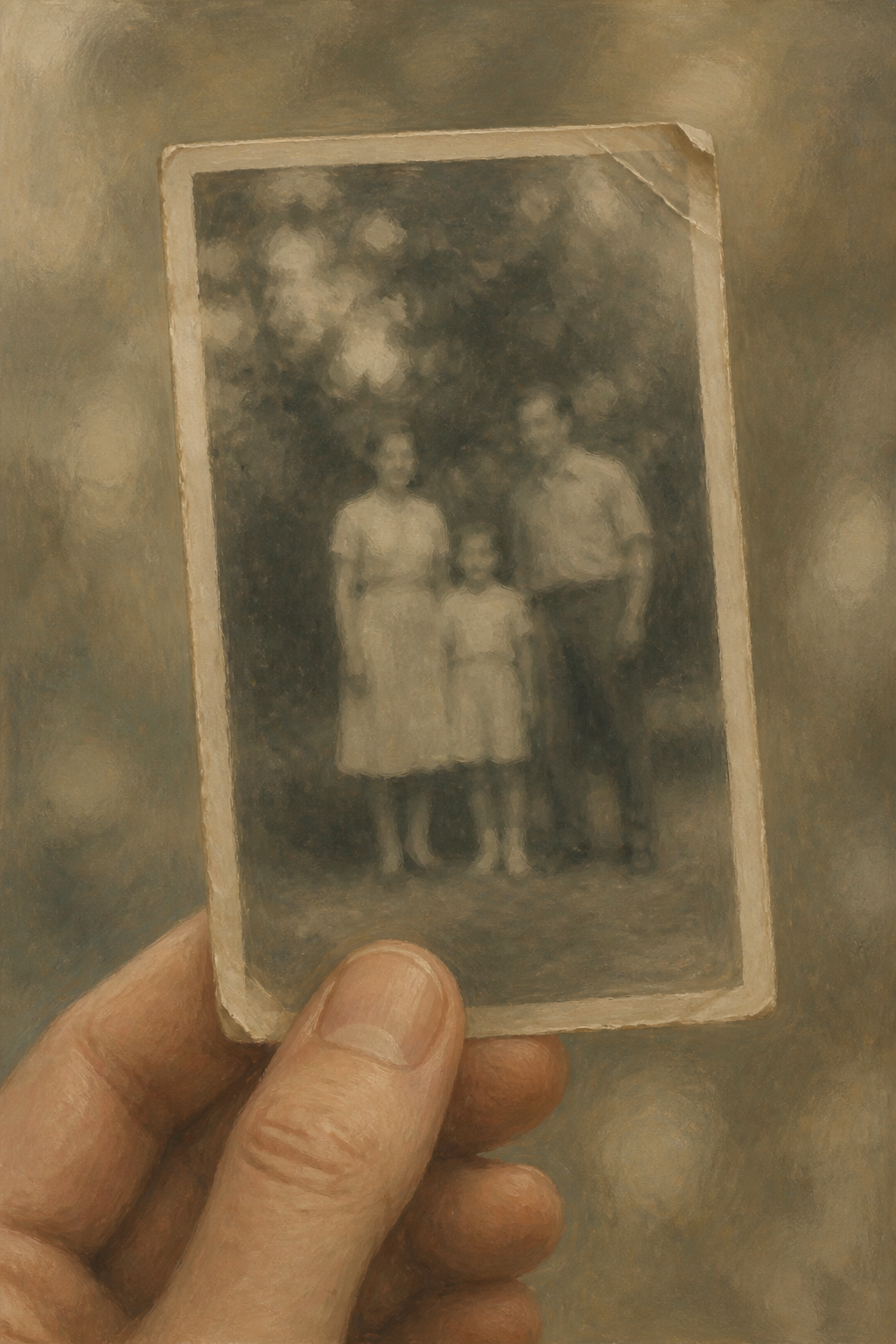
Someone you barely know — clear as a photograph.
Someone you love — blurry.
A stranger, seen once: your brain snapshots them, done, filed away, sharp as a printout. You could pick them out of a crowd tomorrow.
But try picturing someone you actually care about — someone you've watched laugh a hundred different ways, seen half-asleep, seen annoyed, seen caught off guard — and something strange happens. Their face won't hold still. It goes soft at the edges. The more you reach for it, the more it dissolves.
Too many versions. No single copy.
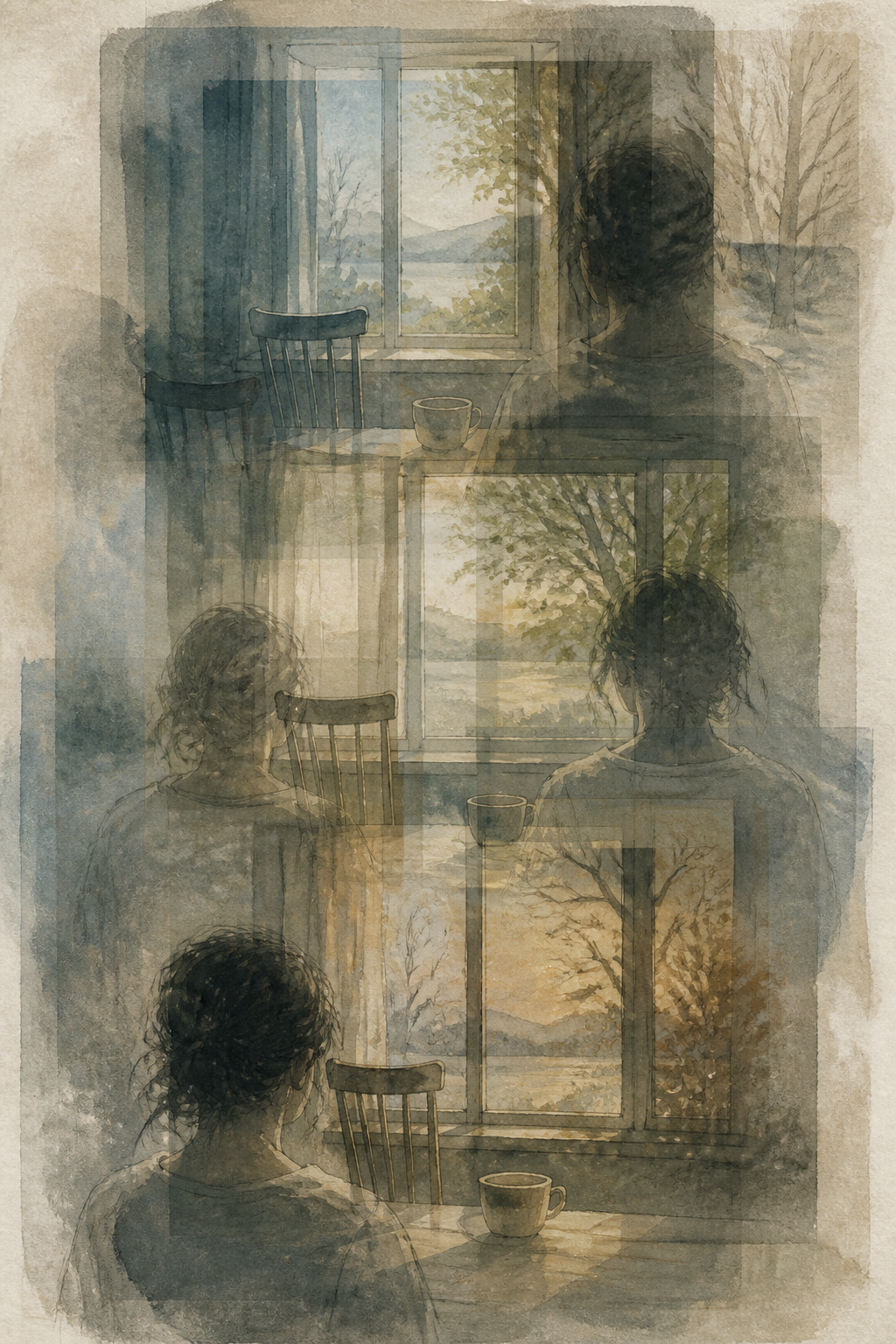
A pile of moments, competing
A stranger's face is one image. Clean, singular, easy to store. Your brain snapped it, sealed it, set it aside.
A person you actually know is dozens of images stacked on top of each other. Mid-laugh. Half asleep. Annoyed. Caught off guard. At the dinner table three Christmases ago. That time they were trying not to cry. Your brain never chose one version to keep as the version — so there's no single photo to pull up. Just a whole pile of moments, all competing at once, each one half-visible beneath the others.
The more you've seen someone, the more versions you're trying to see through at the same time. The image smears.
"The part of your brain trying to see their face is competing with the part that's just feeling something about them — and the feeling wins."
Feeling gets there first.
Thinking about someone you love isn't a purely visual task. It drags in the same circuits as reward, attachment, memory loaded with emotion. So the effort of retrieving their face is competing with something bigger and louder — just the fact of caring about them. The feeling arrives first, takes up the room, and the image loses.
With a stranger, none of that is running. It's just pixels, just shape and feature. Easy to file, easy to fetch.
The blurrier the face,
the more real the relationship.
Strangers are easy to picture because nothing is riding on them. They exist in your memory as objects, not as people. They have no weight. The people whose faces you can't quite hold still — the ones that come back as a feeling before they come back as an image — those are the ones you actually know. The blur isn't failure. It's the record of everything that happened.
The next time someone's face won't come clear when you reach for it, that's not forgetting. That's what love does to a photograph.