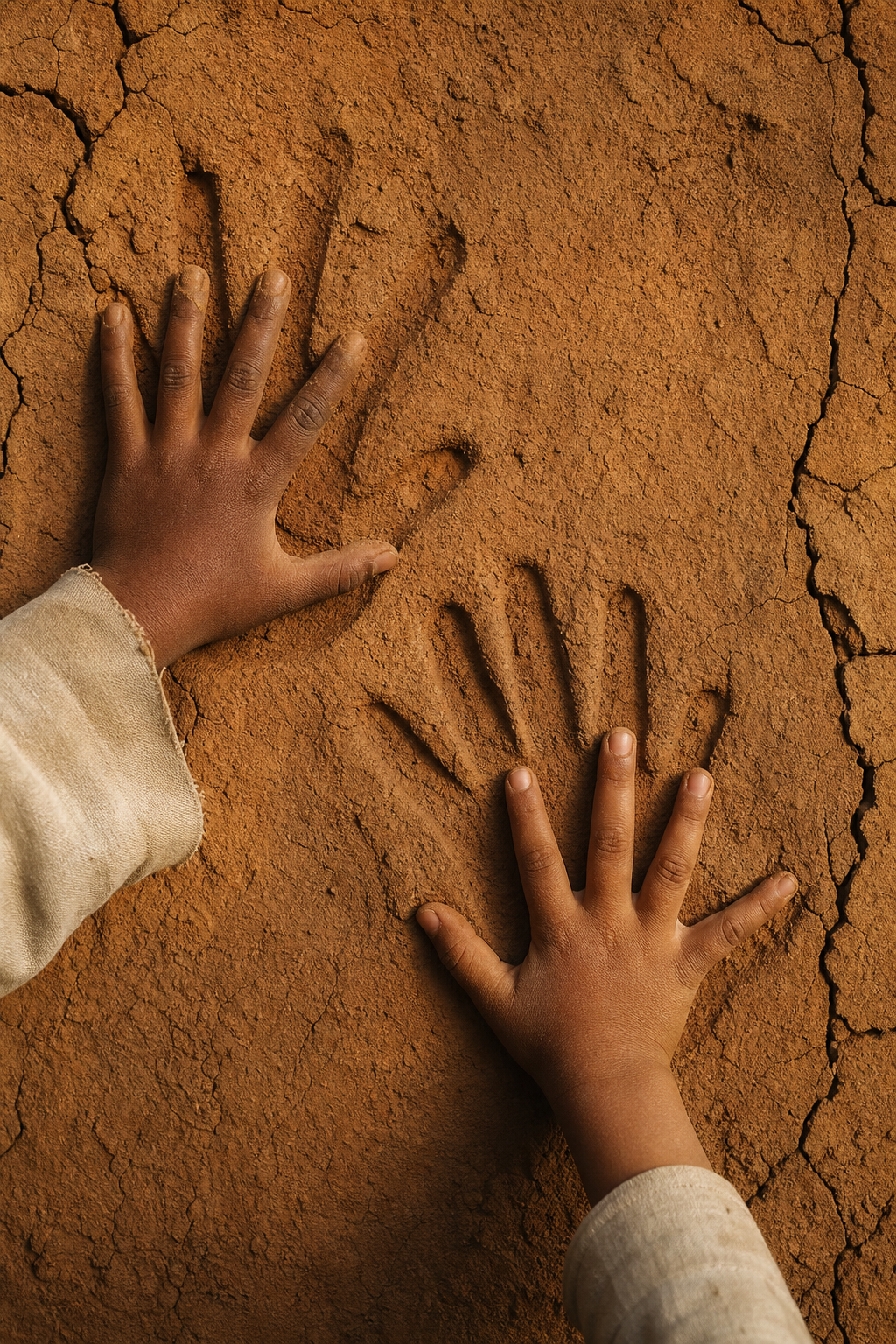
Earthen and cork textures, hand-pressed and hardened

C// — Yoshitoki Iijima

What does a space remember? 空间记得什么? 空間は何を覚えているのか?

Cork peeled from bark that grows back. Earth hardened without a drop of adhesive. Two materials almost everyone walks past — and neither leaves a scar.

软木剥自能再生的树皮。生土不加一滴粘合剂便凝固成形。两种几乎人人都会路过的材料——却都不留伤疤。

木を切らずに再生する樹皮から剥がれるコルク。接着剤を一滴も使わず固まる生土。誰もが見過ごす二つの素材——どちらも傷跡を残さない。

scroll向下滚动スクロール

The story故事物語

In Shanghai, children pressed their fingers into a wet earthen wall. When the exhibition came down, they all said the same thing: please don't tear it down.

在上海,孩子们把手指按进湿润的泥墙。展览拆除时,他们都说了同一句话:请不要拆掉它。

上海で、子どもたちは濡れた土壁に指を押し当てた。展示が撤去される時、みな同じ言葉を口にした。どうか壊さないでください、と。

A scratch on something you bought is damage. A scratch on something you made is a story. 买来的东西上的划痕是损伤,自己做的东西上的划痕是故事。 買ったものの傷は損傷である。自分で作ったものの傷は物語になる。

Yoshitoki Iijima builds with two materials almost everyone walks past — cork, peeled from bark that grows back so the tree is never cut, and raw earth, hardened without a drop of adhesive by a technique more than a thousand years old. Both outlast us. Neither leaves a scar. This conversation is about designing for the second kind of scratch.

饭岛由知用两种几乎人人都会路过却视而不见的材料创作——软木,剥自能够再生的树皮,树木因此从不被砍伐;还有生土,凭一种超过千年历史的技艺夯实成形,不加一滴粘合剂。两者都比我们更长久,两者都不留伤疤。这场对话,就是关于如何为第二种划痕而设计。

飯島由知は、誰もが見過ごしてしまうような二つの素材で作品を作る——木を切らずに再生する樹皮から剥がれるコルク、そして接着剤を一滴も使わず、千年以上の歴史を持つ技法で固められる生土である。どちらも私たちより長く残り、どちらも傷跡を残さない。この対話は、後者の傷のためにデザインすることについてのものだ。

Cork blocks, cut and stacked

01 — Cork软木コルク

Bark that grows back会再生的树皮再生する樹皮

Cork is peeled from bark that regrows — the tree is never cut. Every block carries the years and breath of a living tree still standing. Cut, stacked, carved, these blocks become something you can touch and remember: a wooden architecture with no felled trunk behind it.

软木由树皮剥离而成——树皮会再生,树从不被砍倒。每一块软木砖都保留着一棵仍在生长的树所经历的岁月与呼吸。这些木块被切割、叠放、雕刻,成为可以被触摸、被记住的建筑——背后没有一棵被砍倒的树。

コルクは樹皮から剥がされる——木は切られることなく、樹皮はまた生えてくる。一つひとつのブロックには、今も立っている木が過ごした時間と呼吸が刻まれている。切り出され、積み重ねられ、彫られたそれらは、触れて記憶できる建築になる——その背後に伐られた幹はない。

Earthen sculptures, balls and tubes hardened without adhesive

02 — Dirt泥土

Soil that keeps a record记录一切的泥土記録を刻む土

The sculptures, the exhibit, the balls and tubes that make up the installation are all raw earth, hand-hardened by a technique more than a thousand years old — no adhesive, not a drop. Soil holds the accumulated record of everything that has ever grown in it; it remembers before we ever arrive.

雕塑、展品,以及构成装置的球体与管状结构,皆由生土手工夯筑而成——这项技艺已有超过千年历史,不加一滴粘合剂。泥土保存着曾在其中生长过的一切的印记;早在我们到来之前,它就已经在记忆了。

彫刻、展示物、そしてインスタレーションを構成する球体やチューブは、すべて手作業で固められた生土からできている——千年以上前からある技法で、接着剤は一滴も使わない。土はそこに育ったすべてのものの記録を保っている。私たちが来る前から、すでに覚えているのだ。

Children building with cork and earth in a workshop

Workshops工作坊ワークショップ

A pathway, not instructions一条通道,而非指令指示ではなく、道筋を

Iijima runs workshops with children using both materials — cork blocks to stack and carve, wet earth to press and shape. There's no lesson in what to build. Just a pathway for whatever their imagination decides, the same impulse everyone had as a child: picture something, then simply make it.

饭岛与孩子们一起举办软木与泥土的工作坊——堆叠雕刻软木块,按压塑形湿泥。没有该做什么的规定,只有一条通道,任由他们的想象力决定去向——正是每个人小时候都有过的冲动:想象一件事物,然后动手把它建起来。

飯島は子どもたちと共に、コルクと土の素材を使ったワークショップを開いている——コルクブロックを積み重ねて彫り、濡れた土を押して形づくる。何を作るべきかという指導はない。あるのは、想像したことを自由に形にできる道筋だけ——それは誰もが子どもの頃に持っていた衝動と同じもの、何かを思い描き、ただそれを作ってみることだ。

Just as cork carries the memory of the tree it came from, and soil holds everything that has ever grown in it, a space, in his view, should never truly be empty. It — and we — should remember what was built there, who passed through, and what was felt.

正如软木承载着它曾属于的那棵树的记忆,泥土也保存着曾在其中生长过的一切的印记——在他看来,一个空间永远不该真正空着。它——和我们——应该记得曾在那里建造过什么,谁曾经过,感受过什么。

コルクがかつて生きていた木の記憶を運び、土がそこに育ったすべての記録を保つように、空間もまた、彼の考えでは、決して本当に空っぽであってはならない。空間は——そして私たちも——そこで何が作られ、誰が通り過ぎ、何が感じられたかを覚えているべきなのだ。

Before you build动手之前作る前に

Reinvigorating the creativity everyone had as a child — the desire to imagine something, and just build it. 唤回每个人儿时曾有过的创造力——想象一件事物,然后动手把它建起来的冲动。 誰もが子どもの頃に持っていた創造性を呼び覚ます——何かを想像し、ただそれを作ってみたいという衝動。

Watch the conversation观看对话対話を見る

Cork, dirt, and what stays软木、泥土,与留下的东西コルク、土、そして残るもの

In conversation对话中対話の中で

Two stations, one question两个站点,一个问题二つのステーション、一つの問い

Me

My own station, on what a place carries.

我的站点,关于一个地方所承载的东西。

私自身のステーション、場所が何を運ぶかについて。

earthlinc.earth/station/what-a-place-carries

Yoshitoki Iijima — KUMO

Iijima's studio, KUMO Design.

饭岛的工作室,KUMO 设计。

飯島のスタジオ、KUMOデザイン。

kumodesign.cn