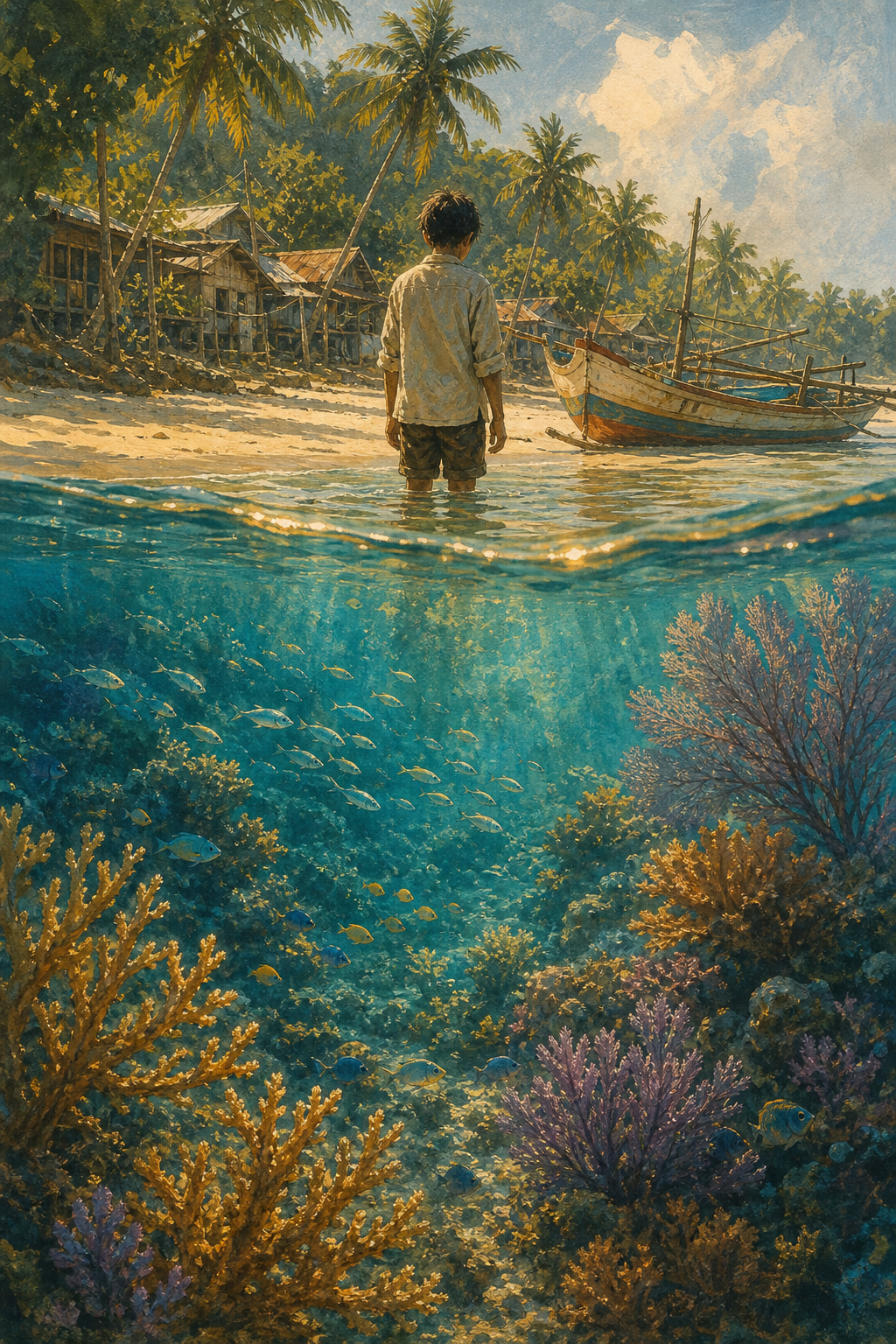
In 1973, Angel C. Alcala helped establish the Sumilon Island Marine Reserve in the Philippines — the first of its kind in the country. But he didn't just establish it and move on. He kept returning. Watching. Recording. And asking: what actually happens when a community decides to protect its reef over the long term?
The answer came slowly, over decades, most visibly at Apo Island. Fish populations grew. Coral coverage recovered. And — crucially — the local fishing communities began to benefit more from a living reef than a depleted one. The sea, protected, gave back.
What Alcala built was not just a marine reserve. It was a case study in trust — between science and community, between a generation of fishers and the next, between human patience and ecological time. Apo Island became one of the most referenced community-managed marine reserves in the world.
His research question was never really about fish. It was about whether people and nature could repair themselves together — if given enough time, and enough care.