Earth LinC · A Great Question · Africa
Wangari
Maathai
1940 – 2011 · Kenya
"Can restoring nature also restore people?"
修复土地,是否也能修复人的生活与尊严?
Read
Earth LinC · A Great Question · Africa
"Can restoring nature also restore people?"
修复土地,是否也能修复人的生活与尊严?
The question she really asked
She didn't start with climate change.
She started with rural women in Kenya — and three quiet, urgent questions.
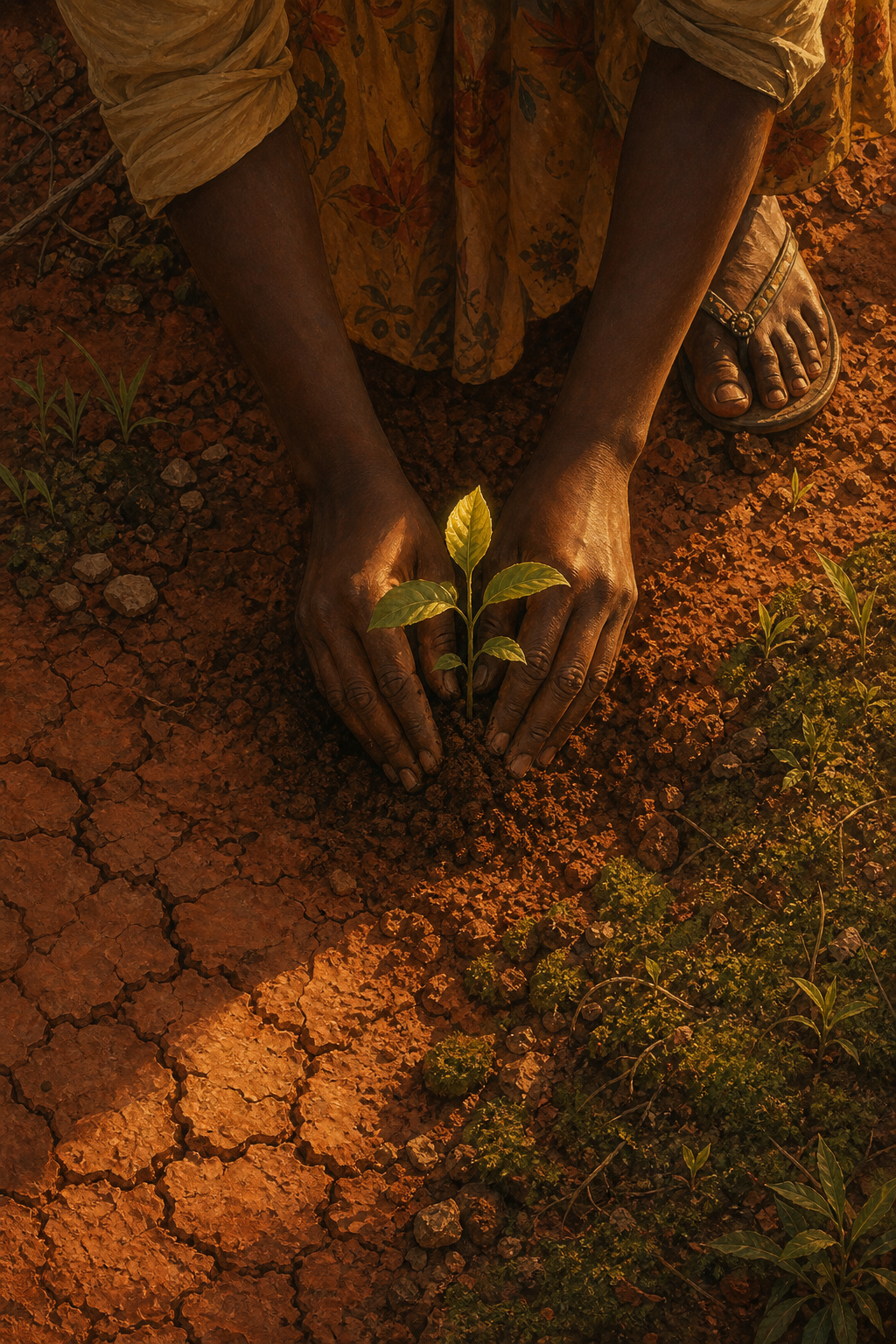
In 1977, Wangari Maathai founded the Green Belt Movement — a response not to policy, but to what she heard when she listened to women in village after village across Kenya. 1977年,她创立绿带运动。起点,是倾听。
What began as a tree-planting initiative became something far larger: a living structure joining ecological restoration, women's empowerment, community governance, and the reclamation of human dignity. 从种树,到赋权妇女、社区治理、生态修复——几十年,一个问题。
In 2004, she became the first African woman — and first environmentalist — to receive the Nobel Peace Prize.
She was not studying trees. She was studying the severed connection between people and land — and asking whether that connection could be rebuilt. 她真正研究的,是人与土地之间失去的连接,能否重新建立?
Millions of trees were planted across Africa. But what Maathai planted first was the question itself — one that grew roots long before any seedling did.
She taught us: the act of planting is also an act of agency. A woman who plants a tree is reclaiming her relationship to land, to community, to the future. 种一棵树的女人,也是在重新拥有她与土地、与未来的关系。
What she heard first
She didn't ask: how do we plant more trees?
She asked what the women were already telling her.
她没有问"如何种更多树"。她在听。
"Why are the rivers growing smaller every year?"
"Why do women walk farther each season to collect firewood?"
"Why is the land growing poorer when people need it most?"
The arc she traced
She didn't begin with resources.
She began with the relationship between people and land. 🌱
她们都不是从资源开始,而是从人与土地的关系开始。
Further reading
Roots run deeper when you follow them.
Wangari Maathai — Official Biography
Green Belt Movement
The Green Belt Movement
Official website · greenbeltmovement.org
Nobel Peace Prize 2004
Official Nobel reference · nobelprize.org
Encyclopaedia Britannica — Wangari Maathai
britannica.com
Unbowed: A Memoir
Wangari Maathai · Penguin Random House
Replenishing the Earth
Wangari Maathai · Penguin Random House
The Challenge for Africa
Wangari Maathai · Penguin Random House
Taking Root: The Vision of Wangari Maathai
Documentary film · takingrootfilm.com
Green Belt Movement History
greenbeltmovement.org
Remembering Wangari Maathai
United Nations Environment Programme · unep.org