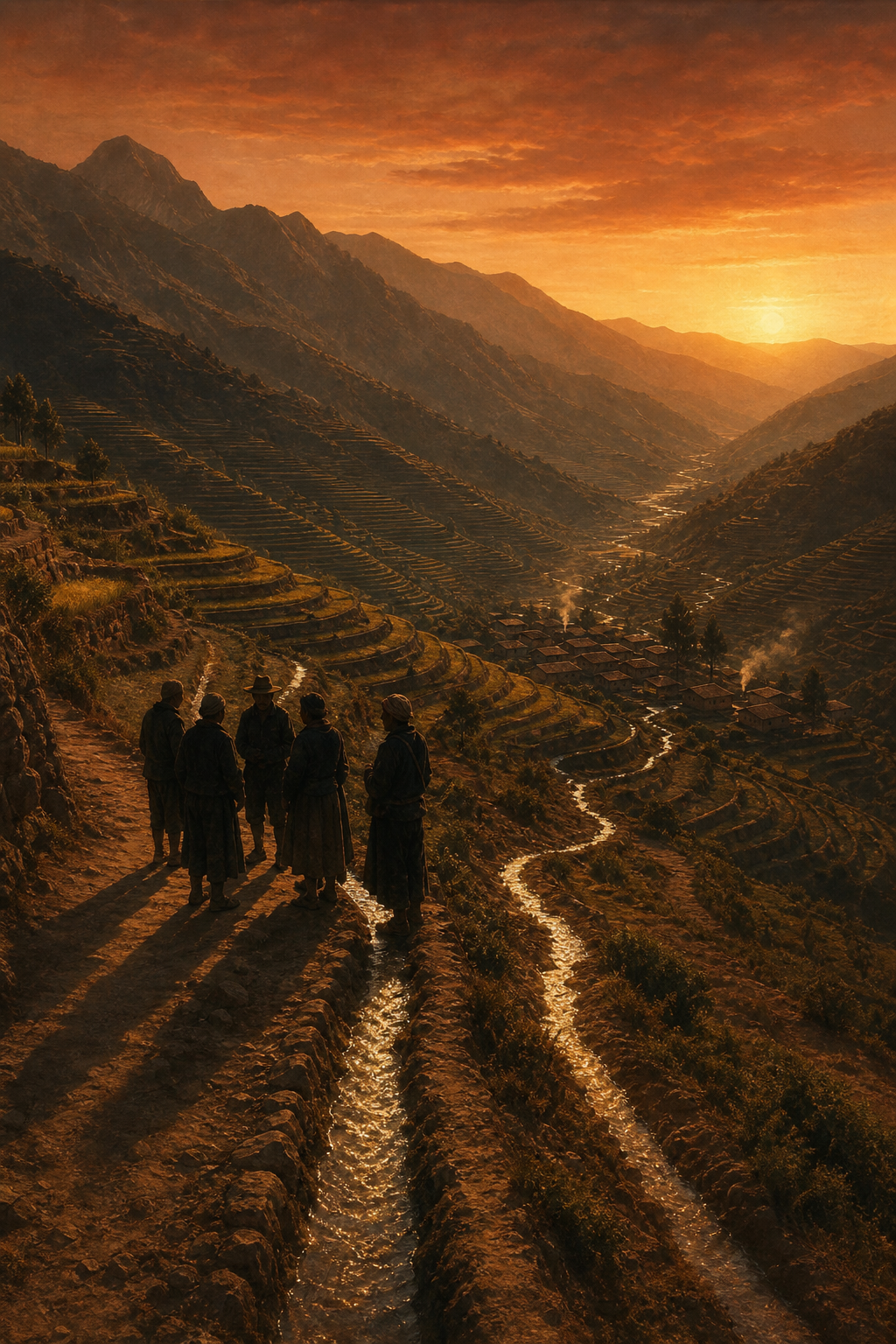
The living commons — forests, water, fields — that Elinor Ostrom spent decades reading

People Who Keep Great Questions Alive

Can communities
govern shared
resources?

A question she carried for decades — through forests, across rivers, into villages — and never let go of.

Elinor Ostrom

她研究了几十年。
森林。渔场。灌溉系统。

她一直在追问:
市场和政府之外,人类还有第三种组织方式吗?

After decades of fieldwork, she won the Nobel Prize. But what mattered more was this: she kept the question alive.

很多成功的社区,不是因为人特别善良。
而是因为他们建立了:
能够持续产生信任的制度。

— The deepest thing she found in forty years of fieldwork wasn't heroism. It was institutional design.

"Beyond Markets and States: Polycentric Governance of Complex Economic Systems."
Elinor Ostrom — Nobel Lecture, 2009

The Commons She Read

Switzerland

Törbel 村庄

共同牧场 · Centuries of Governance

为什么这里没有发生"公地悲剧"?
Why no tragedy here?

Japan

Hirano, Nagaike, Yamanoka

村庄森林 · Community Forests

几个世纪共同管理森林。
Why were these forests never clear-cut?

Nepal

Farmer-Managed Irrigation

灌溉系统 · FMIS Database

她爬山。过河。访问农民。记录。长期跟踪。
"Nobel Prize belongs to the farmers of Nepal."

Spain

Valencia Huerta

灌溉协调 · Water Governance

运行数百年。
Why can local people coordinate water long-term?

Philippines

Zanjera System

灌溉合作 · Collective Action

没有中央控制的情况下,
why do these people cooperate?

"Nobel Prize belongs to the farmers of Nepal."
诺贝尔奖属于尼泊尔农民

她爬山。过河。访问农民。

记录灌溉系统。建立数据库。长期跟踪。

这不是在做学术。这是在认真阅读人类组织自己的方式。

She didn't theorize from a distance. She went to where the water actually flowed — and listened to the people who managed it together.

Ostrom's Thinking Loop

Reading Earth · Reading People · Reading Relationships

Go to the place She went into the field — rivers, mountains, irrigation channels — not to extract data but to understand the system living there.
Ask the same question Across five countries, across centuries of local governance, she kept returning to the same precise, patient question.
Build the database She didn't trust one case or one story. She built long-term records — letting patterns emerge across time.
Stay in the question 不是答案。是 Loop。她最重要的遗产不是结论,而是一种持续追问的方式。

诺贝尔奖委员会的总结

她证明了许多社区能够通过自组织的制度长期管理森林、渔业、水资源和草场,
而不一定依赖私有化或中央集权管理。

她一生都在追问

What becomes possible
when people are trusted
to govern together?

当人们被赋予共同治理的责任与信任时,
会发生什么?

This question didn't die with her. We are part of it now — every community, every commons, every act of trusting people to govern themselves.

References & Further Learning

Nobel Prize

Elinor Ostrom — Nobel Biography

为何获得 2009 年诺贝尔经济学奖。Commons Governance 的核心贡献。

nobelprize.org →

Book · 1990

Governing the Commons

她最重要的著作。提出著名的八条 Commons Design Principles。
Can people govern shared resources without privatization or central control?

Read at Cambridge →

Lecture · Nobel 2009

Beyond Markets and States

她一生思想最完整的总结。Polycentric Systems — 世界并不只有 Market 和 State 两种选择。

Read Nobel Lecture →

Field Study

Nepal Irrigation Systems

她真的走进村庄。过河。爬山。和农民聊天。持续几十年建立 FMIS Database。Earth LinC 的精神在这里。

Nepal Perspective →

Overview

Commons Governance Overview

包含瑞士 Törbel 牧场、日本村庄森林、菲律宾灌溉系统、西班牙 Huerta 以及她总结的八条长期治理原则。

Full Overview →

The best learning here is that we are part of it — to keep a great question alive. 我们也是这个问题的一部分。