Earth LinC · Cognitive Runtime · v1.0
How Does Insight Begin?
一个洞察,是如何开始的?
Earth LinC · Cognitive Runtime · v1.0
一个洞察,是如何开始的?
Opening · 开始
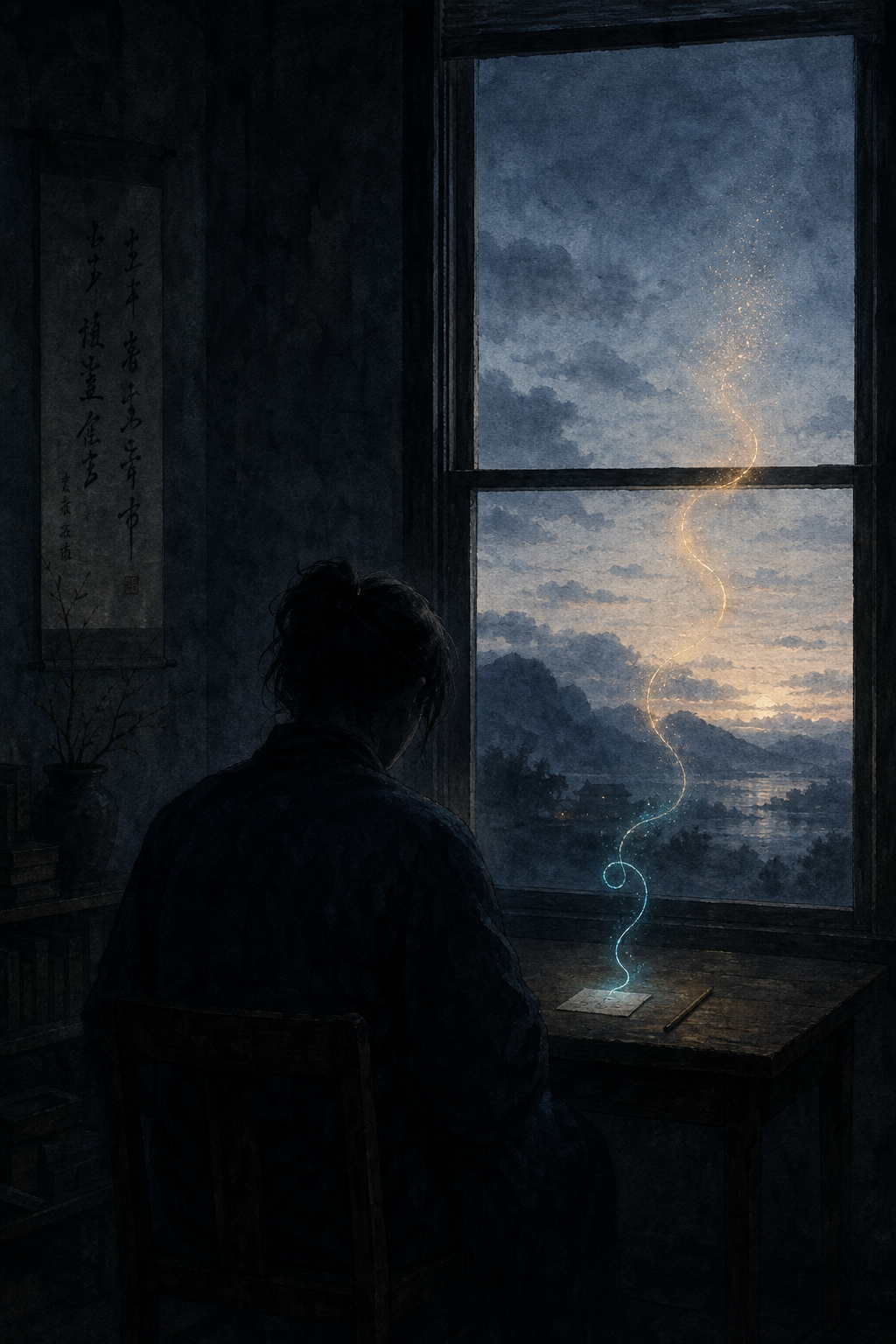
Most insights do not begin with thinking.
They begin with something that quietly touches us.
A sentence. A memory. A person. A place.
We cannot explain it yet.
But we cannot let it go.
Then, over hours, days, or even years, a small resonance grows into a question, a pattern, a language, and eventually, something that can flow beyond ourselves.
Perhaps this is how insight begins.
大多数洞察并非始于思考。
它们始于某个东西轻轻碰到了我们。
一句话。一段记忆。一个人。一个地方。
我们还无法解释它。
却也无法放下它。
随后,在数小时、数天,甚至数年的时间里,
那个微小的共鸣慢慢长成一个问题,一个模式,
一种语言,最终成为一个能够流向他人的洞察。
也许,这就是洞察开始的地方。
Purpose · 目的
A resonance becomes an insight when it finds a language that allows it to flow beyond the person who first felt it.
当一个共鸣找到自己的语言,
并开始流向最初感受到它的人之外时,
它就成为了洞察。
Because what you discovered is not just an inspiration.
It is a Cognitive Runtime — a repeatable pattern for how understanding emerges.
因为你发现的其实不是一个灵感。而是一个认知运行时(Cognitive Runtime)。
Step 01
"What made me stop?"
Not: What is important?
But: What touched me?
Most people skip this. Scientists do not.
Excellent researchers do not seek answers first — they identify: which sentence made me stop?
大多数人跳过这一层。科学家不会。
优秀的研究者不是先寻找答案,而是先识别:哪一句话让我停下来?
Step 02
"Do nothing. Let the question travel with you."
Walk. Sleep. Shower. Commute.
Information becomes knowledge immediately.
Insight does not.
Insight requires incubation.
Information ≠ Insight
信息可以立即获得。洞察需要发酵。
散步。睡觉。洗澡。坐车。
不是偷懒。是在给大脑时间重组。
很多突破都发生在这里。
Step 03 — The most important step · 这是整个系统最重要的一步
"Compress. From many thoughts → one sentence."
Example: "Hometown is not where a person comes from."
GOOD THINKERS
Compress. 压缩。
AVERAGE THINKERS
Expand. 扩展。
Step 04
"Has anyone seen this before?"
Science explains discoveries.
It does not replace discoveries.
经验↓科学 · 故事↓规律 · 感受↓模式
科学帮助解释发现。而不是替代发现。
Step 05
"Can it flow?"
A thought becomes knowledge when understood.
A thought becomes insight when shared.
一个想法被理解,成为知识。
一个想法被传播,成为洞察。
Not just flow — it is the test of understanding.
真正的理解有一个测试:Can it be shared?
共鸣 → 困惑 → 寻找名字 → 寻找规律 → 形成Flow → 流向他人
How a real resonance slowly grows into shareable insight.
一个真实的共鸣,如何慢慢长成一个可以流向他人的洞察。
A Real Process · 真实的思维轨迹
Yesterday, a friend shared an article. One passage touched me — but the rest didn't. The images were low resolution and disrupted my feeling. So I didn't open my laptop.
Yet I kept writing, quietly — inside. All night, smoothing it out in my mind. Then in the morning I took my small card and wrote: "What is your source code?" and "Words flow through my mind."
Simple. Clear. Then I began talking with Copilot — do scientists think this way too? And I found the feeling. Then I came to Earth LinC to create.
昨天朋友分享了一篇文章,有一段很好,其它都不是我想要的。我思考了一个晚上,虽然没有打开电脑,其实我们不断地书写,让自己通顺——知道早上,我用小卡片写下来 what is your source code,和 words flows through my mind。我感觉简单而通顺,然后我开始和 Copilot 聊天,是不是科学家也这样想……然后,我找到了感觉,我在 Earth LinC 上去创作。
Breakthrough ideas rarely start with answers. They start with better questions.
伟大的突破很少从答案开始。它们从更好的问题开始。
If I had an hour to solve a problem, I would spend 55 minutes finding the right question.
如果给我一个小时解决问题,我会花55分钟找到正确的问题。
The important thing is not to stop questioning.
重要的事情不是得到答案,而是不要停止提问。
I would rather have questions that can't be answered than answers that can't be questioned.
与其拥有不能被完全回答的问题,我更愿意拥有能够被质疑的答案。
The first principle is that you must not fool yourself — and you are the easiest person to fool.
不要欺骗自己,而自己正是最容易被欺骗的人。
MIT Sloan · Hal Gregersen
Gregersen's research across twenty years shows that when innovative teams are stuck, forbidding answers and allowing only questions — for just a few minutes — causes 85% of teams to redefine the problem entirely. In the AI era, asking better questions may be more important than having answers.
格雷格森二十多年的研究发现:当创新团队陷入困境时,不允许回答、只允许提问,结果85%的团队重新定义了问题。在AI时代,提出好问题可能比拥有答案更重要。
Writing is thinking.
写作不是记录思考。
写作本身就是思考。
Because the resonance, at its beginning, is essentially an unnamed state. The brain is naturally averse to incompleteness — what psychology calls Need for Closure. When you feel: "I know there is something here, but I cannot say it" — the brain will keep computing, connecting, reconfiguring, seeking pattern. Until it finds language.
因为共鸣本质上是一种"未命名状态"。大脑天生讨厌未完成。心理学叫:Need for Closure — 认知需要闭环。当你感受到"我知道这里有东西,但我说不出来",大脑就会持续计算,连接,重组,寻找模式。直到找到语言。你突然发现:原来自己一直在寻找的是 Source Code — 不是故乡,而是更大的东西。
The source code link · 延伸阅读
A hometown is not where a person comes from.
It is where their neural network first learned what matters.
家乡不是一个人来自哪里。家乡是他的大脑第一次学会重要的地方。
What Is Your Source Code? →Final Question · 最终的问题
Perhaps it begins the moment something touches us and refuses to leave.
也许,
当某个东西碰到了我们,
并拒绝离开的时候,
洞察就已经开始了。
Practice · 练习
Feel it. Hold it. Name it. Share it.
感觉它。陪伴它。命名它。分享它。
Record your reading. Make it shareable.
因为这次记录的不只是森林、河流、故乡。
而是一个真实的共鸣,如何慢慢长成一个可以流向他人的洞察。
References for Sharing & Further Study · 参考资料
01 — Memory & Identity
Place and the Self: An Autobiographical Memory Synthesis
Ivan Knez · APA PsycNet
Place → Memory → Self · 地方如何构建身份认同
02 — Brain & Place
Key Neurons Found to Predict Memory of People and Places
University of Bonn · Neuroscience News
地点是记忆组织的重要索引
03 — Nobel Prize: Place Cells
John O'Keefe · May-Britt & Edvard Moser
Place Cells & Grid Cells · 大脑建立内部地图(Cognitive Map)
Nobel Prize in Physiology or Medicine 2014
04 — Self Across Time
Episodic Autobiographical Memory
Scientific Reports · Nature Portfolio
记忆不仅记录过去,也帮助建构未来的自己
05 — Asking Better Questions
Why Asking Better Questions May Be the Most Important Leadership Skill in the AI Era
Hal Gregersen · MIT Sloan Executive Education
突破往往不是从更好的答案开始
06 — Feynman
Richard Feynman · Nobel Prize in Physics 1965
宁愿拥有无法完全回答的问题,也不要拥有无法被质疑的答案
Official Site →07 — Einstein & Questioning
A More Beautiful Question — Einstein and Questioning
重要的事情不是得到答案,而是不要停止提问
A More Beautiful Question →08 — Long-Term Observation
Walden Pond (Thoreau) · Broadbalk Experiment (Rothamsted 1843–)
Same place. Returning observer. Readable records.
持续观察同一个地方几十年,会看到什么?
This article began with a simple sharing from a lifelong observer of his hometown. What emerged was not merely a story about a place, but a reflection on memory, identity, and the invisible source code that quietly shapes a life. Thank you for the openness to share.
这次研究的是:阅读一个共鸣。一个共鸣最开始非常小——像种子,像河水,像神经元之间微弱的放电。感谢你的分享与共同研究。
Earth LinC · Station
We are practice — ordinary people turning real-world inputs into shareable insight, one resonance at a time.
一个普通人如何把真实世界输入,慢慢长成可分享洞察的运行协议。