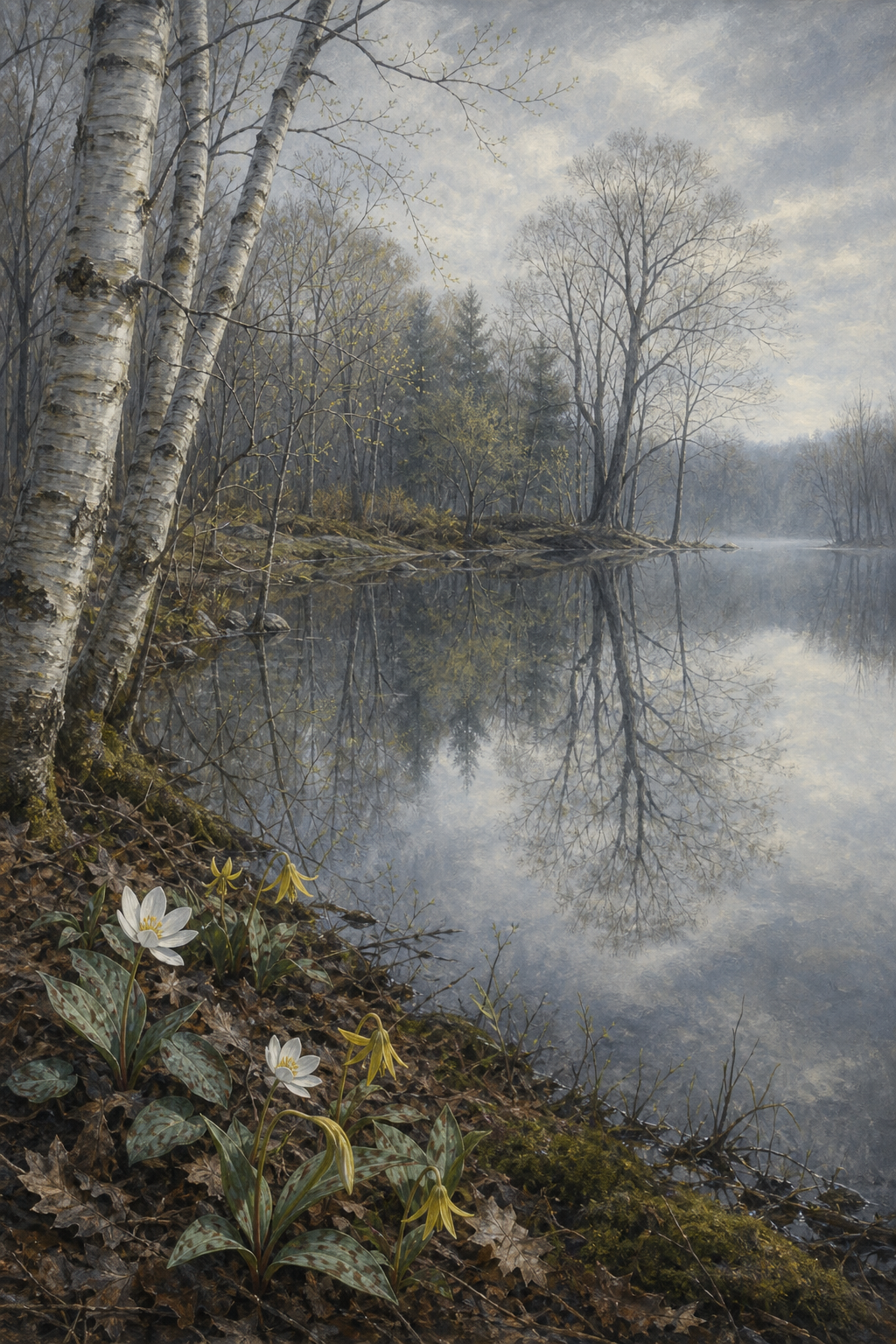
Concord, Massachusetts — Walden Pond across the seasons, a layered living archive.

Reading a Place — Concord, Massachusetts

The
Returning
Readers

Not because the place stayed the same.
Because every generation arrived with a new question.

42°27′N 71°21′W  ·  Concord, Massachusetts
A place continuously re-read across generations — each reader arriving to find what the last one could not yet see. The Returning Readers of Concord

Five Voices Who Made Concord Readable

Each arrived at the same landscape with a different instrument — journal, philosophy, story, science. Each left it richer for the next.

Henry David Thoreau Naturalist · 1817–1862

The first systematic reader of Concord's seasons — his meticulous journals of flowering dates and bird arrivals became the unexpected foundation for 21st-century climate science.

Walden Woods Project ↗
Walden Pond Place · Living Archive

A small, quiet pond that became one of the most continuously read places in environmental thought — proof that depth of observation matters more than scale of place.

Visit Walden Pond ↗
Ralph Waldo Emerson Philosopher · 1803–1882

Emerson saw in Concord's nature a pathway to universal truths, framing the landscape as a living text — teaching a generation to read the world rather than merely see it.

Emerson Central ↗
Louisa May Alcott Storyteller · 1832–1888

Alcott read Concord's everyday human life with novelist precision, turning the town's domestic rhythms into stories carried around the world — the social archive beside the natural one.

Orchard House ↗
Richard Primack Ecologist · Boston University

Primack returned to the same place — Concord — and connected 170 years of observations, turning Thoreau's private journal into a landmark dataset on climate-driven ecological change.

Primack Lab, BU ↗
758 Species recorded
13,441 Observations logged
170 Years of continuity
~7 days Earlier flowering now

A Place Continuously Read Across Generations

Ten discoveries that emerged only because someone kept returning — and reading what the last reader left behind.

01

A solitary walk becomes climate science, 170 years later

In 1851, Thoreau simply recorded when flowers opened and birds returned — with no idea these notes would become a global climate baseline. Richard Primack's team later used them to study warming's effects on plant and bird phenology.

Insight

Future value is often invisible when a record is created.

hmnh.harvard.edu · academic.oup.com

02

Spring arrives a week earlier than Thoreau knew

Primack's team found that many of Concord's plants now flower roughly a week earlier on average than in Thoreau's era — a shift invisible without the long record to compare against.

Insight

A satellite can see that spring came early this year. Only a long record can reveal whether that is anomaly or trend.

jstor.org (multiple)

03

Trees outrun wildflowers

Researchers expected plants to shift together. Instead they found trees leafing out nearly two weeks earlier, while wildflowers advanced only one week — the living world does not move as a single system.

Insight

Not all life responds to climate change at the same speed.

jstor.org

04

Flowers and trees fall out of sync

Spring wildflowers depend on light that reaches the forest floor before trees leaf out. As trees leaf earlier, the wildflowers' light window shrinks — an ecological relationship quietly breaking apart.

Insight

Climate change alters not just timing but relationships — the grammar of the ecosystem, not only its words.

jstor.org

05

Some flowers Thoreau saw have disappeared

Several wildflower species recorded in Thoreau's journals no longer appear in Concord at all — the long record reveals not just change, but loss.

Insight

Long-term records do not only observe change. They bear witness to what is gone.

jstor.org · academic.oup.com

06

Birds could not keep up with plants

Plants flower earlier; migratory birds change arrival times more slowly. Birds return to find that the insect and plant peaks they depend on have already passed.

Insight

Systemic risk often comes not from one thing changing, but from different parts of a system changing at different speeds.

jstor.org · bioone.org

07

One place accumulates a dataset of 758 species

From Thoreau onward, naturalists, researchers, and ordinary residents kept adding observations — until Concord held 13,441 records spanning 1851 to 2020, across 758 species.

Insight

Great datasets often emerge from the long, patient accumulation of ordinary people.

hmnh.harvard.edu

08

From Thoreau's journal to eBird

Researchers connected Thoreau's handwritten bird records directly to modern eBird data — citizen science across two centuries, the same impulse now digitised.

Insight

Citizen science is not new. It has simply been given new tools.

bioone.org

09

Concord becomes a laboratory for verifying climate change

The Concord Museum created an exhibition — Henry Thoreau and Climate Change — not because Concord is extraordinary, but because it has been continuously observed for long enough to make the evidence undeniable.

Insight

Not every place is remarkable. A place that has been watched long enough becomes remarkable.

concordmuseum.org

10

The most important story is the returning itself

The central discovery of Concord is not Thoreau, not Primack, not Walden Pond. It is that the same place was returned to and re-read, generation after generation — Thoreau read Concord, Primack read Thoreau, we read Primack, and the next generation continues.

Insight

A place continuously re-read becomes something no single reader could have made alone.

Where to Return

Places within Concord that reward a returning reader — each one opens differently depending on when you arrive and what question you carry.

Walden Pond

Walk the same path Thoreau walked in a different season. Notice the date the first wildflower appears. You are now part of the long record.

Year-round

Concord Museum

See Thoreau's actual writing desk and the exhibition on Henry Thoreau and Climate Change — where journal meets data.

Indoor · All seasons

Sleepy Hollow Cemetery

Authors' Ridge holds Thoreau, Emerson, Alcott, and Hawthorne within a few steps — four readers of the same town, returned to it permanently.

Pilgrimage point

Orchard House

Louisa May Alcott's home — the social archive beside the natural one. Where the human texture of Concord life was recorded into story.

Historic house

Great Meadows Wildlife Refuge

A wetland Thoreau knew. A place where, today, the bird arrival dates he recorded can be compared against what eBird shows this week.

Birding · Spring & Fall

The Concord River Trail

Walk with Thoreau's A Week on the Concord and Merrimack Rivers in hand, or simply record what you see — you are contributing to the next layer of the archive.

Walking · Reading

Each Reader Made the Next Possible

Not every place is great.
A place that has been continuously watched,
returned to, and re-read — that place becomes great.