Earth LinC · Long-Term Knowledge
Readable
Records
How one forest or river becomes a 50-year classroom — and why the challenge is not observation, but memory.
Earth LinC · Long-Term Knowledge
How one forest or river becomes a 50-year classroom — and why the challenge is not observation, but memory.
Most environmental education teaches students how to observe.
A far rarer challenge is how to make observations survive.
Around the world, a small number of schools, research forests, river-monitoring networks, and citizen-science programs have been quietly working on this problem for decades.
Students graduate. Teachers retire. Volunteers leave.
Yet the forest remains. The river keeps flowing.
When observations are archived, compared, and passed forward, each new student no longer starts from zero. They begin where the previous observer stopped.
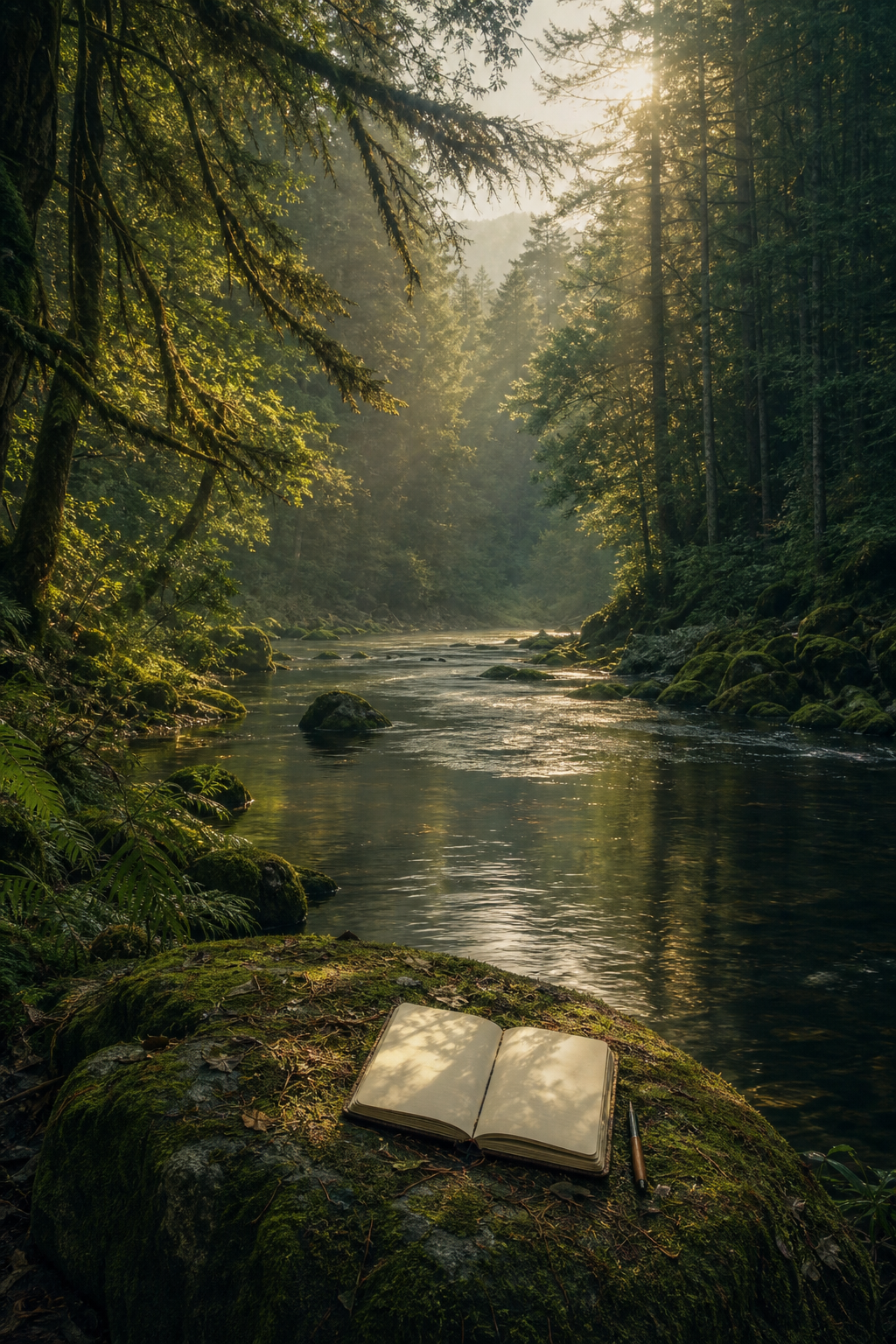
Over time, a forest becomes more than a forest. A river becomes more than a river. They become long-term classrooms where knowledge accumulates across generations.
The challenge is not simply observing change. It is designing records that allow future generations to continue reading the same place.
森林即课堂 · 森が教室になる
Since approximately 2001, students at Keio Futsubu School have entered the same forest every week — managing it, measuring it, and writing it down. What makes this exceptional is not the observation itself, but what happens to the notebooks.
EN — Students who later enroll at Keio University return to read the forest notes they submitted as middle schoolers. A living archive, read across a decade.
ZH — 升入大学的学生会拿出当年的森林笔记,在十年后再次阅读。记录跨越了学段,也跨越了自我。
JA — 大学に進んだ学生が、中学時代に提出した森林の記録を手に取る。記録は時を超えて読み継がれる。
The project maintains an explicit cross-cohort record system: records are not simply filed away, they are designed to be retrieved and compared by the next generation of observers.
→ Keio University / keio.ac.jpSince 2004, students across Massachusetts have been collecting ecological data in schoolyards and nearby forests, feeding observations into a shared long-term database — and publishing their findings in a student journal called Observations.
EN — This is closer to a long-term knowledge system than a nature class. Students produce data that survives them.
ZH — 这比普通的自然课更接近一个长期知识体系。学生产出的数据,比学生自己停留更久。
JA — これは自然観察の授業ではなく、長期的な知識システムに近い。学生が去っても、データは残り続ける。
Each new student no longer starts from zero — they begin where the previous observer stopped. 每位新学生不是从零出发,而是从上一位观察者停止的地方继续。 新しい学生はゼロから始めない。前の観察者が止まった場所から、続きを読み始める。
河流即档案 · 川が記録になる
Since 1995 — now in its 30th year — students across Minnesota have been monitoring the same rivers and tributaries season after season. The data crosses school boundaries and generations of students.
EN — 2025 marks River Watch's 30th year. A high school student today reads data collected before they were born.
ZH — 2025 年是 River Watch 的第 30 年。今天的高中生,读取的数据早于他们出生之前。
JA — 2025年はRiver Watch30周年。今日の高校生は、自分が生まれる前に集められたデータを読んでいる。
Each year students sample the same reaches, recording water temperature, dissolved oxygen, turbidity, macroinvertebrates, and bank conditions — then enter the results into a shared database that any future student can read.
Students monitor the same rivers every spring and fall, recording aquatic insects, river health indices, and pollution indicators. Annual reports from 2018, 2019, and 2021 are held alongside earlier records, allowing direct comparison across years.
EN — The most moving image: a high school student reading data left by students who graduated before them.
ZH — 最打动人的画面:一个高中生正在阅读前几届学生留下的数据。
JA — 最も心に響く光景:高校生が、卒業した先輩たちの残したデータを読んでいる。
Many Montana schools return to the same stream reach in spring and again in autumn, year after year. Long-term records are preserved at each site. Only by sampling the same location across seasons and years can a river's history be built.
EN — Continuous sampling at the same place is what turns monitoring into memory.
ZH — 在同一地点持续采样,才能建立河流的历史。
JA — 同じ場所に繰り返し訪れることで、はじめて川の歴史が積み上がる。
Students monitor the Bay Area's intertidal zones, sandy beaches, rocky shores, and coastal estuaries — tracking sea stars, crustaceans, and coastal change. More than a decade of continuous records have been accumulated.
EN — Before the sea star wasting disease outbreak, students had already accumulated years of baseline data. The archive made the change legible.
ZH — 海星疾病爆发之前,学生已经积累了多年的基准数据。记录使变化变得可读。
JA — ヒトデの病気が広がる前、学生たちはすでに数年分の基礎データを蓄積していた。記録があったからこそ、変化が読み取れた。
亚太地区的积累 · アジア太平洋の記録
Japan's national Monitoring Sites 1000 program fixes both place and method across rivers, wetlands, and coastal zones — with local schools, NPOs, and residents participating for more than two decades. The same site, the same protocol, different people across years: this is the core logic.
EN — Same Place → Same Method → Different People → Comparable Records.
ZH — 固定地点 → 固定协议 → 不同的人 → 可比较的记录。
JA — 同じ場所 → 同じ方法 → 異なる人々 → 比較可能な記録。
Across the Tamsui, Gaoping, and Dajia watersheds, elementary schools, middle schools, community colleges, and local NGOs participate together in monitoring water quality, riparian plants, fish, aquatic insects, and channel change.
EN — The goal is not research papers — it is community river stewardship built from layered school knowledge.
ZH — 目标不是科研论文,而是由学校知识积累而成的社区河川守护。
JA — 目標は学術論文ではなく、学校の知識の積み重ねから生まれる、地域の川の守り手を育てることだ。
Some Korean schools have sustained long-term stream monitoring programs through eco-clubs, recording stream temperature, water quality, frog populations, and insect diversity — and connecting these records to local government environmental databases.
EN — Student data → local database → long-term trend. A quiet architecture for generational knowledge.
ZH — 学生数据 → 地方数据库 → 长期趋势。一种安静的跨代知识架构。
JA — 学生データ → 地域データベース → 長期トレンド。静かな世代間知識の構造。
In Palawan — the Philippines' most celebrated mangrove and bay region — students return annually to fixed sample plots, measuring tree height, canopy cover, seedling count, coastal erosion, and typhoon damage, then comparing findings against historical records.
EN — The interesting thing is not the trees. It is that the same bay has been written into notebooks across different years — a coastal memory.
ZH — 最有意思的不是那些树。而是同一个海湾,在不同年代留下了不同的笔记。这是海岸记忆。
JA — 興味深いのは木ではない。同じ湾が、異なる年代にわたってノートに書き記されてきたことだ。これが海岸の記憶。
Collaboration spans Western Philippines University, Palawan State University, local NGOs, and community fishing organizations — making the archive a shared resource across institutions.
On this small protected island, students, volunteers, and youth researchers working with Marine Conservation Philippines monitor mangrove, coral, seagrass, and intertidal zones continuously. The program especially values field notebooks, mapping exercises, and annual reports as the medium of memory.
EN — Monitoring: mangroves · coral · seagrass · intertidal zones.
ZH — 监测对象:红树林 · 珊瑚 · 海草床 · 潮间带。
JA — 観察対象:マングローブ・サンゴ・海草床・干潟。
A small number of coastal high schools in Negros Oriental have moved beyond planting to active monitoring — recording planting locations, seedling survival rates, typhoon impacts, and tidal change. When new students return years later, they read the old maps and old records, then continue the investigation.
EN — This is a Restoration Archive. Coastal Memory in practice.
ZH — 这是生态修复档案。海岸记忆的具体实践。
JA — これは「修復アーカイブ」だ。海岸の記憶の、実際の形。
什么让记录可以被阅读 · 記録が読み継がれるために
Over time, a forest becomes more than a forest. A river becomes more than a river. They become long-term classrooms where knowledge accumulates across generations. 随着时间流逝,森林不只是森林,河流不只是河流。它们成为知识跨越世代积累的长期课堂。 やがて、森は森以上のものになる。川は川以上のものになる。それらは、知識が世代を超えて蓄積される長期的な教室になる。