 "62 ships → 20"
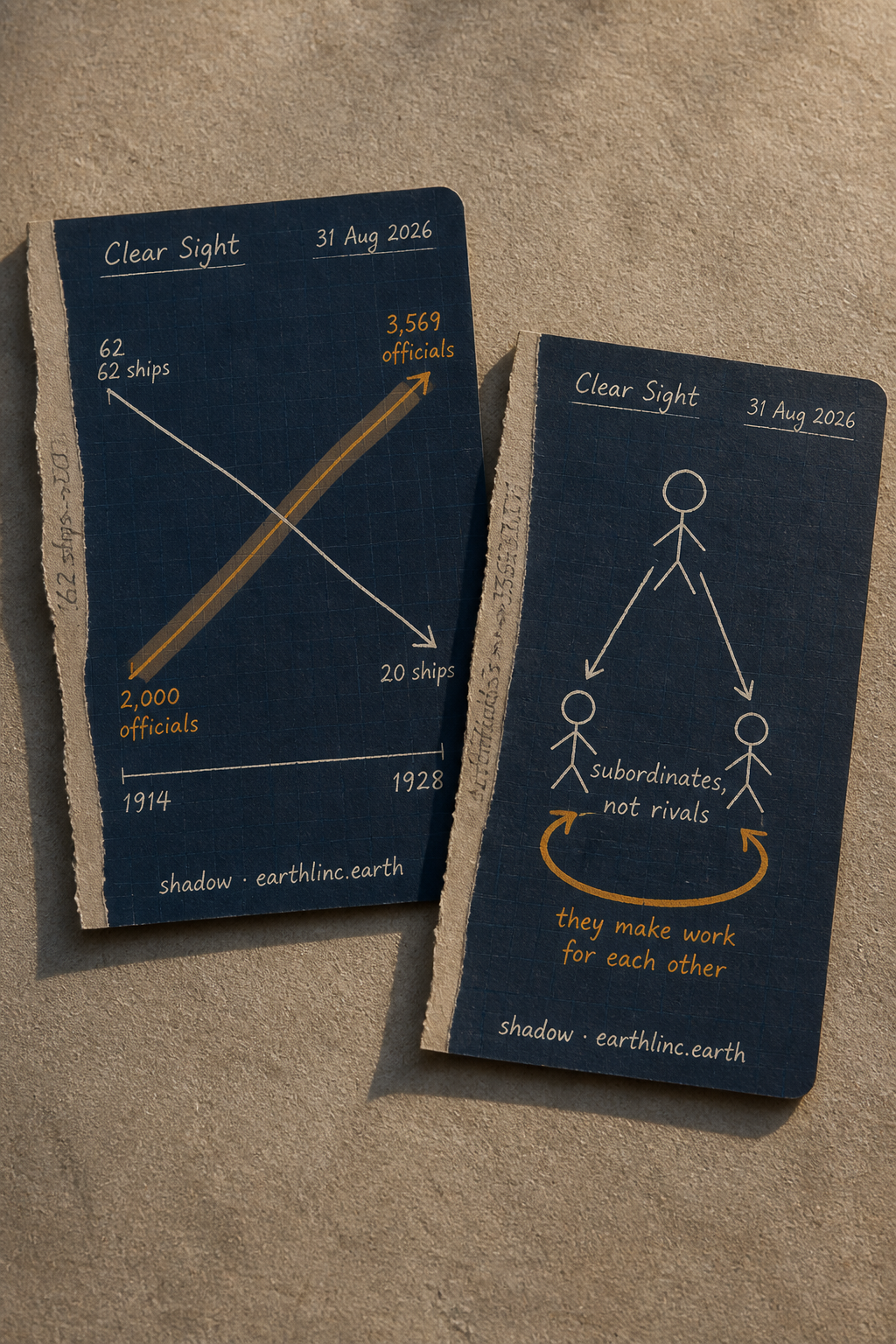 "officials 2,000 → 3,569"
 "a joke that got promoted"
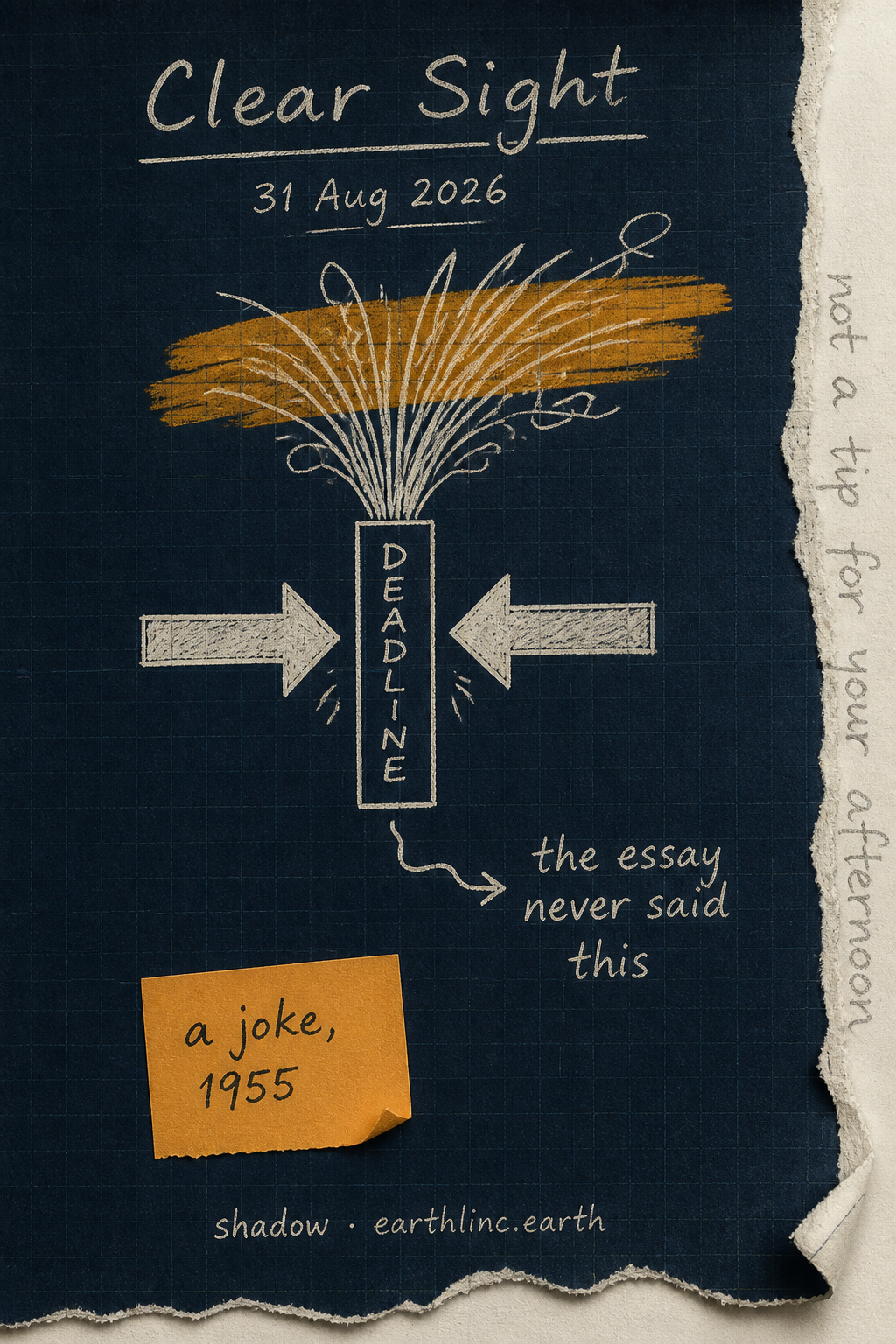
 "not a tip for your afternoon"
说白了就是:给它多少时间,事就用掉多少时间。
C. Northcote Parkinson, a British naval historian, published it unsigned in The Economist on 19 November 1955. A book followed in 1957.
一九五五年十一月十九日,一个英国海军史学者匿名发在《经济学人》上。他姓帕金森,当时在新加坡教书。
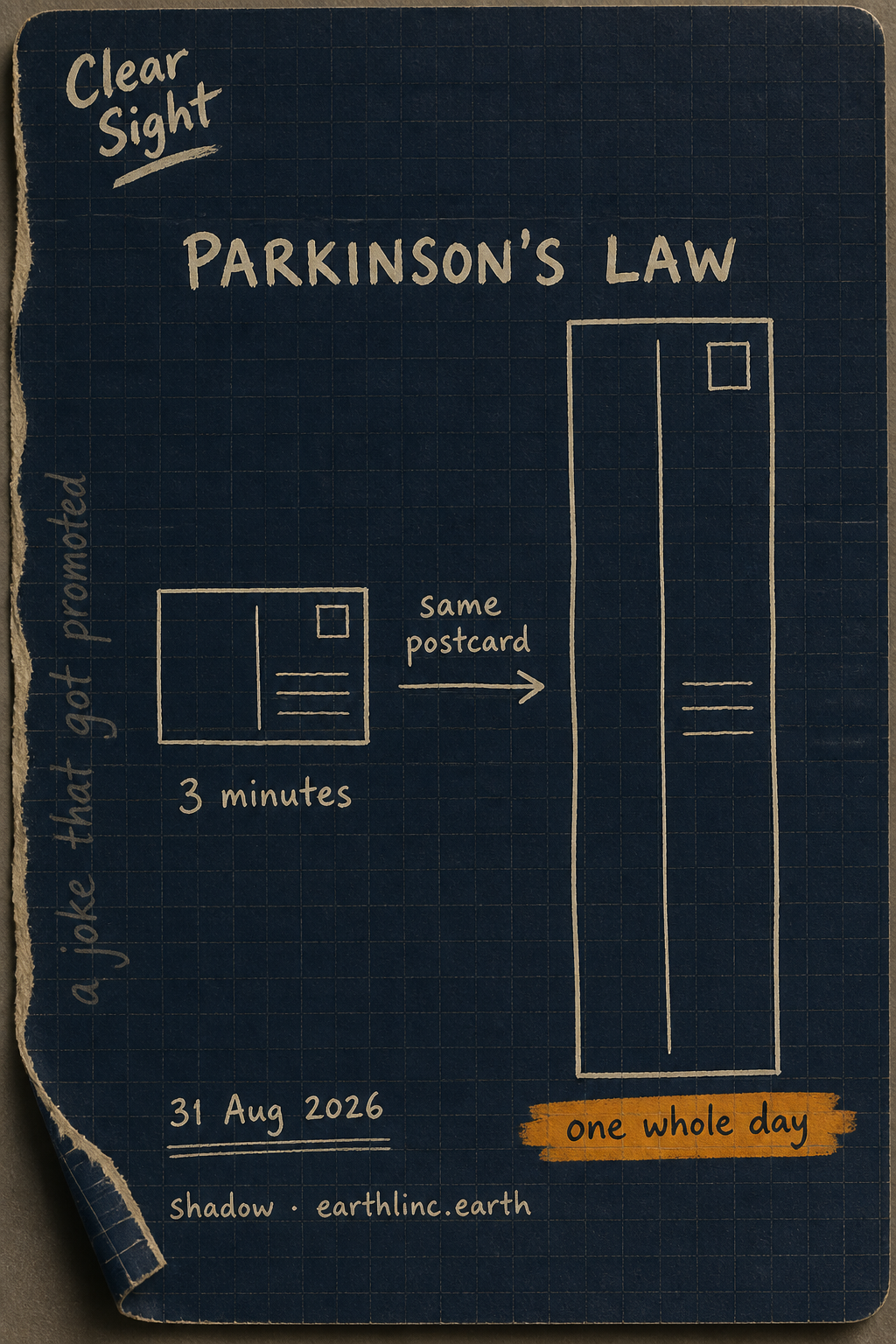
His own: an elderly lady of leisure spends a whole day writing and posting one postcard. A busy man posts it in three minutes.
他自己举的例子:一位闲着的老太太,写一张明信片再寄出去,能花掉一整天。忙人三分钟就办了。
It is satire. The formula in it — staff growing between 5.17 and 6.56 percent a year, "irrespective of any variation in the amount of work (if any) to be done" — is mock arithmetic, a joke about sounding scientific. It counts offices hiring people, not how you spend an afternoon.
这是篇讽刺文章。里面那个百分之五点一七到六点五六的公式,是装作严肃的玩笑,数的是机关怎么添人,不是你下午怎么过。这条我经常犯:把它当成「把死线砍一半」的技巧,原文根本没这么说。记住这点就够了。