Introduction
The Anatomy of a Haunting
Khaled Hosseini's The Kite Runner opens with a wound that never fully closes. "I thought about Hassan's harelip," Amir tells us. "I thought about that winter day in 1975." From the novel's very first pages, guilt announces itself not as a passing emotion but as the defining architecture of a life — a structure built around one act of cowardice witnessed in a cold, snow-dusted alley in Kabul.
This essay traces the intricate machinery by which Hosseini constructs redemption as a possibility — fragile, earned through suffering, and never quite complete. The kite is the novel's supreme metaphor: soaring in freedom one moment, severed and tumbling the next, always subject to the person holding the string.
"It may be unfair, but what happens in a few days, sometimes even a single day, can change the course of a whole lifetime."
— Khaled Hosseini, The Kite Runner
Hosseini structures his narrative around three intertwined forces: the paralyzing weight of guilt, the redemptive arc of confession and action, and the cultural landscape of Afghanistan — a place that, like Amir himself, is caught between a glorious past and a broken present. To understand the novel's moral argument, we must follow each string to its spool.
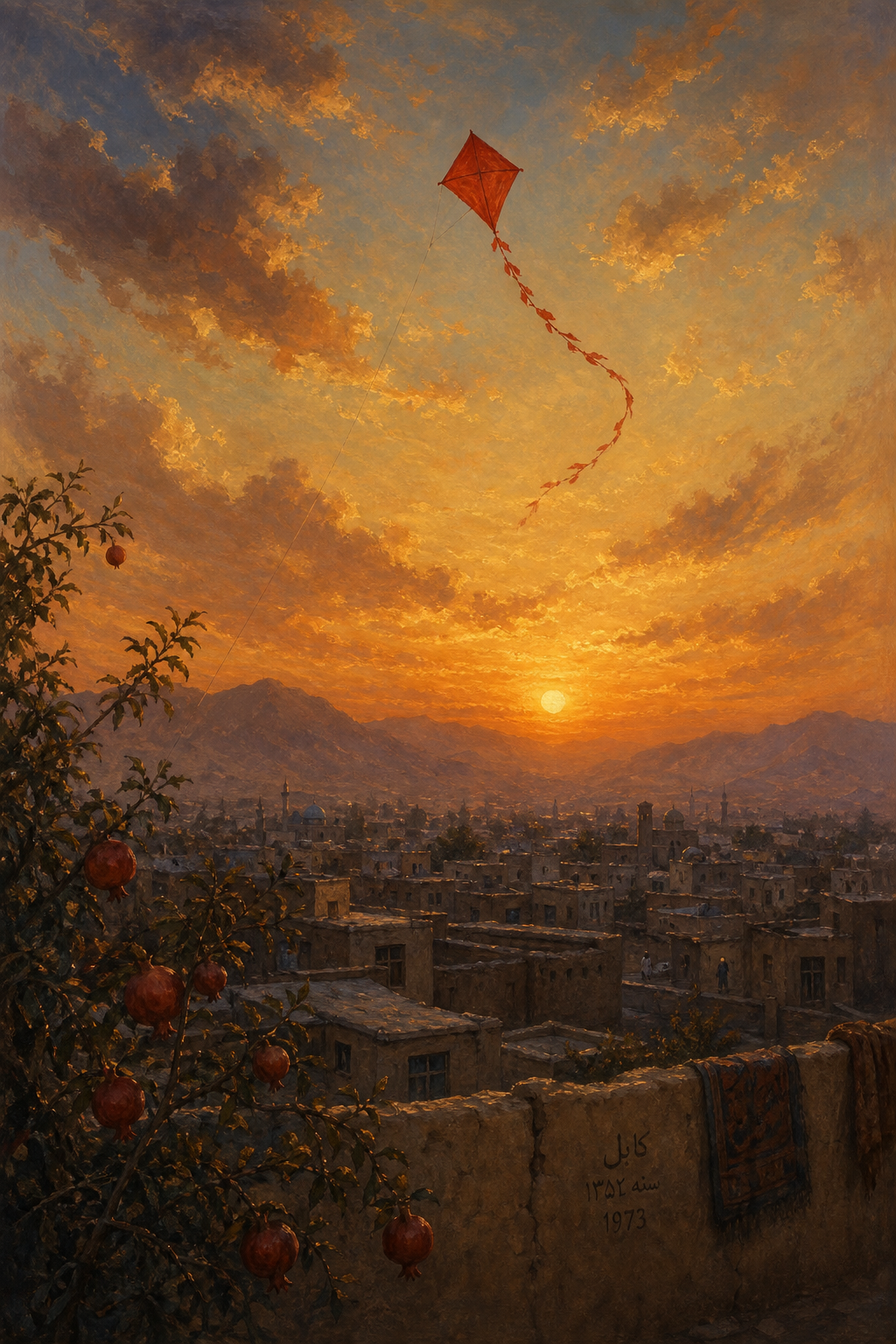
Textual annotation — tracing Amir's arc of guilt
Core Arguments
Three Strings, One Kite
I
Guilt as Architecture
Amir does not merely feel guilt — he builds his entire adult identity around it. Every evasion, every lie, every silence is a load-bearing wall in the structure of his self-betrayal.
II
The Substitution of Courage
Where he failed Hassan in the alley, Amir must find Sohrab in Taliban-held Afghanistan. The second act mirrors the first — and only by facing the same terror can the first be answered.
III
Incomplete Redemption
Hosseini refuses the easy catharsis. Redemption in this novel is not absolution but ongoing labor — a kite that must be flown again and again, in full knowledge it may be cut.
Section One · Guilt
The Winter Day That Stayed
The rape of Hassan by Assef in the alley behind the bazaar is the novel's gravitational center. Amir watches. He does not intervene. The moment is rendered with spare, agonizing clarity: "I had one last chance to make a decision. One final opportunity to decide who I was going to be. I could step into that alley, stand up for Hassan — the way he'd stood up for me all those times in the past — and accept whatever came. Or I could run."
He runs. And Hosseini is precise about what this running means: it is not mere cowardice in the moment, but a lifelong pattern of self-exculpation. Amir proceeds to frame Hassan for theft — engineering his removal from the household — because the daily sight of Hassan is an unbearable mirror. The guilty conscience, Hosseini suggests, does not simply suffer; it actively constructs elaborate escapes.
"I had run. I had run because I was a coward... A part of me was hoping someone would wake up and hear, so I wouldn't have to live with this lie."
— The Kite Runner
This pattern — betrayal followed by self-exculpation followed by deeper shame — becomes the engine of the novel's first half. Hosseini shows us guilt not as a dramatic thunderclap but as a slow, ambient poison. Amir excels at school in America, marries, writes novels. But the alley in Kabul is always there, a cold weather system that never moves on.
🪁
🪁
🪁
"Children aren't coloring books. You don't get to fill them with your favorite colors."
— Khaled Hosseini, The Kite Runner
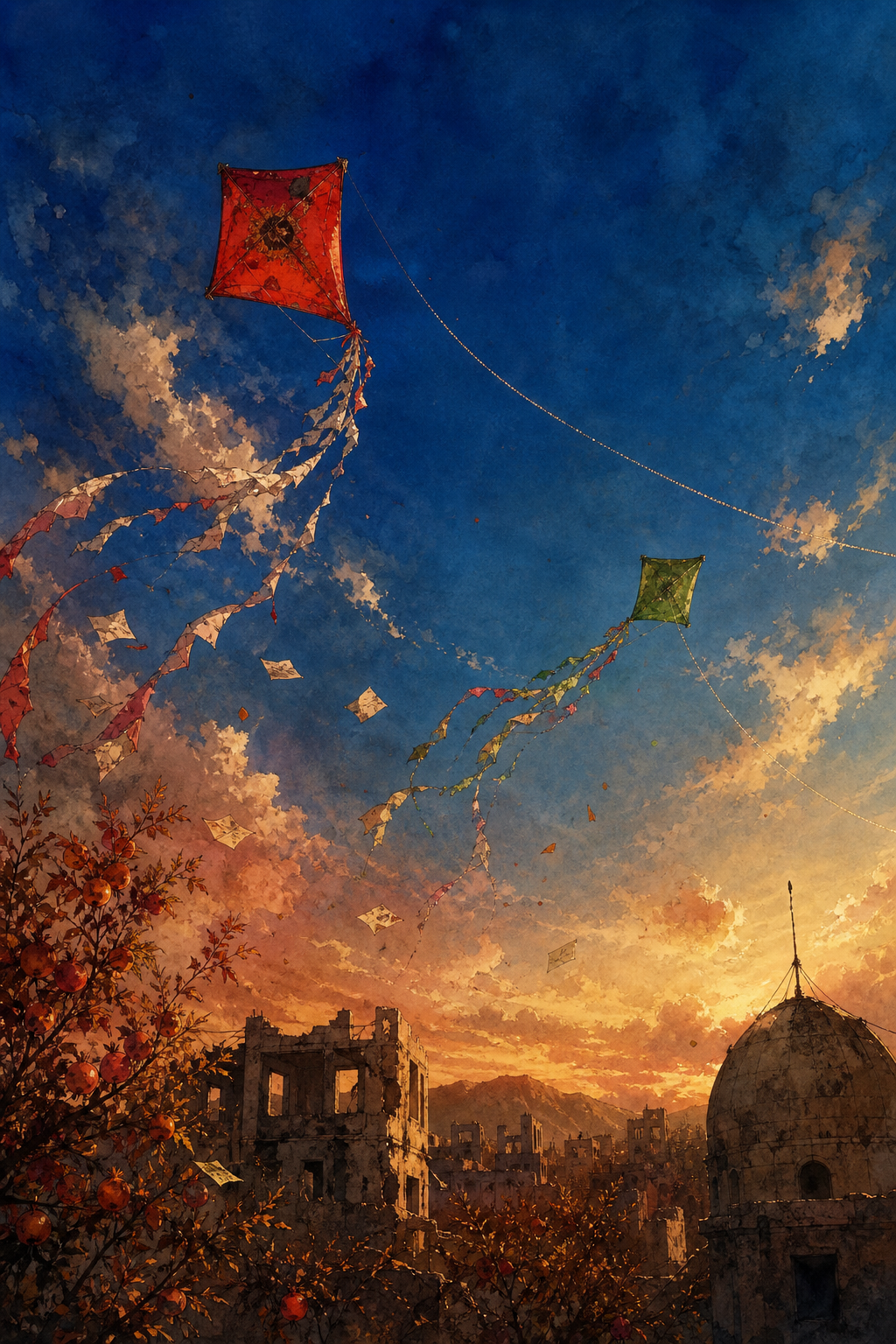
Annotated close reading
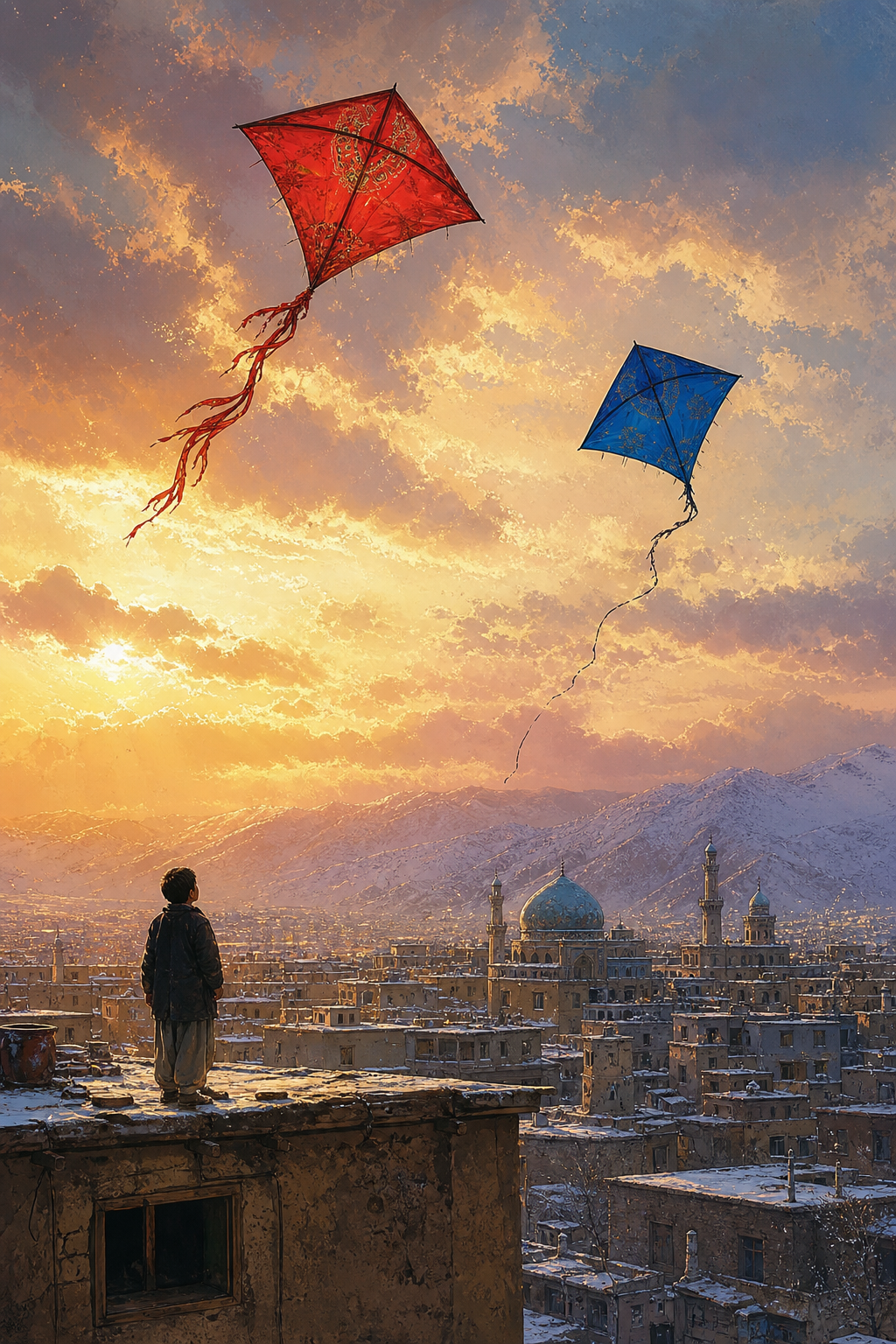
Secondary textual support
Section Two · Return
The Road Back to Kabul
When Rahim Khan calls from Pakistan — "There is a way to be good again" — Hosseini sets in motion the novel's redemptive machinery. The phrase is deceptively simple. It does not promise that Amir will be absolved, or that the past can be undone. It promises only a path, a direction, a way. The burden of walking it remains entirely Amir's.
The return to Taliban-controlled Afghanistan is structured as a deliberate mirror of the original sin. Afghanistan under the Taliban is Kabul in winter — beautiful, cold, and governed by cruelty disguised as righteousness. When Amir encounters Assef again — now a Taliban official, still wearing the same brass knuckles, still radiating the same terrifying ideological certainty — Hosseini makes the repetition explicit. The alley has simply grown larger.
"I wondered if that was how forgiveness budded; not with the fanfare of epiphany, but with pain gathering its things, packing up, and slipping away unannounced in the middle of the night."
— The Kite Runner
The beating Amir receives from Assef is one of the most psychologically dense moments in the novel. He laughs — genuinely laughs — as his ribs break, because for the first time in twenty-six years the punishment is proportionate. The body is finally receiving what the conscience has always known it deserved. This is not masochism but a profound moral logic: suffering as the only honest currency in the economy of guilt.
Yet Hosseini does not let Amir's suffering be sufficient. The rescue of Sohrab — Hassan's son, Amir's nephew, a child shaped by the same forces that shaped his father — requires not only courage but sustained, unglamorous commitment. Amir must navigate adoption bureaucracy, Sohrab's near-suicide attempt, and the long, quiet work of coaxing a traumatized child back toward trust.
Section Three · The Kite
Paper, String, and the Shape of Grace
Hosseini's use of kite running as central metaphor is precise rather than decorative. In Afghan culture, kite fighting — gudiparan bazi — is an art of both aggression and release: you fly your kite high, maneuver to cut your opponent's string, then send runners to chase the fallen kite. The runner who catches it keeps it as a trophy of victory and loss.
Hassan is, famously, the greatest kite runner in Wazir Akbar Khan. His gift is not in flying — that is Amir's domain — but in finding. He runs ahead of where the kite has fallen, arriving before it lands. "For you, a thousand times over," he tells Amir. The phrase is an act of pure, uncalculated love — and it becomes, retroactively, the measure of everything Amir fails to be.
The novel's final scene restores kite flying not as triumph but as tentative beginning. In a San Francisco park, Amir helps Sohrab fly a kite. When Sohrab's kite cuts another — the first voluntary, expressive act the boy has performed since his suicide attempt — Amir asks if he should run it. Sohrab says, almost inaudibly, "For you, a thousand times over." The circle closes. The string, though frayed, holds.
"I ran. A grown man running with a smile on his face and tears streaming down. I ran."
— The Kite Runner, final pages
Conclusion
A Wound That Teaches How to Heal
The moral architecture of The Kite Runner is built on a refusal of easy resolution. Hosseini gives us redemption that is real but incomplete, hope that is fragile but genuine, love that arrives too late but still arrives. The novel asks whether guilt, properly metabolized, can become something generative — not an escape from the past but a reorientation toward the present.
Amir cannot undo what happened in the alley. Hassan is dead. The years of silence cannot be reclaimed. But Sohrab is alive, and the same impulse that made Amir a coward — his desperate need for love and approval — can, turned outward, make him a father. The kite doesn't erase the alley. It simply proves that the string still exists, that the hand is still capable of holding on.
Hosseini's lasting achievement is to make us feel the weight of that string in our own hands — to understand that the capacity for betrayal and the capacity for devotion are not opposites but the same hunger, pointed in different directions. There is a way to be good again. It is not a destination. It is a practice, a daily act of running.
برای تو، هزار بار دیگر
For you, a thousand times over.
There is a way
to be good again.
This essay traces the threads of guilt, return, and imperfect redemption in Khaled Hosseini's The Kite Runner — a novel about what we carry, what we owe, and the kites we dare to fly again.
Read the Full Paper ↗