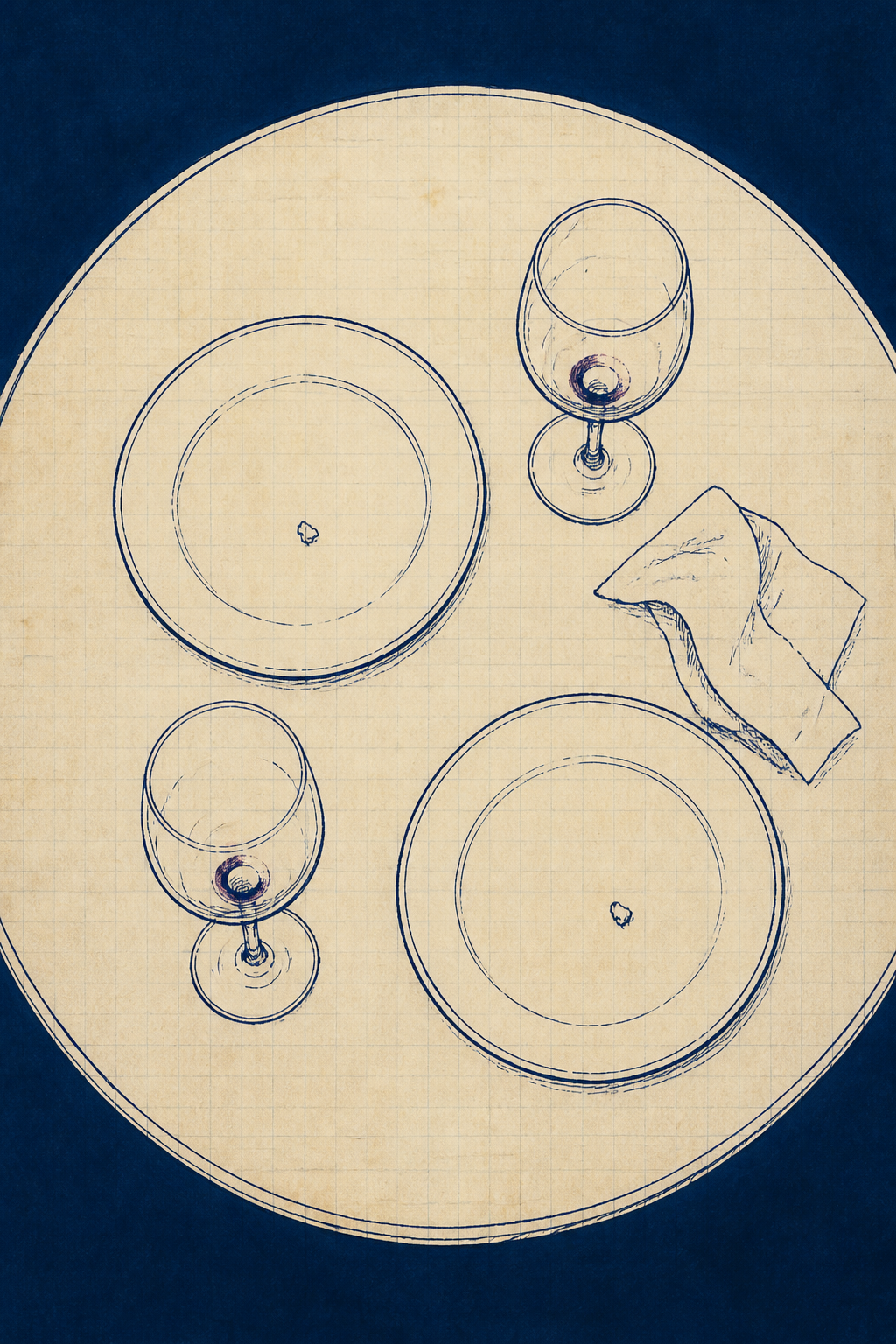
Spanish. Two words run together: one means upon, the other means table. The Real Academia Española lists four senses for it; this is only the second.
西班牙语。两个字拼起来,一个是「在上面」,一个是「桌子」。
词典里它有四个义项,我们说的这个排第二。
Upon-table. The dictionary's first sense is not an hour at all — it is the cloth you spread over the table.
字面上就是「桌上」。
第一个义项是桌布。查到的时候我愣了一下。
The stretch after the food is gone and nobody stands up. Not the dessert, not the coffee. The staying.
菜吃完了,没人起身,就那么坐着的那一段。
不是甜点,也不是咖啡。是不走。
The nearest Chinese is chayu-fanhou, the loose hours after a meal — but those are counted from anywhere, once you have got up. This one cannot leave the chair.
And in Spain it is a television band as well: the midday slot, sold as the country's second prime time. Abroad the word is holy. At home it is scheduling.
中文里最接近的是茶余饭后,但差了一点——那是站起来以后的时间,它是还坐着的那一段。
在那边它还是电视台一个时段的名字,中午那档,号称第二黄金时间。说不上来为什么,知道之后反而更喜欢它。