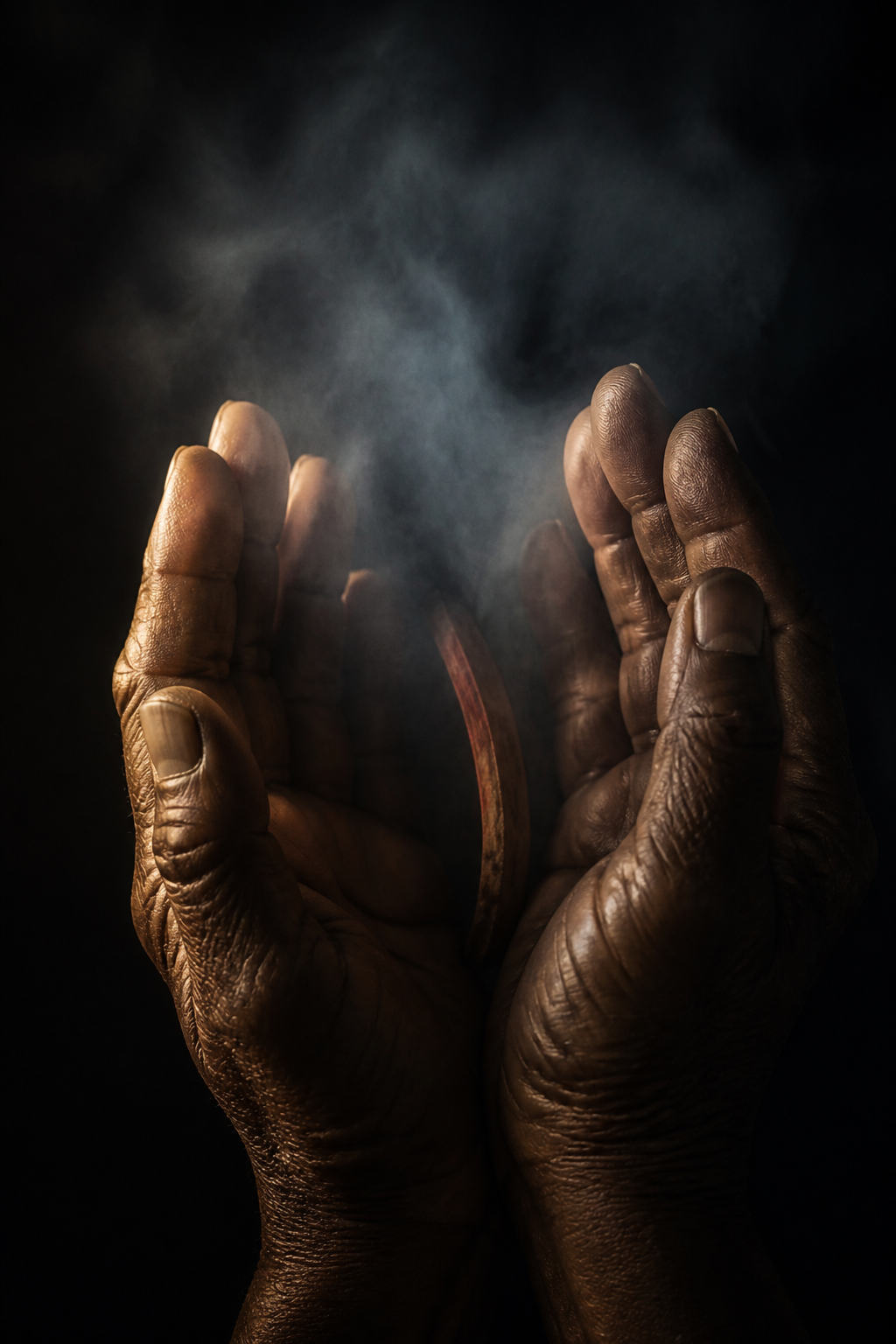
Someone lifts a length of bone to their mouth and turns it, slowly, until the edge splits the air in the right place. There is nothing to see yet. There is only the sound of a person finding an angle.
Revival is usually told as an object story: instruments sleep in cases, then wake. That telling leaves out everybody who did the work. The sound of taonga pūoro came back through hands, breath, tongues, patience and argument — through makers cutting and testing material, players learning what a hole a millimetre wider will do, kaumātua remembering, language teachers giving names back their weight, archivists and researchers reading and listening, and composers writing new music for old shapes.
Nothing here revived itself. People renewed relations, and the instruments spoke because people breathed.
This page keeps its distances. It says what is on the public record, it says when a reading is its own, and it stays quiet where quiet is right.
Instruments differ between whānau, hapū and iwi. Nothing on this page should be read as one Māori interpretation, or as instruction in practice.
- documentedOn the public record — published, printed, catalogued or widely reported.
- attributed interpretationA reading made by named practitioners or authors, held as theirs.
- station readingThis page's own framing. Not evidence, not testimony.
- modelled — made nowSound and images generated for this page today. Never archival material.
Every sound begins as something that grew.
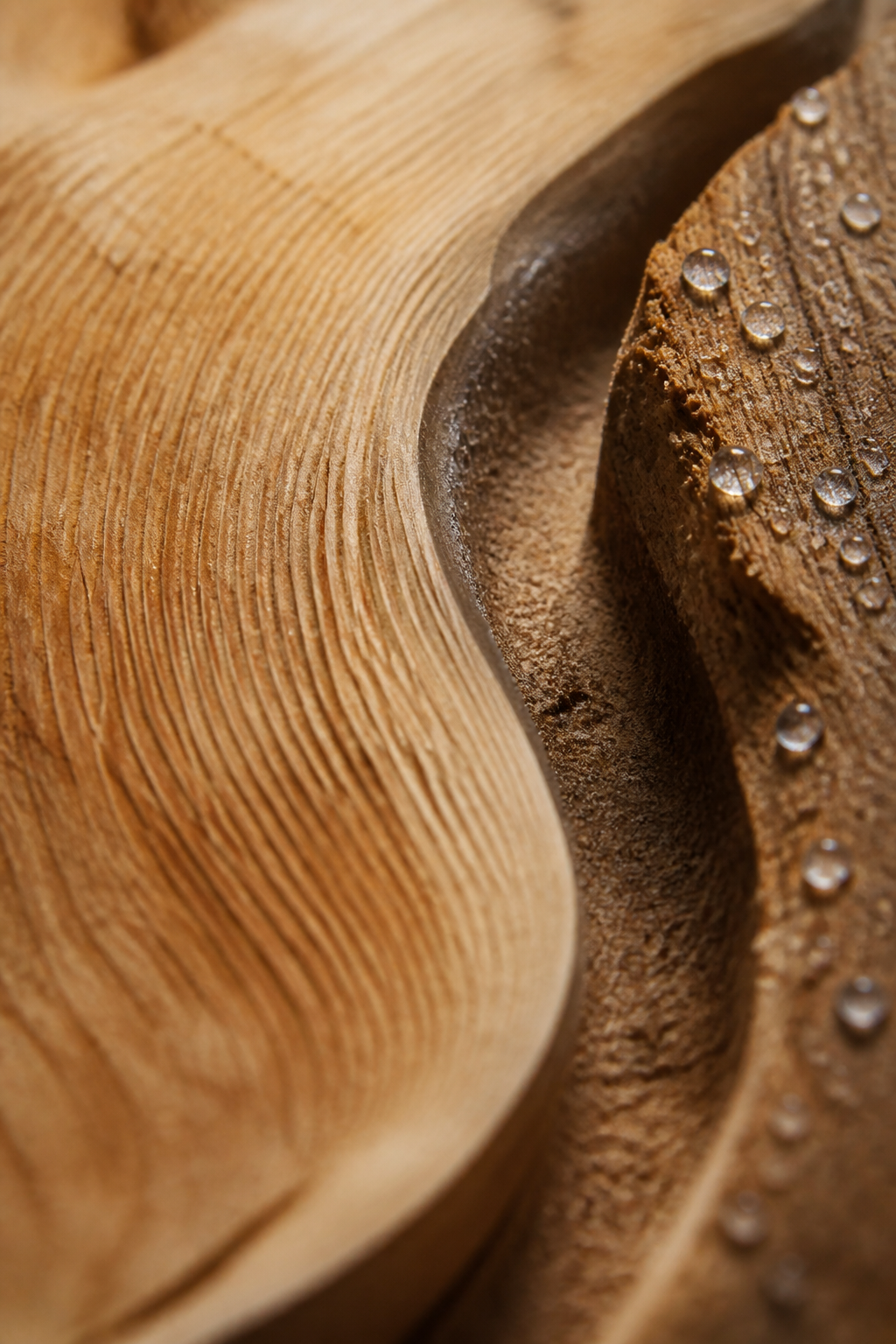
Before there is an instrument there is a material with its own history: a bird, a tree, a river stone, a gourd raised in a garden, a shell brought up from the sea floor. Makers speak about listening to that material — its density, its grain, the way it takes a cut — long before there is a tone to judge.
- kōiwibone
- rākauwood
- pounamustone
- huegourd
- angashell
- huruhurufeather
documented station reading
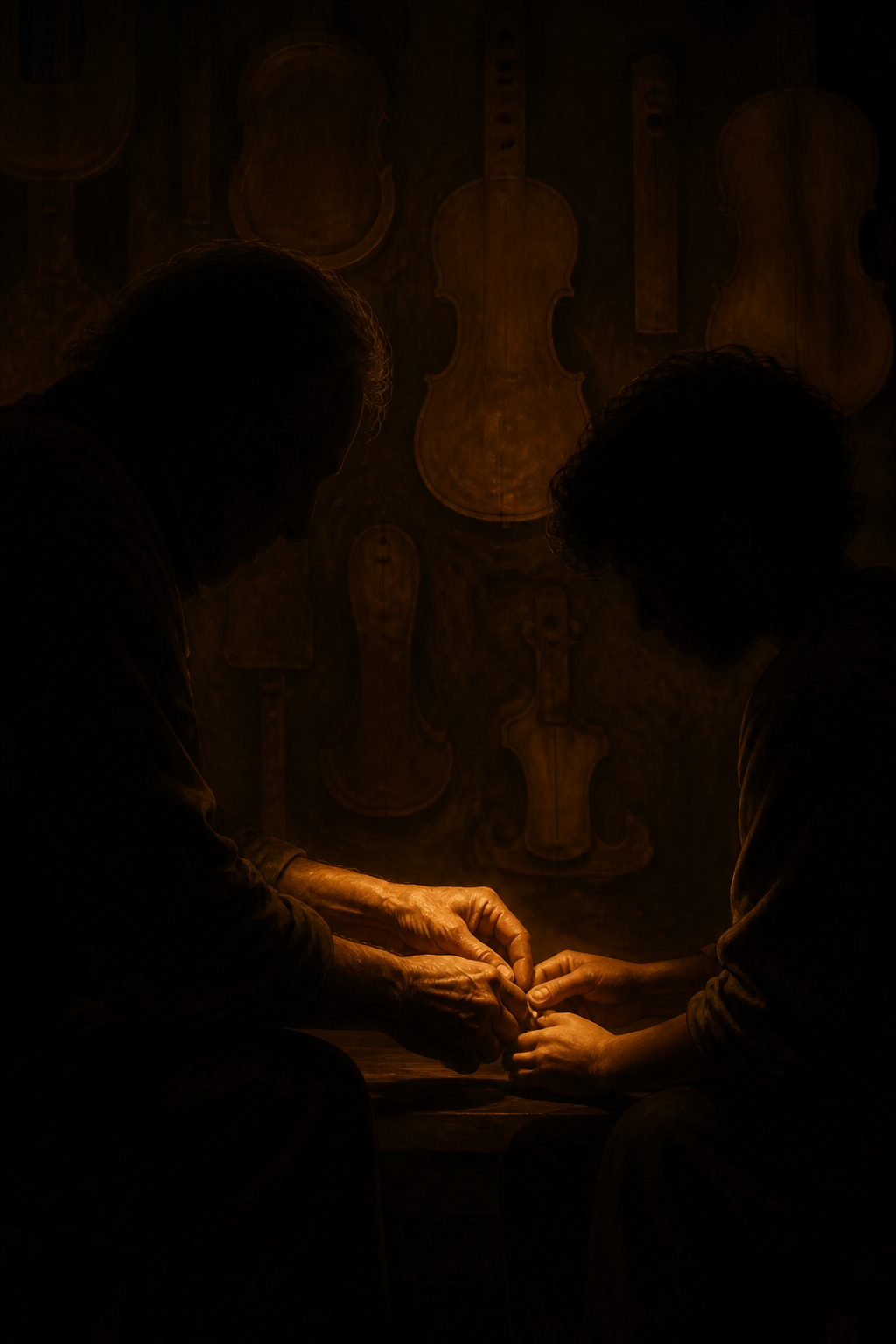
The hand comes before the museum.
Makers carve, drill, test, cut again. A flute that will not speak is not a mystery to be solved by reading; it is a piece of material to be taken back to the bench. Much of what was recovered was recovered this way — by making a thing, blowing it, failing, adjusting, and asking someone older what they remembered hearing.
Brian Flintoff, a carver and maker based in Whakatū (Nelson), has made instruments for players for decades, and put a great deal of that making knowledge into print in Taonga Pūoro: Singing Treasures (2004). Carvers and players still work as a pair: one shapes, the other breathes, both listen.
documented
Teaching is the instrument that carries all the others.
station reading
Now the names, and only what is public.
These are widely published names and plain descriptions of form. They are not lessons in use, and they say nothing about occasions, karakia or the standing of any particular instrument.
kōauau
A short flute, open at both ends, often played across the top edge. Made from wood, bone or stone.
pūtōrino
A flute-form found in Māori instrument making and not, as published sources note, in the same shape elsewhere: a bulging body with a central opening. Players and writers commonly describe it as holding more than one voice, depending on how it is sounded.
pūtātara
A trumpet made from a large shell, fitted with a mouthpiece of wood or gourd. Its sound carries across open ground and water.
pūrerehua
A shaped blade swung on a cord. The sound is made by the air it disturbs, not by breath passing through it.
pōrotiti
A disc spun on twisted cords, humming as the cords wind and unwind — a sound made by two hands and a rhythm rather than by the mouth.
hue
Gourd: grown, dried and hollowed. The garden is part of the instrument, and so is the season it was grown in.
Use, meaning and standing vary between whānau, hapū and iwi, and much of it is not ours to set out. Where this page stops, it stops on purpose.
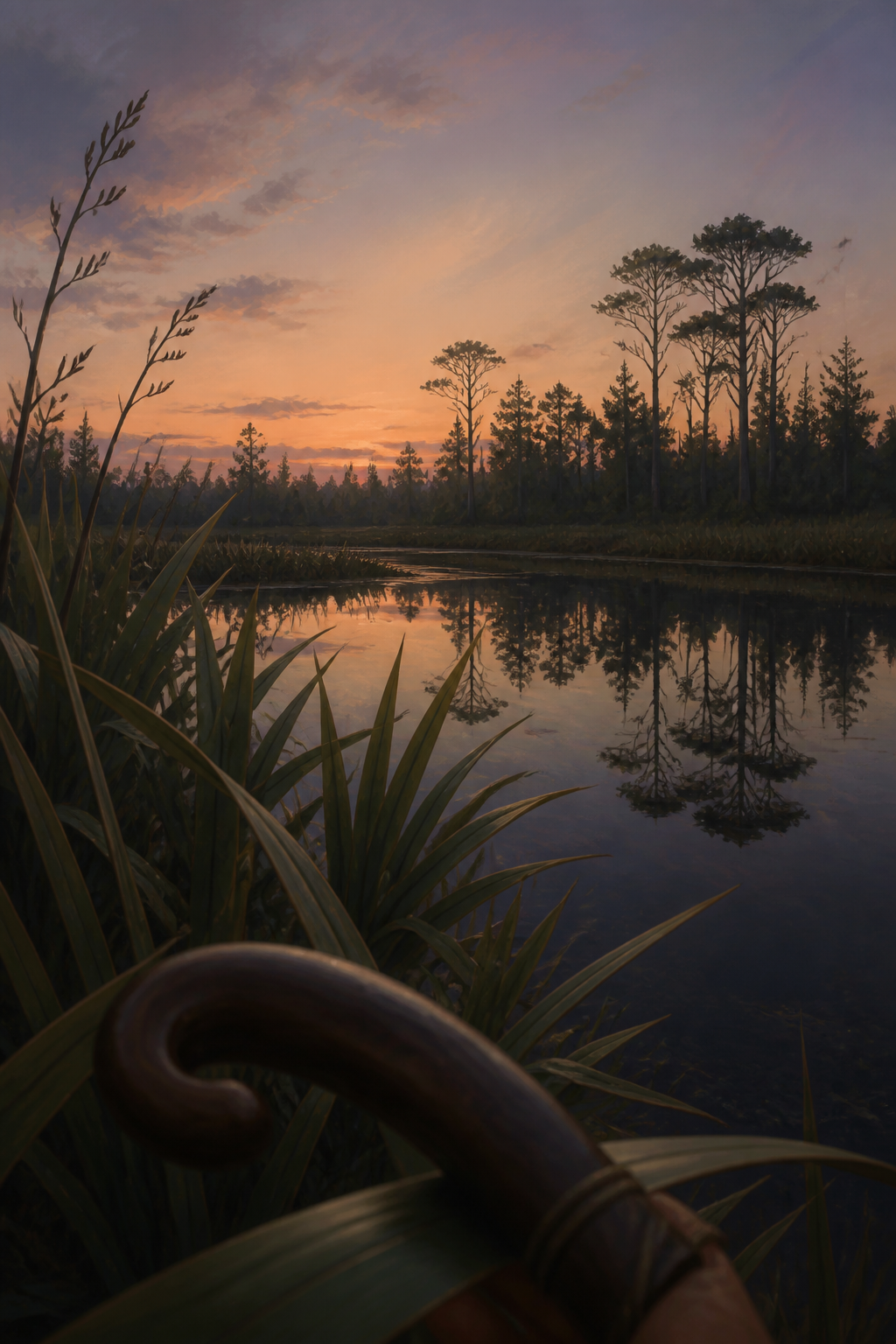
The sound has company.
Practitioners have long spoken and written about these instruments in relation to the living world: bird calls, wind through a gully, water, insects, weather. Hirini Melbourne's songwriting is full of native birds and places, and those waiata went straight into the mouths of children in kōhanga reo and kura — which is why so many people know the tunes without knowing they are learning anything.
The instruments came back into hands at roughly the same time the language was being carried back into everyday mouths. Te Kōhanga Reo began in 1982; the taonga pūoro work gathered through the 1980s and 1990s. Two renewals leaning on each other.
documentedstation reading
A handful of public traces.
Not a lineage and not a hierarchy. These are things anyone can look up.
Hirini Melbourne, 1949–2003
Ngāi Tūhoe and Ngāti Kahungunu. Composer, singer, writer and teacher; taught for many years at the University of Waikato. His waiata are sung across Aotearoa, and his work with taonga pūoro sat inside a much larger life of language and teaching.
documentedRichard Nunns, 1945–2021
Musician and researcher who worked alongside Melbourne for around two decades, and travelled to learn from kaumātua in many places. He was consistent in public about being a Pākehā practitioner working with permission and under guidance.
documentedTe Kū Te Whē, 1994
An album of taonga pūoro by Melbourne and Nunns, released by Rattle. Worth being exact: it is a recording made in the 1990s by living musicians — a present-tense work, not a recovered document of older sound.
documentedHaumanu
From the 1990s, the collective that grew around this work brought makers, players, kaumātua and researchers into the same rooms to make, sound and discuss instruments together. The gathering was the method.
documentedstation readingAriana TikaoHoromona HoroRob ThorneJerome KavanaghWarren WarbrickJames Webster
A partial list, chosen by this page, of people who make, play, record, research and teach in the present day — including work inside libraries and archives, where recordings and manuscripts are cared for and made findable again. Many more names belong here. Their absence is this page's limit, not theirs.
documentedstation reading
Some knowledge is not on this page, and will not be.
Particular tikanga, karakia, the standing of certain instruments and the occasions they belong to are held by whānau, hapū and iwi. That knowledge is not withheld here as a puzzle, and it is not waiting behind an interaction. There is nothing to unlock.
Silence, in this case, is legible: it is the edge of what is ours to hold. A page can be honest about its own edges and still be worth reading.
station reading
The instruments did not come back from silence. People came back to each other — around breath, material, language, making, listening and teaching.
Which means it is not finished, and cannot be. Every generation has to breathe it again: someone growing a gourd, someone shaping bone, someone saying a word correctly to a child, someone sitting still long enough to hear what a length of wood will do.
The field still moves. It carries every breath you gave it.