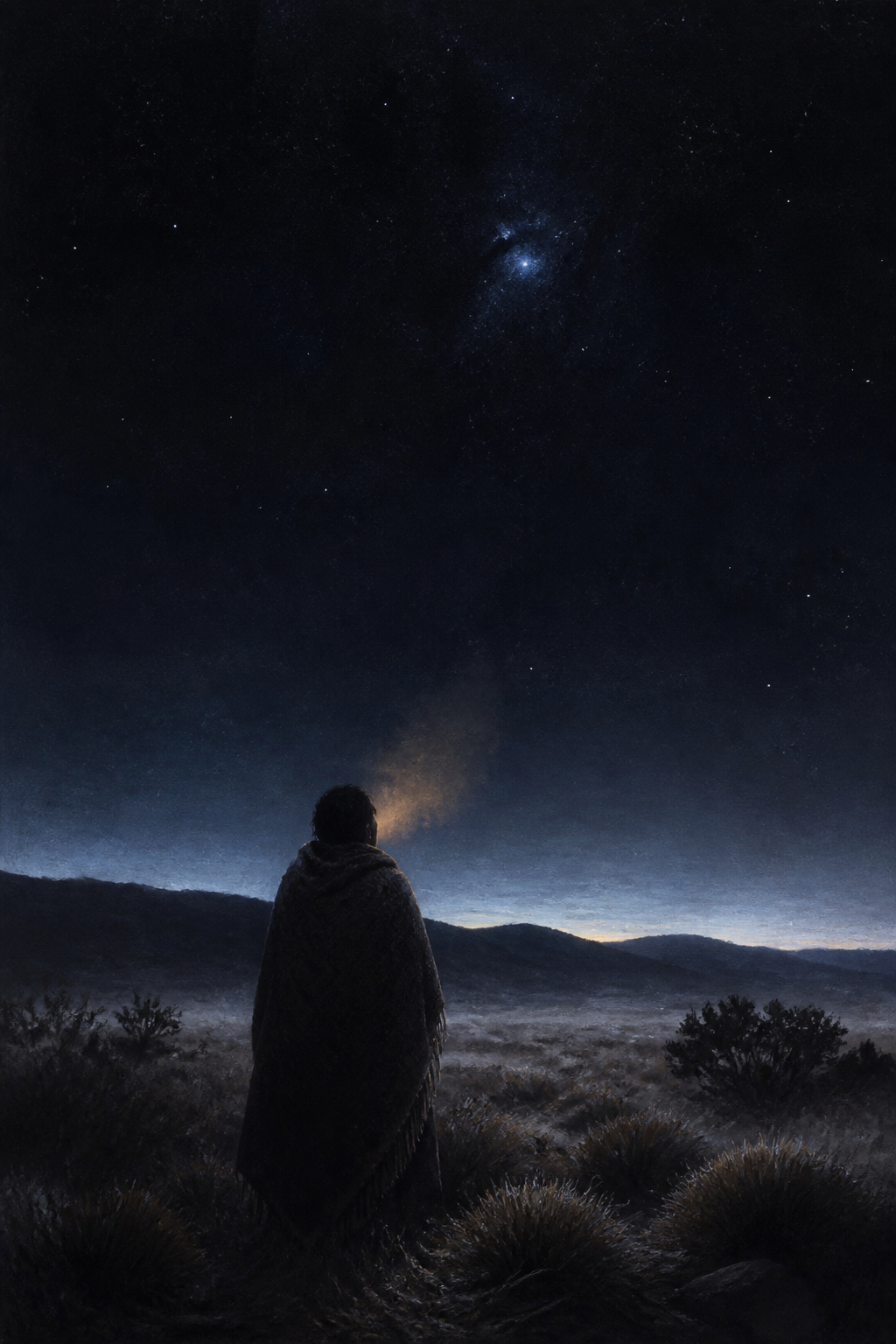
ngā whetū o Matariki · a sky read by people
Touch the dark up there. Then drag along it. Your eyes need a moment — that part is not decoration.
Matariki was carried through a family line
Not a lesson written in the stars. A relationship kept by hand — observed, taught, written down, argued over, gathered around, and handed on to whoever would stand out in the cold to receive it.
↓ carry onThis page responds to touch: the sky above changes where you work on it, and the record below fills in as it does. Nine stars are named in the account this page draws on: Matariki, the wellbeing of people and land; Tupuānuku, food from the ground; Tupuārangi, food from above; Waitī, fresh water; Waitā, the sea; Waipuna-ā-rangi, rain; Ururangi, the winds; Pōhutukawa, those who have died; Hiwa-i-te-rangi, the hopes for the year coming. All of the same material is set out in the sections that follow, whether or not you touch anything.
What came clear, as you did it
this fills in from the sky above — nothing here arrives on its own
Nothing yet. Go back up and work on the dark: touch it, drag through it, kneel at the bottom of it.
-
documentedThe open cluster catalogued in English as the Pleiades sits roughly four hundred light-years away. Of its many stars, about nine come clear to a patient naked eye, and it returns to the pre-dawn sky over Aotearoa in mid-winter, as it does every year, whoever is watching.
station readingNothing you just did changed the sky. It changed your eye — the only instrument this part of the knowledge has ever needed, and it takes minutes, not seconds.
-
source-attributedNine stars, and the domain each is spoken of with, as published from the Te Kōkau manuscript by Rangi Mātāmua (Tūhoe) — several hundred pages recorded by his great-grandfather Rāwiri Te Kōkau and his father, passed down to him by his grandfather, and published in Matariki: The Star of the Year (2017). One family's line, written and made public. Not the Māori account.
station readingThe faint lines that joined up between them are this page's own device for showing that the cluster hangs together. They are not a traditional figure, and nothing here reproduces one.
-
source-attributedIn the published account, Waipuna-ā-rangi is spoken of in relation to rain and Ururangi in relation to the winds, and the clarity or haziness of the stars as they rose was read for the season ahead — a reading made with the eyes, held against the maramataka, and answerable to the people who had to plant by it.
source-attributedIt is not one sky. Where Matariki sits low, or is hard to see — Whanganui, Taranaki, parts of Te Waipounamu — the turning of the year is marked by Puanga or Puaka, the star known in English as Rigel. Timing differs too; Mātāmua has publicly argued for observing in the Tangaroa phase of the moon following the rising.
station readingYou cleared your view. You did not get a forecast. That reading belongs to the people who hold the knowledge and carry the consequences of getting it wrong.
-
source-attributedTupuānuku, the food that grows in the ground. Tupuārangi, the food that comes from above. Waitī, fresh water and everything in it. Waitā, the sea and everything in it. Mid-winter is when the harvest is in and the stores are full, and the observances people actually attend are hosted — by whānau, by iwi, by marae — with hautapu ceremonies where food is offered and the living fed afterwards.
station readingThe warmth you made down there is the part that gathers anyone. Knowledge has always moved at the speed of people feeding each other.
-
source-attributedPōhutukawa is spoken of in relation to those who have died — the ones whose names are called aloud at the rising.
station readingThe light you sent up carries no name. Naming belongs to the people who lost them, and it is not this page's to put in your mouth.
-
source-attributedHiwa-i-te-rangi is spoken of in relation to what is hoped for: what a person, or a whānau, sets down for the season coming. Remembrance and intention arrive in the same cold hour, from the same handful of light.
documentedMatariki became a public holiday in Aotearoa New Zealand, first observed on 24 June 2022 — the country's first public holiday recognising te ao Māori.
Look up once more before you go. The stars are exactly where they were — but the haze is lower, the ground is warm, and there are lights up there that were not there when you arrived. They stay while you read. Everything below is the part people carried.
The line the knowledge came down
source-attributedRangi Mātāmua (Tūhoe) has spoken and written publicly about a manuscript of Māori astronomical knowledge held in his own family — several hundred pages recorded by his great-grandfather Rāwiri Te Kōkau and his father, Te Kōkau Himiona Te Pikikōtuku, and passed down to him by his grandfather. He published from it in Matariki: The Star of the Year (2017), and a great deal of what Aotearoa now says out loud about Matariki travels along that one family's line.
station readingThat matters twice over. It means this knowledge survived because particular people decided to keep it, teach it and eventually publish it. And it means what you are reading here is one line — Tūhoe, written, made public — and not the Māori account. Other whānau and iwi hold their own. Some of it has never been published, and will not be.
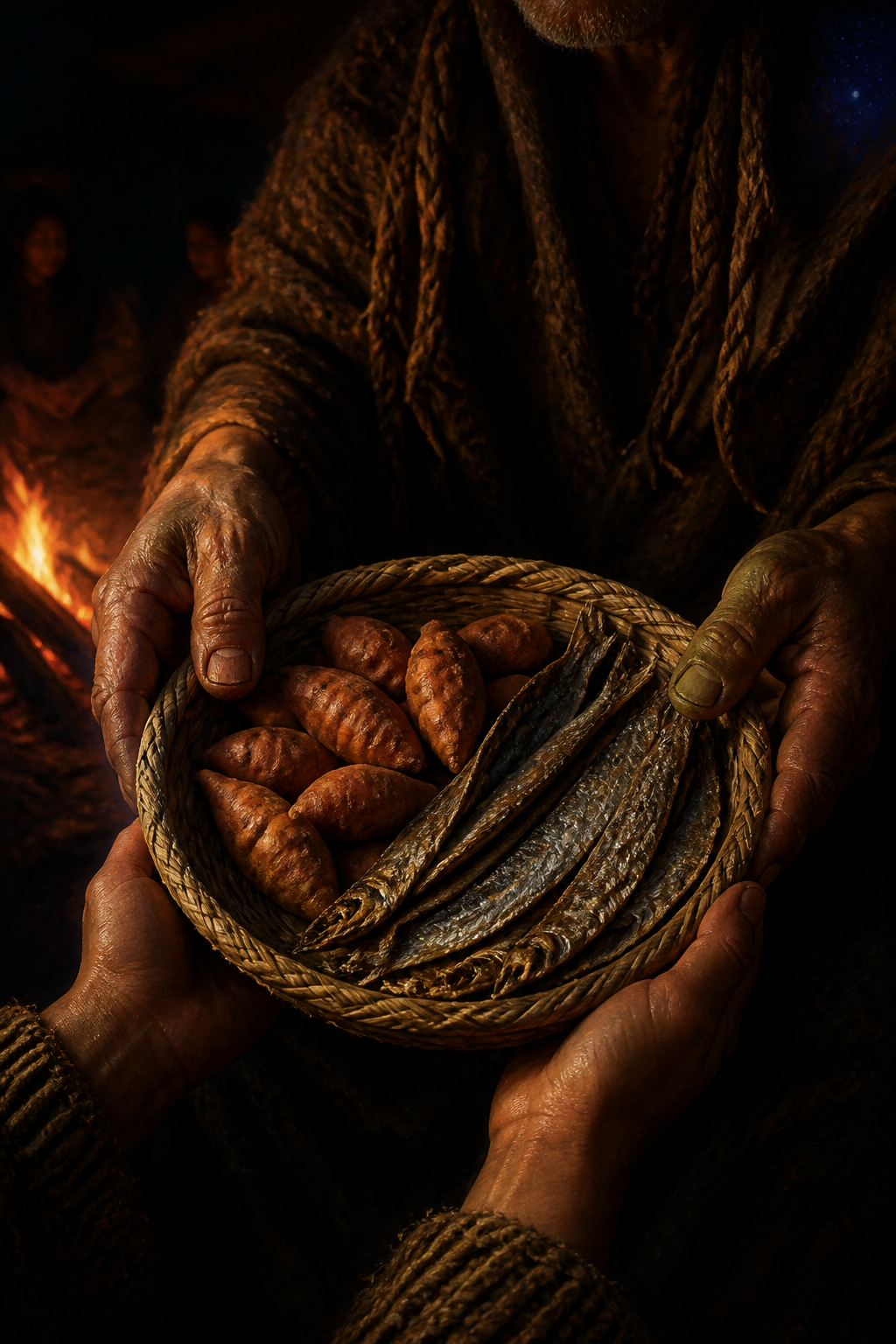
The stars keep nothing. People keep it — and someone still has to go outside before dawn and point.
station readingthis page's own words — not a quotation from any person
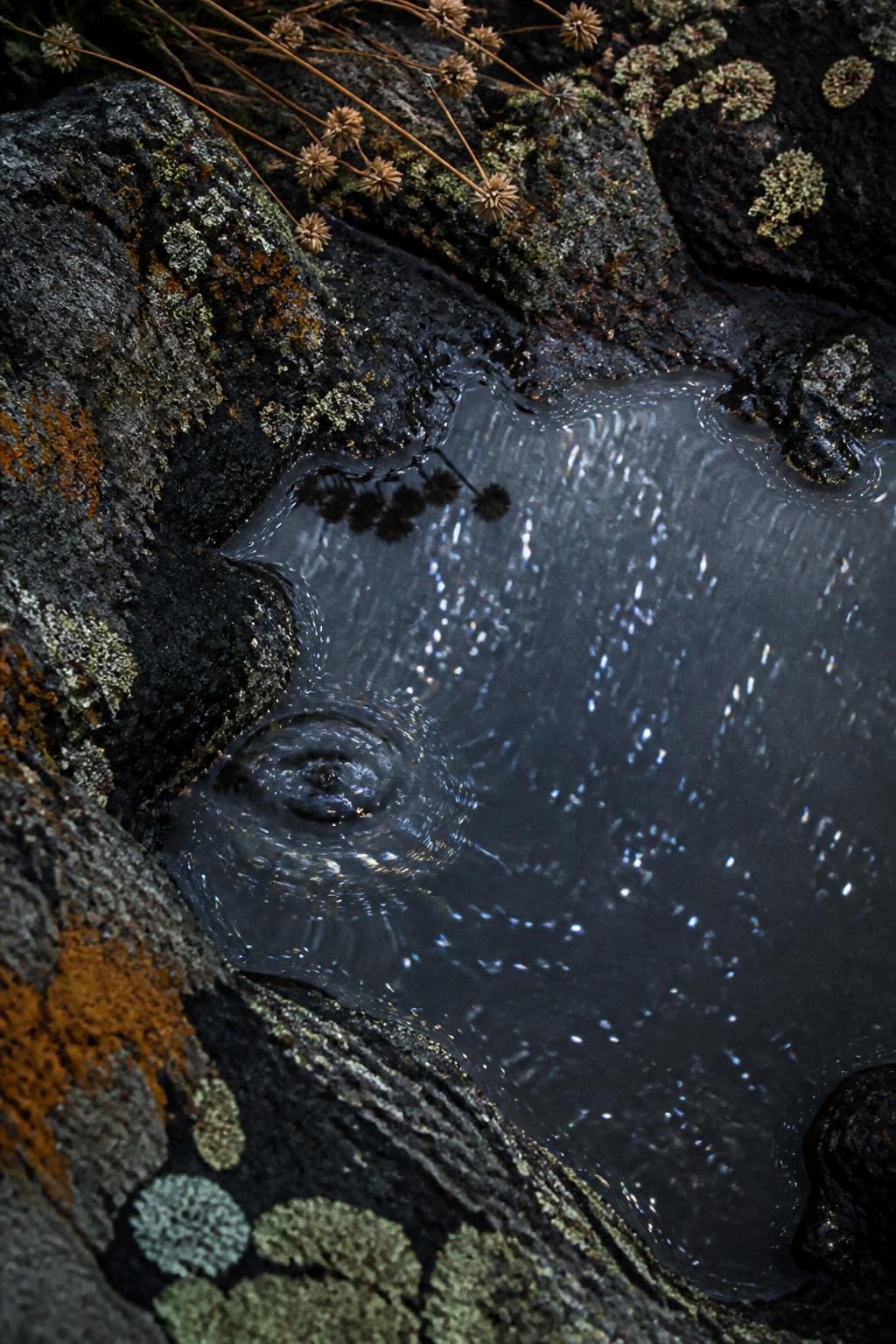
Food, and the stars spoken of with it
source-attributedIn the account published from the Te Kōkau manuscript, the cluster is nine stars, and each is spoken of in relation to a part of the world people actually live off. Tupuānuku, the food that grows in the ground. Tupuārangi, the food that comes from above. Waitī, fresh water and everything in it. Waitā, the sea and everything in it.
station readingMid-winter is when the harvest is in and the stores are full. So the knowledge is not separable from the eating: the rising is also the season for putting food in front of people, which is how a great deal of knowledge has always moved.
Reading the season off the same stars
documentedThe astronomy is fixed and public. The open cluster also catalogued as the Pleiades sits roughly four hundred light-years away; of its many stars, about nine come clear to a patient naked eye; and it returns to the pre-dawn sky over Aotearoa in mid-winter, as it does every year, whoever is watching.
source-attributedWhat the rising is asked to tell you is a different kind of knowledge. In the published Te Kōkau account, Waipuna-ā-rangi is spoken of in relation to rain and Ururangi in relation to the winds, and the clarity or haziness of the stars as they rose was read for the season ahead — a forecast made with the eyes, held against the maramataka, and answerable to the people who had to plant by it.
station readingAstronomy, mātauranga, seasonal practice, remembrance and a public holiday are not the same thing. This page tries not to let them blur into one another.
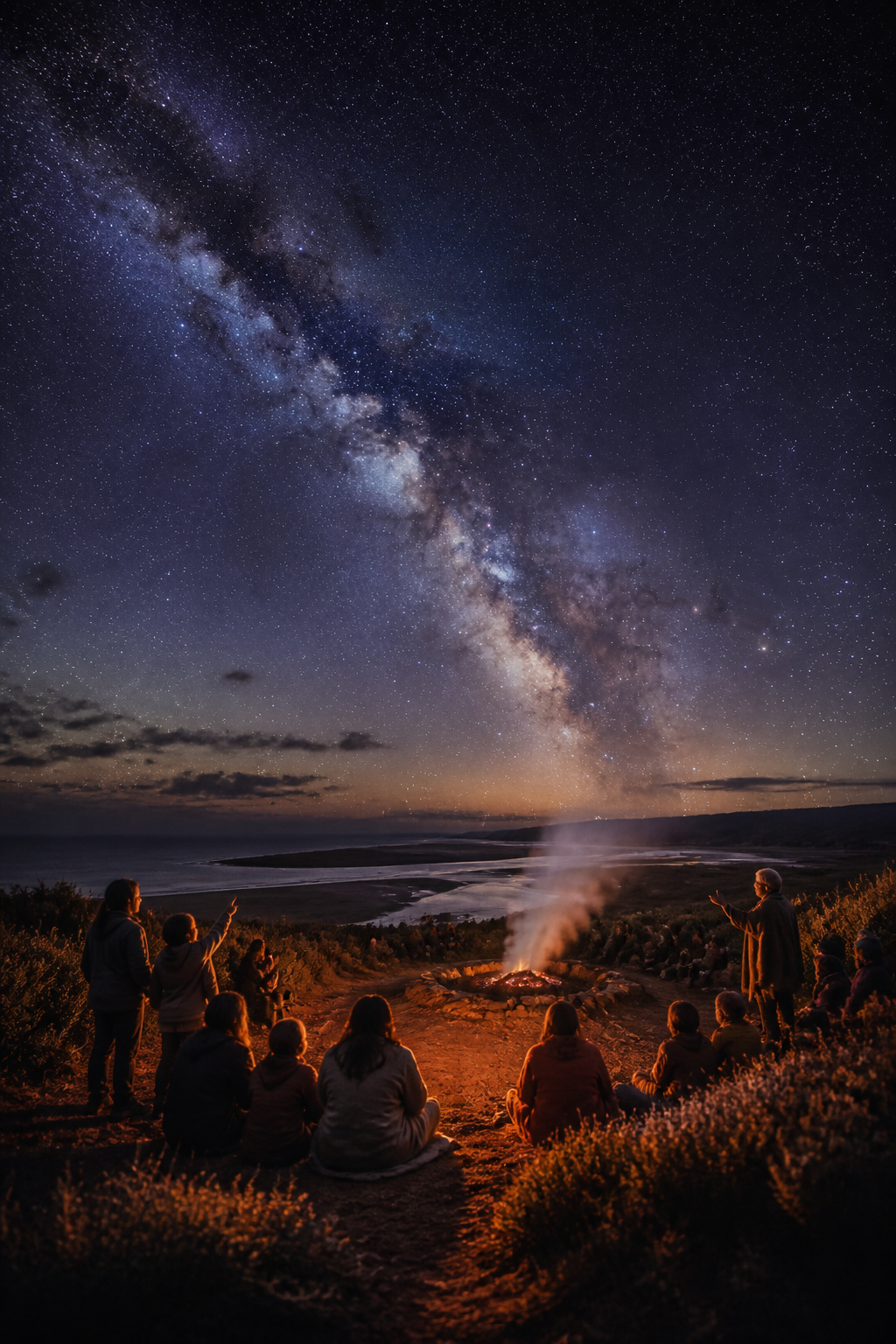
Who is standing there now
documentedMatariki became a public holiday in Aotearoa New Zealand, first observed on 24 June 2022 — the country's first public holiday recognising te ao Māori.
source-attributedThe observances people actually attend are hosted: by whānau, by iwi, by marae. Dawn gatherings, hautapu ceremonies where food is offered, the dead named aloud, the living fed afterwards.
source-attributedAnd it is not one sky. In Whanganui, in Taranaki, and in parts of Te Waipounamu, the turning of the year is marked by Puanga or Puaka — the star known in English as Rigel — where Matariki sits low, or is hard to see, or where the tradition simply runs another way. Timing differs too; Mātāmua has publicly argued for observing in the Tangaroa phase of the moon following the rising. These are not versions of one thing to be averaged into a national answer. They are different skies, read from different places, and they stay different here.
Generated illustration — not a photograph of any real gathering.
Same sky.
Nothing has been added to it. The stars are exactly where they were before you arrived, and they will be there when this page is gone.
What has changed is that you can see relationships in it now — ground food, water, sea, rain, wind, the dead, the year ahead — and every one of those relationships is there because a person carried it: observed it, wrote it down, disagreed about it, taught a grandchild, cooked for a hundred people, and adapted it again for a country that has only just begun keeping the morning.
Knowledge persists the way it always has. Someone stands outside in the dark with someone younger, and points.
scope & provenance
- documentedpublicly verifiable fact
- source-attributedas recorded or stated in a published source
- station readingthis page's own interpretation
This station draws only on knowledge that has been publicly shared and published. No whānau, iwi, tohunga or other authority has reviewed or authorised it, and it does not speak for anyone.
Star names and the domains they are spoken of with are as published from the Te Kōkau manuscript by Rangi Mātāmua (Matariki: The Star of the Year, 2017). Where accounts differ by region or by iwi, the difference has been left standing rather than reconciled.
Some Matariki knowledge is held, restricted, or simply not ours to show. Where that is the case there is nothing here to be found — the absence is real, and it is not a puzzle to be solved.
The sky at the top of this page responds to your hands: your eye adapting, haze lowering, a fire held, lights sent up. Those are this page's own devices for making relationships perceptible. No ceremony is being performed, reproduced or simulated, and nothing you do here is an observance.
All four images on this page are generated illustration made for this page. They are not photographs, archival material, or documentation of any real person, place, ceremony or object. No sentence on this page is presented as a quotation from any person.