black, cyan, magenta; daylight never reaches the street
PLACES
dense vertical cities, street markets, corporate towers
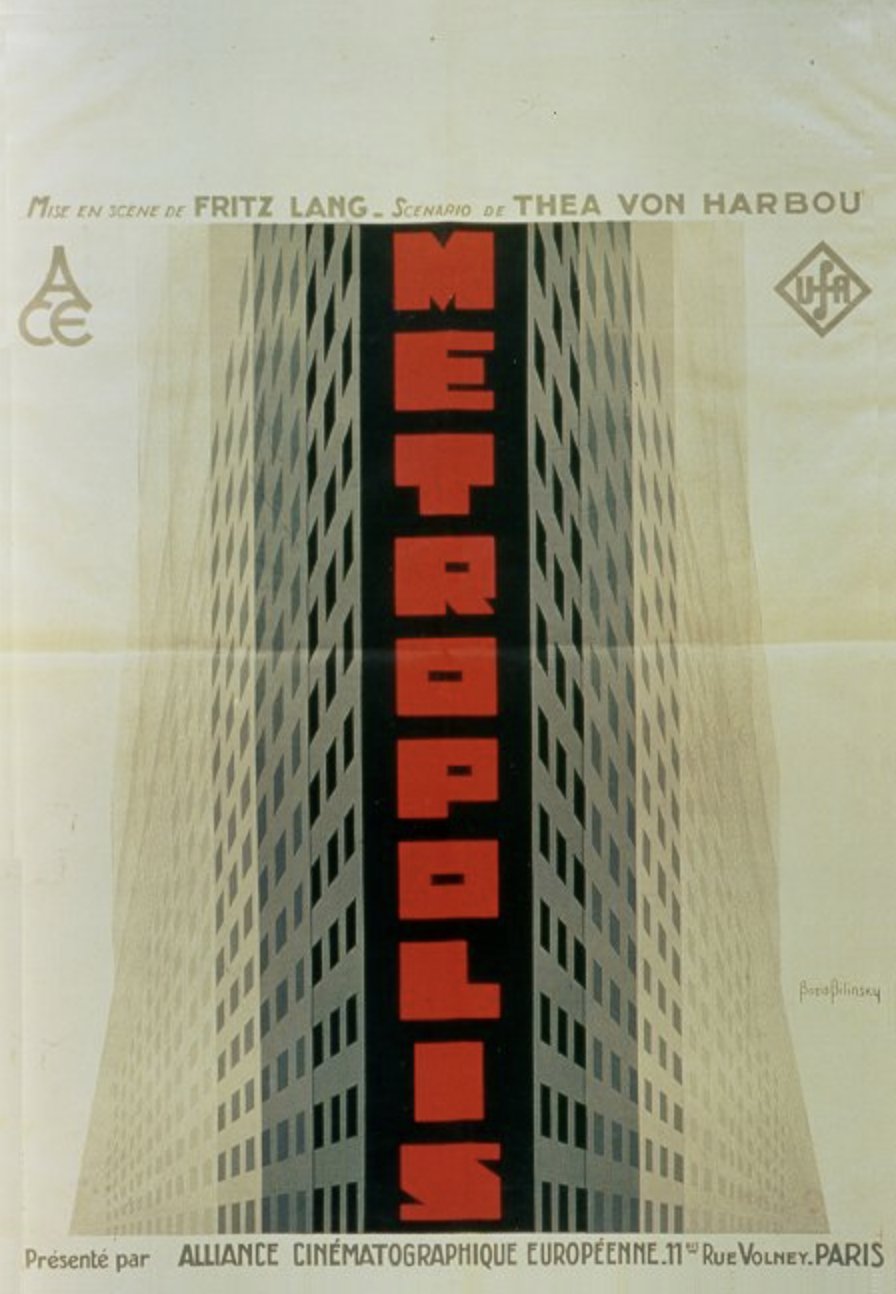
POSTER FOR METROPOLIS, 1927. BORIS BILINSKI. PUBLIC DOMAIN.
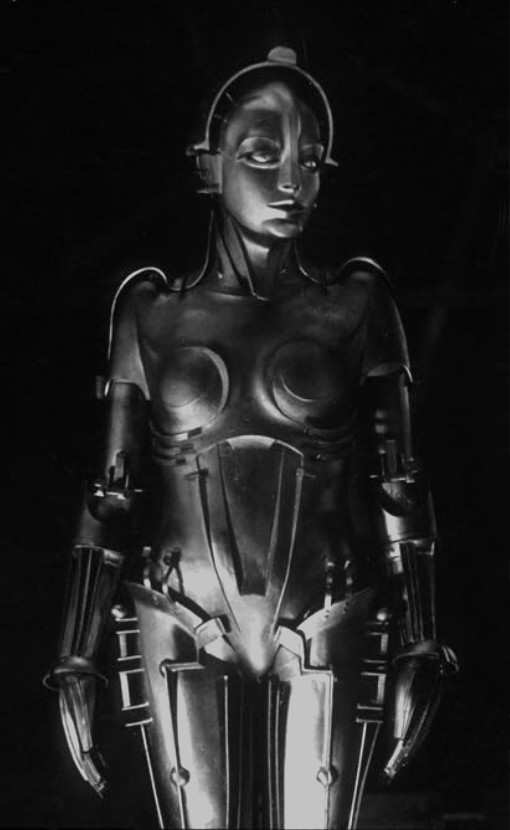
THE MASCHINENMENSCH. METROPOLIS, 1927. PHOTOGRAPH BY HORST VON HARBOU. PUBLIC DOMAIN.
Both of these are from 1927. The word "cyberpunk" would not exist for another fifty-six years.
02 — WHERE THE WORD CAME FROM
Named after a story about teenage hackers.
Bruce Bethke wrote a short story called "Cyberpunk," published in Amazing Stories in November 1983. The title described that one story and nothing wider.
Editor Gardner Dozois then took the word for a 1984Washington Post article, "SF in the Eighties," and applied it to William Gibson, Bruce Sterling, Lewis Shiner, Pat Cadigan and Greg Bear — also called the "mirrorshades group." The word was lifted from a story title and pinned on writers who never asked for it.
PROGRAMME FOR METROPOLIS, 1927. PUBLIC DOMAIN.
03 — THE THREE QUESTIONS
WHICH MACHINE RULESnetworks, implants, cheap ubiquitous computing
WHO HOLDS POWERcorporations. The state is absent or hollowed out
WHO FIGHTS BACKhackers, couriers, street operators. Skill without institution
This is why "punk" is in the name — the protagonist is technically capable and socially disposable.
Every later -punk keeps this shape and swaps the machine.
04 — HIGH TECH, LOW LIFE
The two lines run in opposite directions.
Technology advancing does not mean life improving; cyberpunk splits those two lines apart and lets them run in opposite directions. The phrase circulates as the genre's shorthand with no single agreed first user — credit belongs to the genre itself.
05 — THE LOOK WAS FIXED IN TWO YEARS
BLADE RUNNER — Ridley Scott, 1982 — the look
NEUROMANCER — William Gibson, 1984 — the language
Between them they settled the genre before most of its books were written.
06 — IT WAS COPIED FROM A REAL PLACE
Cyberpunk's city was copied from Hong Kong, photographed and then darkened. Kowloon Walled City: roughly 33,000 people in a single block of interlocked buildings, effectively ungoverned, demolished in 1993–94.
Repeatedly cited as the source of cyberpunk's dense vertical city and a direct reference for Ghost in the Shell. Ridley Scott said he wanted Blade Runner to look like "Hong Kong on a bad day."
The most futuristic-looking genre of the twentieth century was largely a documentary of a neighbourhood that no longer exists.
KOWLOON WALLED CITY FROM THE AIR, 1989. CC BY-SA 4.0.
07 — WHY THE FUTURE LOOKS JAPANESE
In the 1980sJapan was expected to become the dominant economic power. Cyberpunk absorbed that expectation and never updated it — Japanese signage, zaibatsu, Tokyo streets, one decade's anxiety frozen in place.
Akira (1988) and Ghost in the Shell (1995) then made Japan an author of the genre it had been furnishing.
KABUKICHŌ, SHINJUKU, TOKYO. CC BY-SA 4.0.
08 — WHAT IT GOT RIGHT
Its central fear largely arrived: corporate power exceeding state power, surveillance as infrastructure, private data as the real currency, a comfortable interface over an uncomfortable system.
What it missed is stranger — it expected the body to be modified far more than it has been, and never guessed the network would turn out dull, social and advertising-funded.
09
Every other -punk is defined against this one. That is what it means to be the origin.