KongCast · Series II
ACHERON
《奧德賽》背後,仍在流動的河。
The Living River Behind the Odyssey
The Living River Behind the Odyssey.
《奧德賽》背後,仍在流動的河
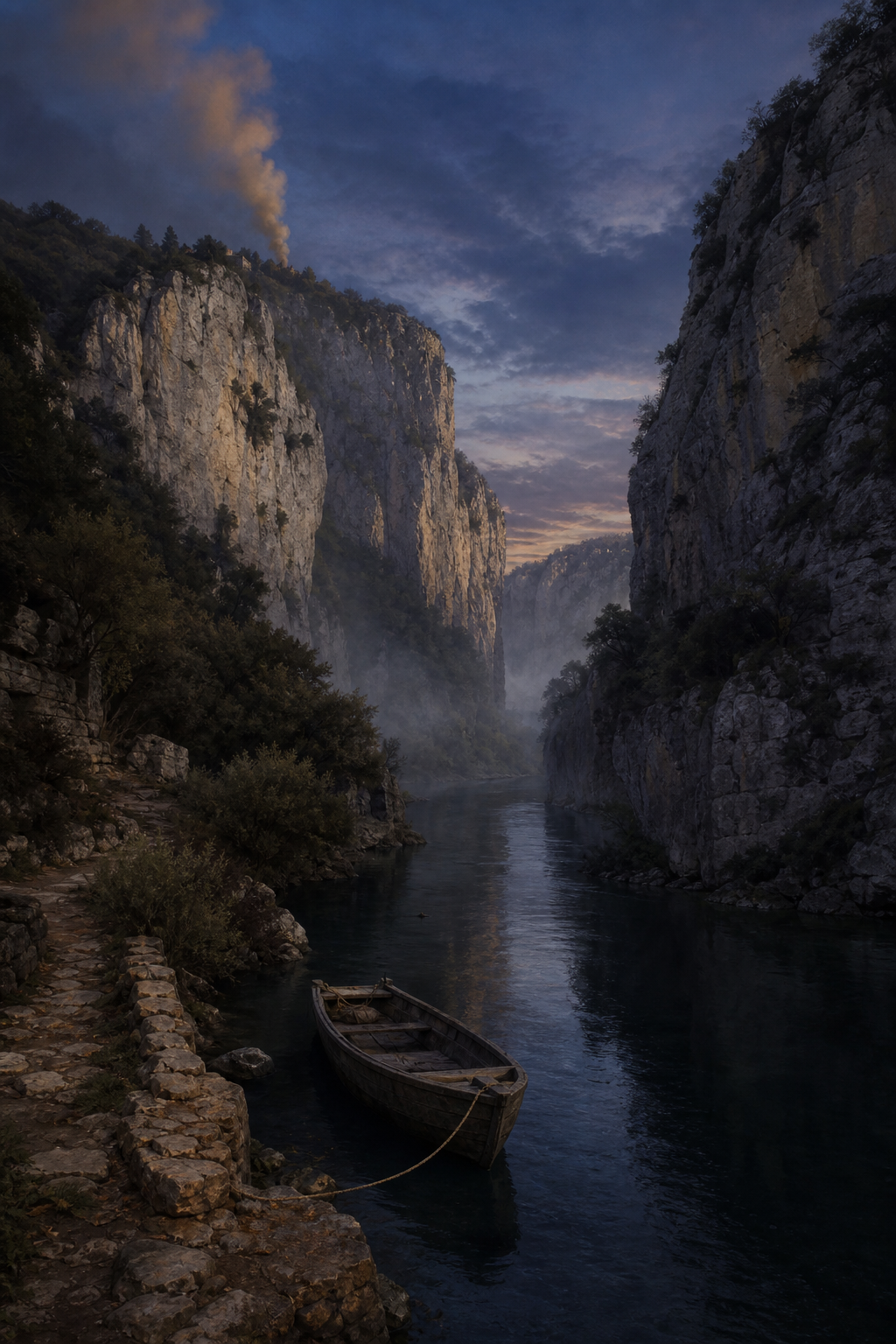
黑水在這裡有了名字。
名字先落進詩裡;而河,早就在 Epirus 流著。
Here the black water takes a name.
The name falls into a poem first; the river was already flowing in Epirus.
一條在 Epirus 真實流動的河,為什麼成為人類想像中的世界邊界;它又如何持續流進今天? A river that truly flows in Epirus — why did it become the edge of the imagined world, and how does it keep flowing into today?
水從這裡一路往下,直到海。沿途它會為你打開六次;關上之後,你仍站在同一段河上。
先逆流一次——有了名字,我們得找到它真正的開始。
From here the water runs downward, all the way to the sea. Six times along the way it opens; close it and you stand on the same stretch of river.
First, upstream — with a name given, we must find where it actually begins.
上游 · 泉與峽Upstream · springs and gorge
水先出現,名字之後才來。The water comes first; the name arrives later.
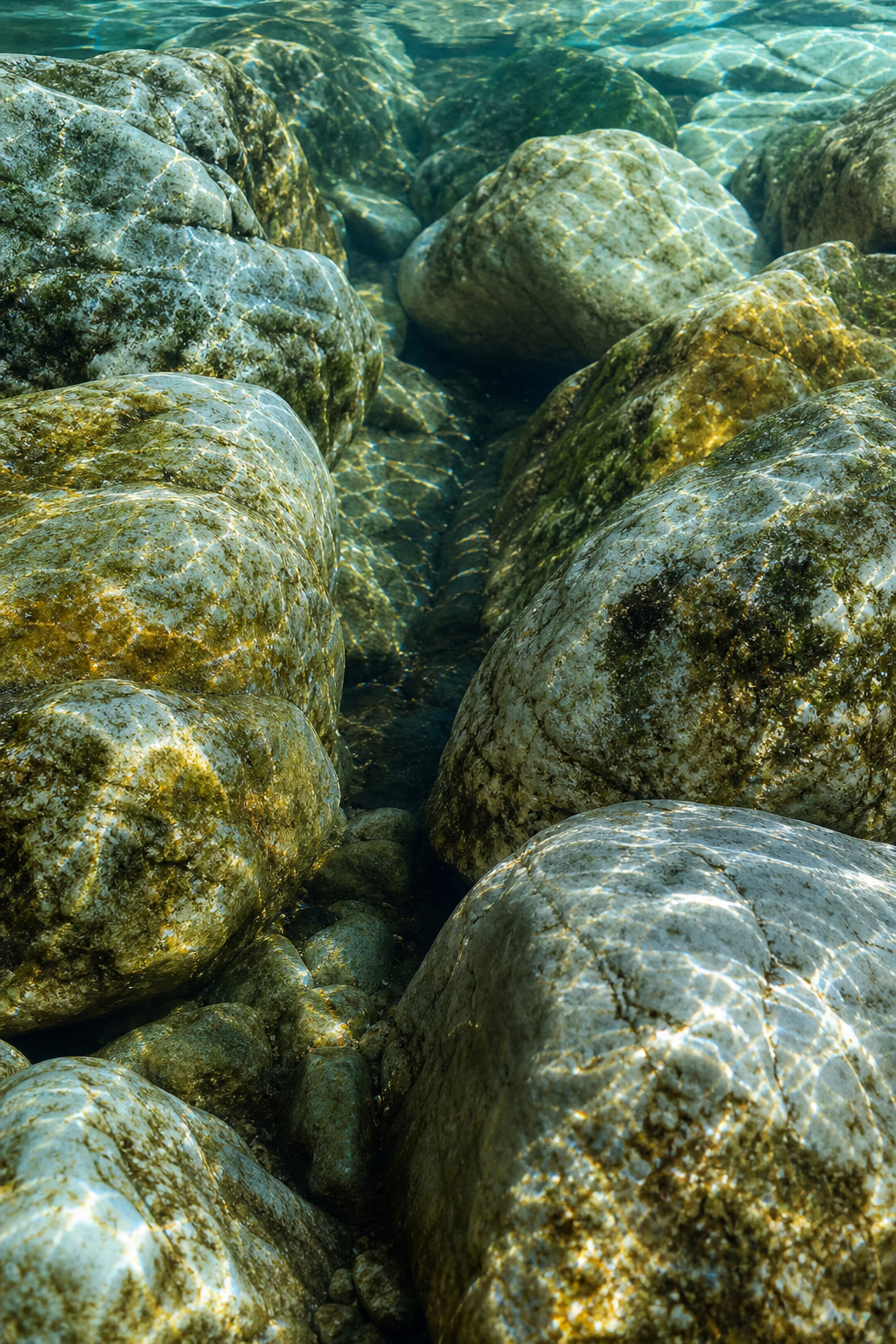
在任何神話為它命名之前,這條河已經從 Souli 山區的泉水滲出,靠近 Glyki 切開石灰岩,再流向 Ammoudia 匯入伊奧尼亞海。 Long before any myth named it, this water was already seeping from springs in the Souli mountains, cutting limestone near Glyki, and running on to Ammoudia and the Ionian Sea.
這裡的水淺而亮,石灰岩把光反成一層冷綠。再往下一點,它就不只是一條水。 Here the water is shallow and bright; limestone folds the light into a cold green. A little further down, it stops being one water.
點按三滴水,讓河聚合Tap the three droplets to gather the river
阿刻戎從哪裡來,又流向哪裡?Where does the Acheron rise, and where does it flow?
阿刻戎峽谷的石灰岩與灌木,Epirus。點擊圖片查看原始影像;照片經 Wikimedia Commons,作者與授權見來源頁。Limestone and scrub of the Acheron gorge, Epirus. Click the image for the original file; via Wikimedia Commons, author and licence on the source page.
- 它發源於 Souli 山區、Glyki 附近的泉水與山地。It rises from springs and highland terrain in the Souli mountains, near Glyki.
- 在 Glyki 一帶切開峽谷,再攤開進入平原。Near Glyki it cuts a gorge, then spreads into the plain.
- 最後在 Ammoudia 注入伊奧尼亞海。It ends at Ammoudia, entering the Ionian Sea.
- 水色明亮清透——與「幽暗之河」這個名字並不相符。The water is bright and clear — nothing like the "dark river" of its name.
另可參見See also:Wikimedia Commons
匯流 · 黑水Confluence · black water
三條水在史詩裡匯合。Three waters meet inside a poem.
冷綠在此變沉。在《奧德賽》第十卷,喀耳刻指引奧德修斯前往阿刻戎與皮里弗勒革同、科庫托斯匯流之處;第十一卷,才是他向亡者求問的儀式。 The cold green goes heavy here. In Book 10 of the Odyssey, Circe directs Odysseus to where the Acheron meets Pyriphlegethon and Cocytus; Book 11 holds the ritual of questioning the dead.
不同流向、不同水色,在同一片河面上對上。水色一沉,河面就開始像一道門。 Different directions, different colours, meeting on one surface. As the colour sinks, the surface begins to look like a door.
拖曳清水,覆蓋黑色倒影Drag the clear water to cover the dark reflection
一條真實的河,為何被讀作生死的界線?Why is a real river read as the border of the living and the dead?
急流與深潭相接處,阿刻戎中游。點擊查看原圖;照片經 Wikimedia Commons,作者與授權見來源頁。Where rapids meet a deep pool, middle Acheron. Click for the original; via Wikimedia Commons, author and licence on the source page.
- 《奧德賽》第十卷是喀耳刻的指引,第十一卷才是亡者儀式本身。Book 10 is Circe's instruction; Book 11 is the ritual itself.
- 詩中,皮里弗勒革同與科庫托斯在那裡匯入阿刻戎。In the poem, Pyriphlegethon and Cocytus flow into the Acheron there.
- 現代地理無法證明荷馬:地名與地形只是彼此靠近,不是彼此證明。Modern geography cannot prove Homer: name and terrain stand near each other, they do not verify each other.
水下 · 地面讓開Underwater · the ground gives way
神話曾經落在地面上。Once, the myth touched the ground.
同一片水面繼續變黑,直到水下顯出人開鑿過的拱室。在梅索波塔莫斯附近、古稱埃菲拉的一帶,有一處遺址,長期與「亡者神諭所」(Necromanteion)的傳統相連——但這一辨認仍有爭議。 The same surface keeps darkening, until a cut vault shows through from underneath. Near Mesopotamos, in the district anciently called Ephyra, stands a site long linked to the tradition of a Necromanteion, an oracle of the dead — though the identification remains disputed.
拱室不會替我們回答。把水撥回原處:河邊,今天還有人在過日子。 The vault answers nothing for us. Let the water fall back into place: beside this river, people are still living today.
按下即可觸發;亦支援向下拖曳。Press to trigger; dragging down also works.
這裡真的是通冥所嗎?Was this truly an oracle of the dead?
地下拱形空間與開鑿的地面。點擊查看原圖;照片經 Wikimedia Commons,作者與授權見來源頁。Underground vaulted space and cut floor. Click for the original; via Wikimedia Commons, author and licence on the source page.
- 傳統上,這處遺址被稱為 Necromanteion,與召喚亡者的儀式相連。Traditionally the site is called the Necromanteion, linked to rites of summoning the dead.
- 但這一解讀仍有爭議:部分研究將它讀作設防的希臘化時期居所或農莊。The reading remains debated: some scholarship interprets it as a fortified Hellenistic residence or farmstead.
- 傳統與不確定,應當同時被聽見。Tradition and uncertainty should be heard at the same time.
來源Source:希臘文化部 Odysseus 入口網站 · Necromanteion / Hellenic Ministry of Culture — Odysseus portal
河岸 · 現在Banks · present tense
河邊仍有人在過日子。People still live beside it.
水線沒有斷,只是走進了真正的日光,兩岸轉綠。Glyki 一帶,農業、畜牧與旅遊並存;在河口 Ammoudia,漁業、農業與旅遊與受保護的濕地及三角洲共存。 The waterline never broke; it simply walked into real daylight, and the banks turned green. Around Glyki, agriculture, livestock and tourism coexist; at the Ammoudia estuary, fishing, agriculture and tourism sit alongside protected wetlands and a delta.
白天的河,普通得幾乎沒有神話。可是我們的想像裡多了一個人——一個荷馬沒有寫過的人。 By day the river is so ordinary it holds almost no myth. Yet our imagination has gained a figure — one Homer never wrote.
橫向拖曳水流,看見今日生活Drag across the current to see life today
今天,這條河如何形塑生活?How does the river shape life now?
跨阿刻戎的桁架橋與淺灘,Glyki 一帶。點擊查看原圖;照片經 Wikimedia Commons,作者與授權見來源頁。Truss bridge and shallows over the Acheron, near Glyki. Click for the original; via Wikimedia Commons, author and licence on the source page.
- Glyki:一座鋼橋接起兩岸的日常,週邊以農業、畜牧與旅遊為生。Glyki: a steel bridge joins daily life on both banks; agriculture, livestock and tourism sustain the area.
- Ammoudia 河口:漁業與農業,加上旅遊與受保護的濕地、三角洲。At the Ammoudia estuary: fishing and agriculture, alongside tourism and a protected wetland delta.
- 在梅索波塔莫斯,遺址就在村子旁邊——神話是鄰居,不是景點。At Mesopotamos the ancient site sits beside the village — the myth is a neighbour, not an attraction.
來源Sources: Visit Greece · Epirus · NECCA — Natural Environment & Climate Change Agency, Epirus
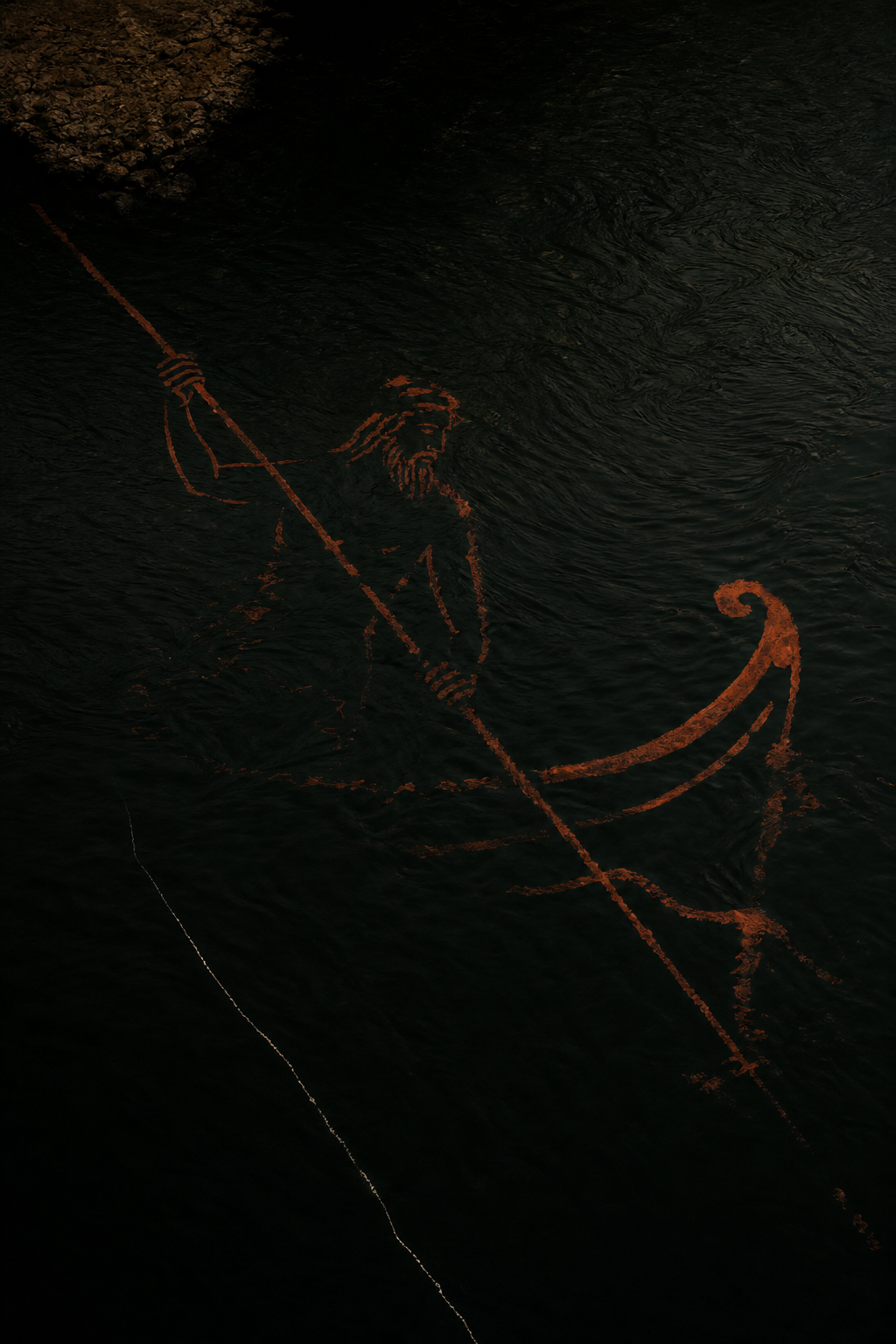
倒影 · 被記住的擺渡人Reflection · the remembered ferryman
荷馬寫下河流;後來的圖像,才讓擺渡人上了船。Homer named the river. Art gave it a ferryman.
《奧德賽》在阿刻戎召喚亡者,卻沒有寫下卡戎。數百年後,墓葬陶瓶才讓擺渡人、船與等待的亡者變得可見。 The Odyssey summons the dead at Acheron, but it does not name Charon. Centuries later, funerary vases made the ferryman, the boat and the waiting dead visible.
陶土的紅留在瓶上;而水面上那道紅線,正被水帶走。 The terracotta red stays on the vase; the red line on the water is already being carried away.
點按圖像區域或按鈕,開啟卡戎記憶層Tap the image area or button to open the Charon memory layer
卡戎,何時才被記住?When was Charon first remembered?
白底墓葬用 lekythos,繪有撐篙渡亡者的船夫。點擊查看原圖;圖片經 Wikimedia Commons,作者與授權見來源頁。White-ground funerary lekythos showing the pole-pushing ferryman of the dead. Click for the original; via Wikimedia Commons, author and licence on the source page.
- 荷馬《奧德賽》從未提及卡戎,包括第十一卷的亡者儀式。Homer's Odyssey never names Charon, not even in Book 11's ritual.
- 約公元前 450 至 440 年,白底墓葬瓶才使撐篙的船夫清晰可辨。Only around 450–440 BCE do white-ground funerary vases give the pole-pushing ferryman a clear, recognisable form.
- 我們記住的,常常是後來補上的一筆。What we remember is often the stroke added afterwards.
下游 · 日光Downstream · daylight
霧散之後,只剩下水。When the fog goes, only water is left.
這裡不需要結論。把文字、神話與霧一起抽走,水沒有變——看看留下什麼。 No conclusion is needed here. Drain the words, the myth and the fog together; the water does not change — see what stays.
按住 1.2 秒;鍵盤可用 Enter 直接觸發。Hold for 1.2 seconds; press Enter to trigger directly.
退到最後,只剩一件事:水還在往海走。 When everything withdraws, one thing is left: the water is still walking toward the sea.
今天還剩下什麼?What remains today?
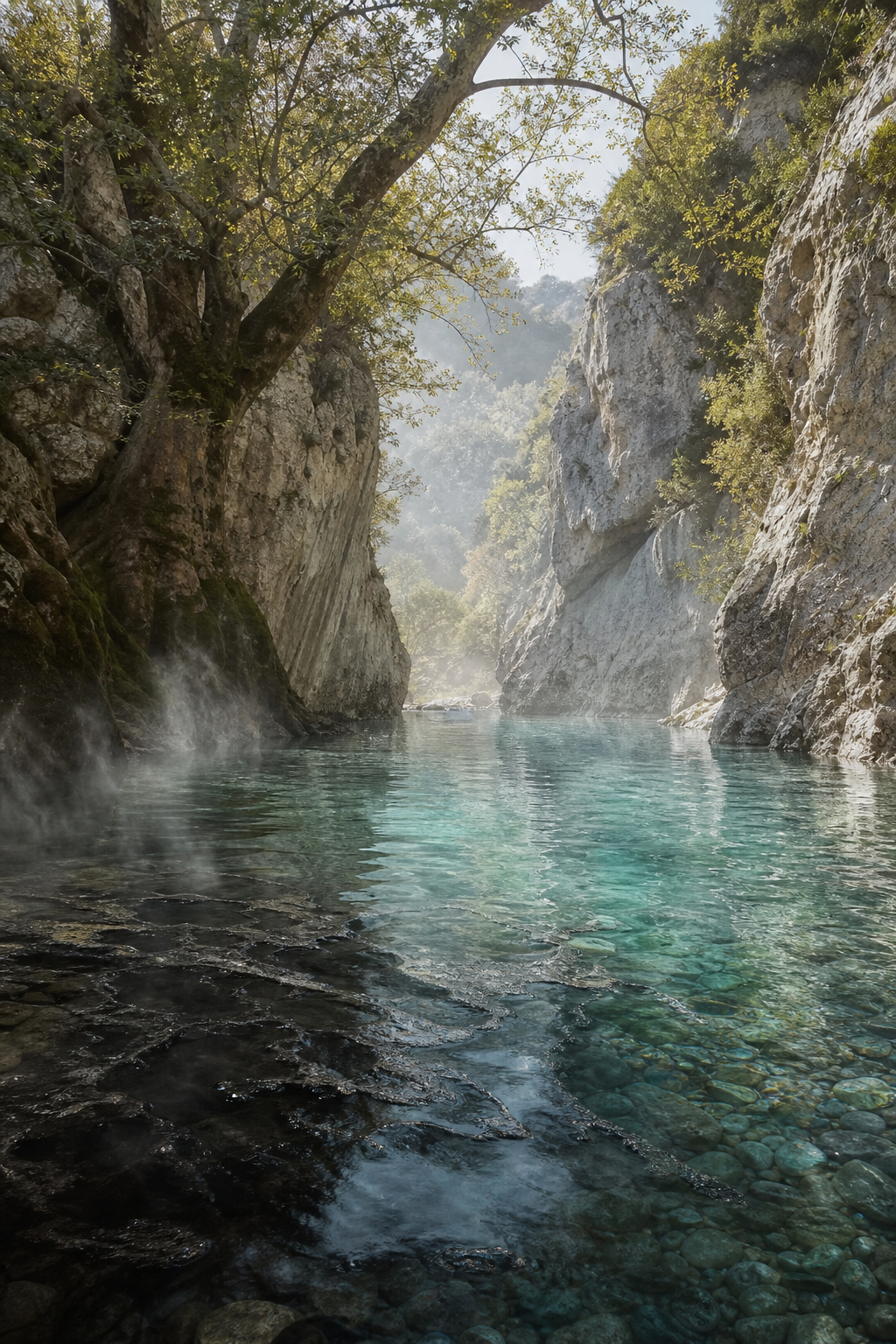
- 剩下的是真實的河、峽谷、日光與海。What remains is an actual river, a gorge, daylight and the sea.
- 現實並不為神話作證。Reality does not validate the myth.
- 但延續讓人仍能追問:為什麼是這條河,承載了這樣的意義。Yet continuity lets us still ask why this river carried such meaning.
- 河沒有回答。它繼續流。The river does not answer. It keeps flowing.
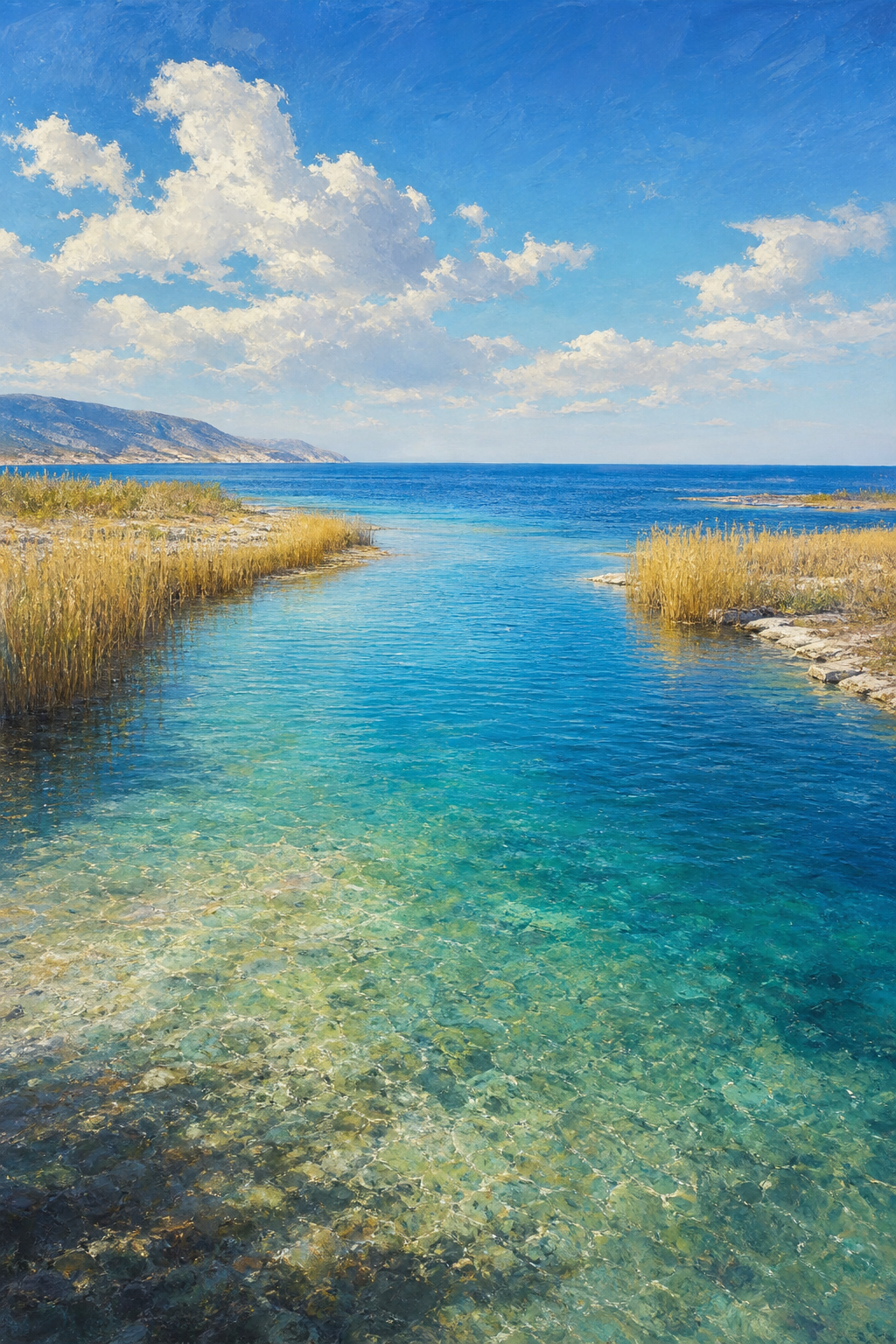
出海口 · AmmoudiaMouth · Ammoudia
紅線被水帶走了。剩下的只是真實的河面,正在抵達海——和我們進來時的那片黑水,是同一條。 The red line has been carried away. What remains is an actual surface of water arriving at the sea — the same water as the black current we entered by.
河從來沒有變成邊界。是我們,站在岸上,需要一條邊界。 The river never became a border. We, standing on the bank, needed one.
頁面中的水景為生成影像;史料照片皆附來源,說明見各記憶層。 The waterscapes on this page are generated images; every documentary photograph carries its source, noted inside the memory panels.