A Continuation
The Lake
The Lake
Is Listening.
The water still goes somewhere. This time we ask who's speaking for it — and how they think we should be treating it now.
The water still goes somewhere. This time we ask who's speaking for it — and how they think we should be treating it now.
The last time we followed this water, we traced where it goes — down the escarpment, through the cities of the Horseshoe, out past the breakwalls into Lake Ontario and beyond. This time the question is different: who is speaking for it. Not the utilities or the shipping lanes, but the people who've made it their work, sometimes their inheritance, to keep the lake legible to itself a hundred years from now.
In Anishinaabemowin, water is nibi — not something metered, but a relative to be cared for the way you'd care for an elder. Beginning in 2003, Josephine Mandamin carried a copper pail of lake water on foot around the full shoreline of Lake Superior, then Michigan, Huron, Erie, and Ontario — thousands of kilometres, one step for every gallon someone else was pumping out.
The Mother Earth Water Walks she founded weren't lobbying so much as modeling a different relationship. Autumn Peltier, who took up that advocacy as a teenager, put it plainly before the United Nations: water doesn't belong to us to sell. That idea is quietly reshaping watershed planning across the Horseshoe, where traditional law is now cited alongside engineering reports for the first time in generations.
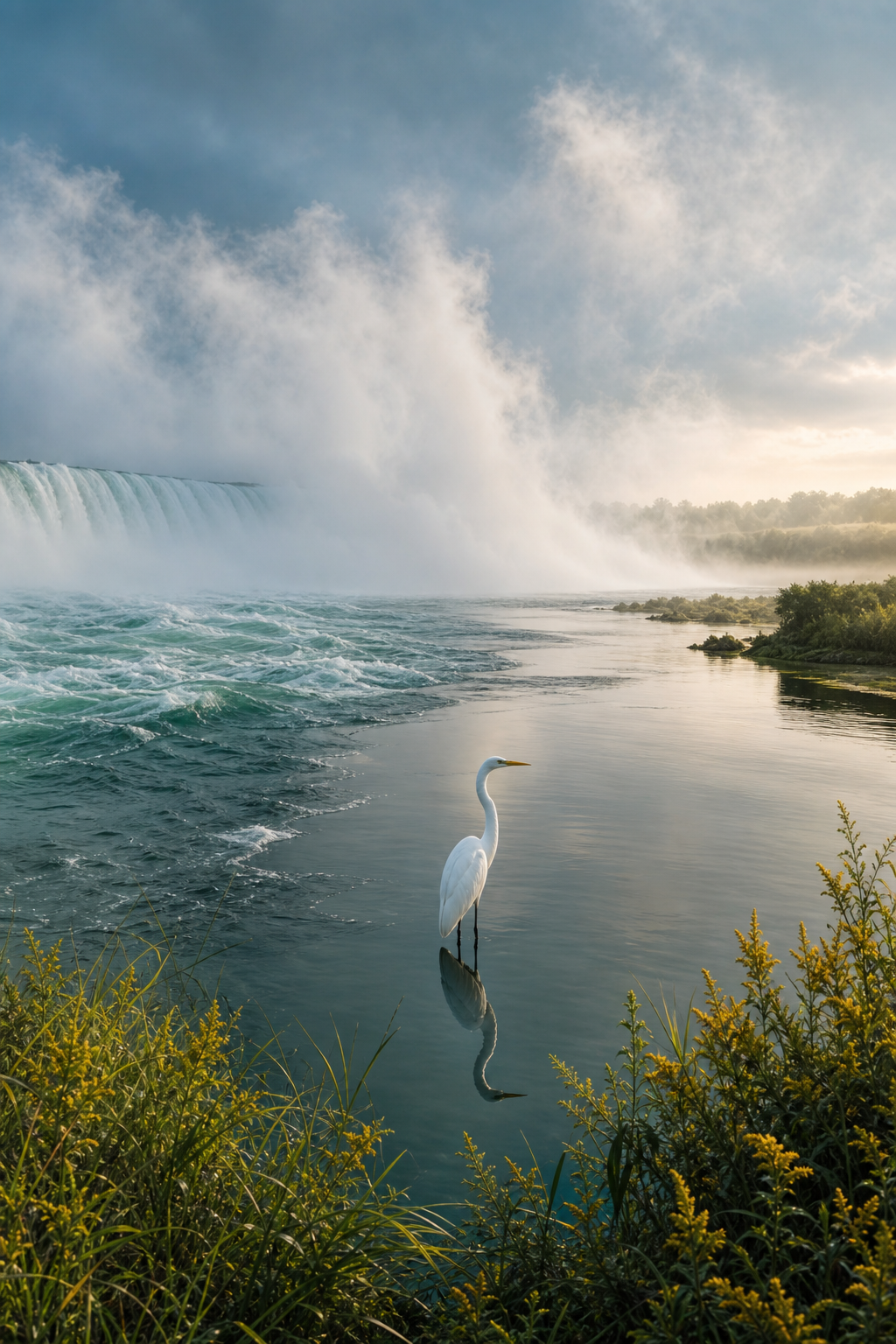
Roughly ninety percent of the Niagara River's flow is quietly diverted before it reaches the brink — sent through tunnels to turbines that light half of southern Ontario and western New York, a compromise formalized in the 1950 Niagara Treaty under the International Joint Commission. It's easy to love water this loud and this photogenic.
Lake Ontario Waterkeeper, founded by lawyer Mark Mattson in 2001, exists for the water that isn't — the intake pipes, the storm outfalls, the harbours nobody photographs. Their standard is almost embarrassingly simple: swimmable, drinkable, fishable. Not pristine, not wild — just safe enough that a kid can jump off a dock without a parent checking the last sewer overflow first.
For most of the twentieth century, Toronto built its back to the lake — rail yards, expressways, a concrete edge kept at working distance. The picnic tables that now sit where a container port used to be are a small, deliberate rebellion.
Waterfront Toronto's revitalization, and the parallel push to daylight the buried mouth of the Don River, both rest on what planners call "one water" thinking: stop treating drinking water, stormwater, and wastewater as three budgets and three problems, and start treating them as one system with one outcome — a lake still swimmable by the time it reaches someone else's tap downstream.
For much of Hamilton Harbour's industrial history, a heron standing in it would have been a strange sight. The Bay Area Restoration Council has spent over thirty years on the Remedial Action Plan for the Harbour and Cootes Paradise, and the metric they trust most isn't a lab report — it's what shows up unasked.
Great egrets, great blue herons, and rebounding fish that need clean, oxygenated water to spawn are the slow, unglamorous proof a watershed is healing. Nobody schedules a heron. It just comes back when the water is worth standing in.
"You don't own the water — you just happen to be near it for a while."
Put these voices together and a shape emerges. Think in watershed time, not budget cycles — the lake doesn't care what quarter it is, only whether the wetland at its edge is still there in twenty years. Measure health by what returns on its own, not only by what's measured in a report: a heron is harder to fake than a compliance chart.
Treat the shoreline as a commons to be shared, not a backlot to be leased. Let Indigenous water law sit beside settler engineering instead of behind it. The Golden Horseshoe spent a century learning to take from Lake Ontario. What these voices are teaching it now, patiently, is how to ask.
This station continues from an earlier one about where the water goes once it leaves the Horseshoe.
Continue the Flow →