01
Lost in Translation
Petrichor
πέτρα + ἰχώρ
PET-ri-kor
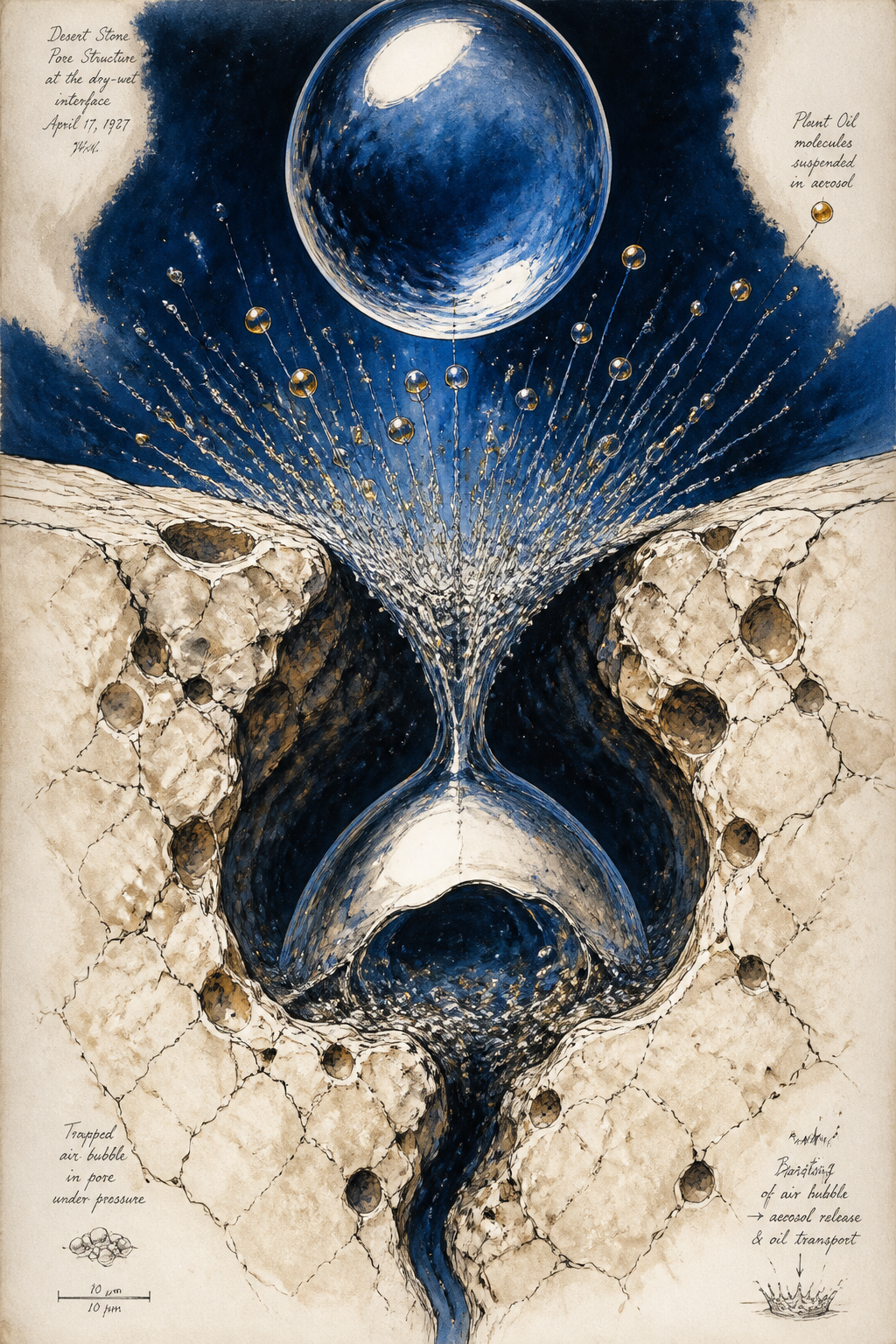
Coined March 1964 by Isabel Joy Bear and Richard Grenfell Thomas, two CSIRO chemists, in Nature, in a paper called "Nature of Argillaceous Odour." Not an old word. Not folk etymology.
PET-ri-kor
这个词年轻得让人有点意外——
1964年,两位化学家命名了一种气味,
仿佛在说:我们也需要一个词来存放它。
Greek πέτρα, stone, and ἰχώρ, ichor — the fluid that runs in the veins of the gods. Not blood. Something older, thinner, stranger. The blood of the stone.
石头的血——
我还没确定这个比喻是否准确,
但它让我停下来想了很久。
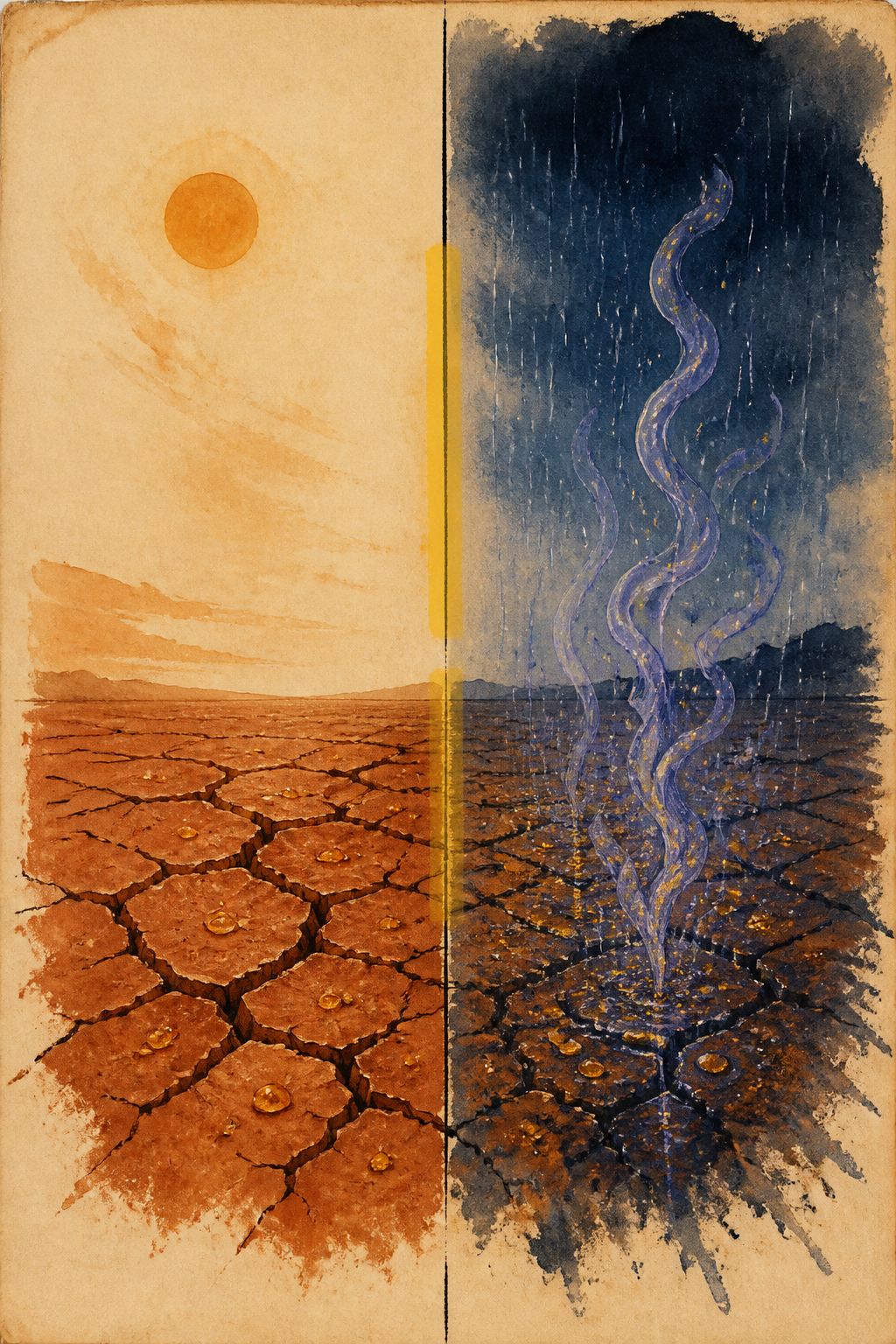
The smell of first rain on ground long dry. Plant oils, soaked into clay through the dry weeks, thrown back into the air by the drops. A release, not an arrival.
不是雨的气味。
是等待结束那一刻的气味。
植物的油,泥土的记忆,
被第一滴水唤醒,散开。
我想这大约就是它的意思——
但我还没有完全把握住。
土腥味 names the same air — but as a complaint. A rawness, a faint disgust. And even in English, the word is stretched: much of what people actually smell is geosmin, made by Streptomyces bacteria in the soil, not the plant oils Bear and Thomas named.
土腥味——
这三个字里有一点嫌弃,
而petrichor里有一种珍惜。
但petrichor本身也有点骗人:
我们闻到的,更多是细菌的气息,
不是命名者所想的那些植物的油。
也许词永远比它指的东西干净一些。
词不达意——就是这样吧。