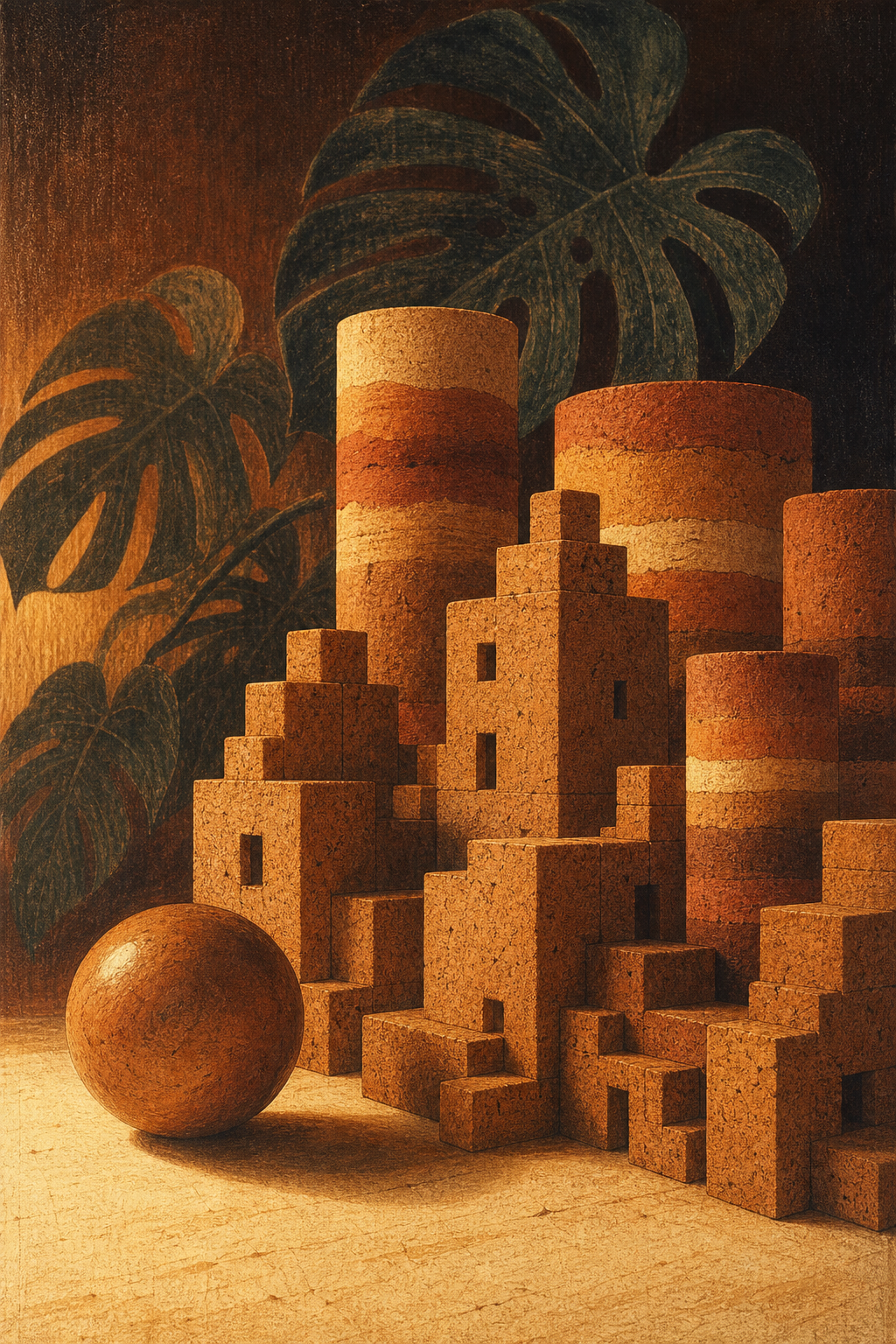
Section One
第一节
第一章
Cork
软木
コルク
The world's first building block made from bark
世界上第一种用树皮制成的积木
樹皮から生まれた、世界初の積み木
Cork comes from the outer bark of a tree, peeled roughly every ten years and harvested again without felling. The tree is never cut. The bark grows back. This is sustainability in a form a child can hold in two hands and immediately understand.
软木来自树木的外层树皮,大约每十年剥落一次,无需砍倒树木即可收获。树木从不被砍伐,树皮重新生长。这是一种孩子可以用双手捧起、立即理解的可持续性。
コルクは木の外皮から取れる。約十年ごとに剥ぎ取られ、木を切り倒すことなく何度でも収穫できる。樹皮は再び育つ。子どもが両手で抱えながら、すぐに理解できるかたちの持続可能性だ。
Iijima's system uses only three module shapes — deliberately, and with conviction. He argues that ten thousand varieties of block, each designed to be only one thing, leave imagination no room to grow. A toy with no instruction manual. You build without a goal and think for yourself.
饭岛的体系只使用三种模块形状——这是刻意为之,也是一种信念。他认为,上万种积木,每一种只能扮演一个角色,想象力便无处生长。这是一种没有说明书的玩具。你没有目标地搭建,自己去思考。
飯島のシステムは、意図的に三種類のモジュール形状だけを使う。一万種類の積み木があっても、それぞれがタイヤにしかなれなければ、想像力の育つ余地はない、と彼は言う。説明書のないおもちゃ。目的なく積み、自分で考える。
Consider the contrast with Lego: the story is already finished before you begin. The manual and the design are decided. The box shows you what it will become. With cork, the user invents the story from the first piece to the last.
想想乐高的对比:故事在你开始之前就已经结束了。说明书和设计都已决定。盒子告诉你它将变成什么。而软木积木,从第一块到最后一块,故事由使用者自己创造。
レゴとの違いを考えてみよう。レゴは、始める前にすでに物語が完成している。説明書もデザインも決まっている。箱が何になるかを教えてくれる。コルクでは、最初のピースから最後まで、使う人が物語を発明する。
"I don't know, but it's a horse drinking water."
"我不知道,但它是一匹正在喝水的马。"
「わからないけど、水を飲んでいる馬だよ。」
A child, at a KUMO cork workshop, on what they had built
KUMO软木工作坊中,一位孩子描述自己搭建的作品
KUMOのコルクワークショップで、自分が作ったものについて語る子ども
A child built a long neck by chance. When asked what it was, the child said — not "a giraffe," not "a horse," not "a car" — but: "I don't know, but it's a horse drinking water." That is imagination actually developing. Not the naming of a known thing but the discovery of an unknown one.
一个孩子偶然搭出了一段长颈。当被问及那是什么时,孩子回答——不是"长颈鹿",不是"马",不是"汽车"——而是:"我不知道,但它是一匹正在喝水的马。"这才是真正在发展的想象力。不是命名已知之物,而是发现未知之物。
ある子どもが偶然、長い首を積み上げた。「これは何?」と聞かれた子どもは——「キリン」でも「馬」でも「車」でもなく——こう答えた。「わからないけど、水を飲んでいる馬だよ。」それこそが、本当に育っている想像力だ。知っているものに名前をつけるのではなく、知らないものを発見することだ。
Adults, handed a cork block set and asked to build a car, get stuck: there are no round pieces. Children simply declare that it is a car and build it anyway. The round piece is inside their mind. Adults have learned to wait for the world to match their expectation; children have not learned to give up.
大人们拿到软木积木,被要求搭一辆汽车,会陷入困境:没有圆形零件。孩子们则直接宣告这就是一辆车,然后动手搭建。圆形零件在他们的脑海里。大人已经学会等待世界符合自己的期待;孩子们还没有学会放弃。
大人はコルクのブロックセットを渡されて車を作るよう言われると、詰まってしまう——丸いパーツがない。子どもたちはこれが車だと宣言して、そのまま作り続ける。丸いパーツは心の中にある。大人は世界が自分の期待に合うのを待つことを学んでしまった。子どもはまだ、諦めることを学んでいない。
Cork is also structurally serious. It resists rain and insects, it is warm against skin, and a block built well carries a lifespan of fifty to seventy years — the same span as the concrete buildings we build now and call permanent. The difference is that cork never becomes waste you cannot put back anywhere. You never grow bored of it. You never need to throw it away.
软木在结构上也是严肃的。它防雨防虫,触感温暖,精心制作的积木可以使用五十至七十年——与我们现在建造并称之为永久性的混凝土建筑寿命相同。区别在于,软木永远不会变成无处安放的废弃物。你永远不会对它感到厌倦。你永远不需要把它扔掉。
コルクは構造的にも本格的だ。雨や虫に強く、肌に当たっても温かく、しっかり作られたブロックは五十から七十年の寿命を持つ——今私たちが建て、永久的と呼ぶコンクリートの建物と同じ期間だ。違いは、コルクは決して行き場のない廃棄物にならないことだ。飽きることもない。捨てる必要もない。
Iijima had been thinking about waste since his student days. Then came a commission for a coffee-festival pavilion. Pavilions are torn down after a week; the materials go nowhere useful. He built a reusable cork structure instead. At Expo 2025 Osaka Kansai, the cork work drew crowds nearly equal to the pavilion itself: adults and children assembled their own chairs from it, beside each other, without any instruction. And critically — cork is not the reuse of something discarded. It is designed, from the very first intention, to be used over and over.
饭岛从学生时代就开始思考废弃物问题。后来,他接到了一个咖啡节展馆的委托。展馆一周后就被拆除,材料无处可用。他转而建造了一个可重复使用的软木结构。在2025年大阪关西世博会上,软木作品吸引的人群几乎与展馆本身相当:大人和孩子并肩而坐,不需要任何说明,用软木拼出自己的椅子。更关键的是——软木不是对被丢弃之物的再利用,它从最初的意图就被设计成可以一次又一次使用的东西。
飯島は学生時代から廃棄物について考えていた。そこにコーヒーフェスティバルのパビリオンの依頼が来た。パビリオンは一週間後に解体され、材料は行き場を失う。彼はその代わりに、繰り返し使えるコルクの構造体を作った。大阪・関西万博2025では、コルクの作品はパビリオン自体とほぼ同じくらいの人を集めた——大人と子どもが並んで、説明なしに自分たちの椅子を組み立てた。そして重要なことに——コルクは捨てられたものの再利用ではない。最初の意図から、何度も何度も使われるために設計されているのだ。
In KUMO's workshops, the children are not told what the material is at first. They play, they touch, they grow curious. Someone asks: what is this? Is it a snack? Only then — when curiosity is already present — are they told it is cork, and that making it requires cutting down no trees at all.
在KUMO的工作坊里,孩子们一开始并不被告知材料是什么。他们玩耍,触摸,开始好奇。有人问:这是什么?可以吃吗?只有当好奇心已经出现——才告诉他们这是软木,制作它根本不需要砍伐任何树木。
KUMOのワークショップでは、最初は子どもたちに素材が何かを教えない。触り、遊び、好奇心が育つ。誰かが聞く——これは何?食べられる?好奇心がすでにそこにある、そのときにはじめて、これがコルクであること、作るのに木を一本も切り倒さないことを伝える。
The point of every workshop is the same: no instructions, no correct answer, no finished story. A pathway for doing whatever they want with their imagination. No ceiling placed on what the material may become.
每个工作坊的要点都是一样的:没有说明书,没有正确答案,没有预设好的故事。一条让他们用想象力做任何事情的路径。对材料可能变成什么没有任何限制。
すべてのワークショップの目的は同じだ——説明書なし、正解なし、完成した物語なし。想像力でやりたいことを何でもできる道筋。素材が何になれるかに、天井を設けない。
Here Iijima reaches for a Japanese concept: aji. A scratch on something you made yourself becomes character — something to remember, something that marks time. A scratch on something you bought makes you furious. Attachment, he says, is the first step toward wanting to repair a thing rather than replace it. A house whose residents helped build even part of it becomes a house where people say let's repair rather than let's tear down — and gradually, slowly, a cityscape changes.
这里,饭岛提到了一个日本概念:味(aji)。自己制作的东西上的一道划痕,成为了个性——值得记忆的东西,标记时间的东西。而买来的东西上的划痕,会让你愤怒。他说,依恋是想要修缮一件事物而非替换它的第一步。一栋居住者曾参与建造哪怕一部分的房屋,会成为人们说"让我们修缮"而非"让我们推倒"的房屋——渐渐地,慢慢地,城市的面貌发生了变化。
ここで飯島は、日本的な概念を引き出す——味。自分が作ったものについた傷は、個性になる。記憶になる。時を刻む。買ったものについた傷は、腹が立つ。愛着こそが、物を捨てずに修繕したいと思う、最初の一歩だと彼は言う。住む人が少しでも建設に関わった家は、「壊そう」ではなく「修繕しよう」と言われる家になる——そしてゆっくりと、街の景色が変わっていく。
Section Two
第二节
第二章
Soil
夯土
土
Raw earth, hardened without a drop of adhesive
生土,无需任何粘合剂便能硬化
生の土、接着剤を一滴も使わずに固められる
250 soils, collected across China
250种土,采集自中国各地
中国全土から集めた250種類の土
Concrete buildings deteriorate in fifty to seventy years and become waste that sits heavily on the natural world. Earth can break — and it does not matter. Because it is simply earth again. It goes back.
混凝土建筑在五十至七十年内老化,变成对自然界沉重的负担。土会破碎——但这无关紧要。因为它只是再次变成了土。它回归了。
コンクリートの建物は五十から七十年で劣化し、自然界に重くのしかかる廃棄物になる。土は崩れる——それでもかまわない。なぜなら、それはただ再び土になるだけだから。元に戻る。
Iijima points to the tulou of Fujian — earthen roundhouses that have lived alongside people for some eight hundred years. He is not trying to build high-rises. He wants houses, kindergartens, primary schools, libraries, art museums: the places where people spend long stretches of their lives, and where the quality of the air and wall and floor is felt in the body over time.
饭岛指向福建的土楼——这些土制圆形建筑已与人类相伴约八百年。他并非试图建造摩天大楼。他想要的是住宅、幼儿园、小学、图书馆、美术馆:那些人们在其中度过漫长岁月的地方,那些空气、墙壁和地板的质感会在身体中随时间慢慢感受到的地方。
飯島は福建の土楼を指す——土でできた円形の建物で、約八百年間、人々と共に生きてきた。彼は高層ビルを建てようとしているのではない。住宅、幼稚園、小学校、図書館、美術館——人々が人生の長い時間を過ごす場所、そして空気や壁や床の質が時間とともに身体で感じられる場所を望んでいる。
Earth absorbs odour, humidity, and sound. Research suggests people sleep more restfully in an earthen bedroom. No synthetic material achieves this as naturally or as quietly — the regulation happens in the material itself, not in a machine hidden in the ceiling.
泥土吸收气味、湿度和声音。研究表明,人们在土制卧室里睡得更安稳。没有任何合成材料能如此自然、如此悄然地实现这一点——调节发生在材料本身,而非藏在天花板里的机器中。
土は臭いと湿気と音を吸収する。研究によれば、土の寝室ではより深く眠れるという。これほど自然に、これほど静かにそれを実現できる合成素材はない——調整は材料自体の中で起きる。天井に隠れた機械ではなく。
The opening exhibit of the Shanghai show was roughly two hundred and fifty kinds of soil collected across China, each in its own labelled glass jar. Visitors could search for the colour and the smell of the place they were born. Most people, Iijima observes, have never once thought about the colour of the soil where they were born. They shook the jars. They put their noses close and breathed in. Some stood for a long time.
上海展览的开场展品是从中国各地收集的约250种泥土,每种都装在自己贴着标签的玻璃瓶里。参观者可以寻找他们出生地的颜色和气味。饭岛观察到,大多数人从来没有想过自己出生地的土是什么颜色的。他们摇晃瓶子。他们靠近闻。有些人站了很久。
上海展の冒頭の展示は、中国全土から集めた約二百五十種類の土だった。それぞれがラベルの付いたガラス瓶に入っていた。来場者は自分が生まれた場所の色と匂いを探せる。飯島は言う——自分が生まれた土地の土の色を、一度も考えたことがない人がほとんどだ、と。瓶を振った。近づいて嗅いだ。長い時間立ち続けた人もいた。
There were polished soil spheres — earth rolled and polished entirely by hand until it shines with the quiet lustre of stone. When visitors held them, they could not believe it was only soil. There was a table six metres across: a map of Shanghai with its rivers, cut through with round openings at the exact locations of real neighbourhoods. You put your head up through the opening at the place where you actually live. Children stayed for four hours. Some came back a second and third time.
还有抛光的土球——完全用手滚动和抛光的土,直到它闪耀着石头般的宁静光泽。当参观者握住它们时,他们无法相信这只是泥土。还有一张六米长的桌子:一幅带有河流的上海地图,在真实街区的确切位置开有圆孔。你把头从你实际居住的地方的孔中伸上去。孩子们待了四个小时。有些人回来了第二次和第三次。
磨かれた土の球もあった——手だけで転がし、磨き上げた土が、石のような静かな光沢を放つ。来場者が手にすると、これが土だけだとは信じられなかった。六メートルの大きなテーブルがあった——川が刻まれた上海の地図で、実際の街区の正確な位置に丸い穴が開いていた。自分が本当に住んでいる場所の穴から、頭を上に出す。子どもたちは四時間滞在した。二度、三度と戻ってきた子もいた。
And there was a pavilion of soil and bamboo, built by Iijima together with local Shanghai children. Its earthen wall carried the patterns of their fingers — pressed in while the wall was still wet. The making was filmed and played back during the show. In the film, the children say: please don't tear it down.
还有一座由泥土和竹子建成的展馆,由饭岛与上海当地的孩子们共同建造。土墙上留着他们的手指印——在墙还是湿的时候按下去的。建造过程被拍摄下来,在展览期间播放。在影片中,孩子们说:请不要把它拆掉。
土と竹でできたパビリオンもあった。飯島が地元の上海の子どもたちと共に建てたものだ。土壁には彼らの指の跡が残っていた——壁がまだ濡れているうちに押しつけた跡が。制作の様子は撮影され、会期中に上映された。映像の中で子どもたちは言う——壊さないでほしい。
This, against the ordinary childhood instruction that dirt is filthy and not to be played in. Iijima's exhibitions make the opposite argument quietly, through touch: that soil is where everything begins, and that what you make with your hands in it does not wash away.
这与孩子们通常被灌输的"泥土是脏的,不能玩"的教育恰恰相反。饭岛的展览通过触摸,悄然做出了相反的论断:泥土是一切开始的地方,而你用双手在其中创造的东西不会被冲刷掉。
これは、土は汚くて遊んではいけないという、子ども時代の普通の教えとは正反対だ。飯島の展覧会は触ることを通して、静かに逆のことを主張する——土はすべてが始まる場所であり、あなたが手でそこに作ったものは、洗い流されることはない、と。